You know what's funny about growing up with sports games? My dad never got them. He'd watch Match of the Day religiously, knew every player's transfer history back to the Jurassic period, but couldn't understand why I'd want to *play* football on the telly when I could kick a ball outside. "It's not real," he'd say, shaking his head as I lined up another penalty in Sensible Soccer. Thing is, he was wrong and right at the same time.
Real baseball meant nothing to me as a British kid in the early 90s. Cricket? Sure, that made sense—village greens, warm afternoons, the gentle thwack of leather on willow. Baseball was this alien American thing with rules I didn't understand and terminology that sounded like code. Then Ken Griffey Jr.'s Slugfest landed on the N64, and suddenly I was speaking fluent home run.
I picked up the cart from Electronics Boutique (remember when game shops had actual expertise behind the counter?). The guy there—Steve, I think—had this habit of tapping cartridges on the counter like he was testing their weight. "This one's mental," he said, sliding Slugfest across the glass. "Proper arcade mad." He wasn't wrong. The moment you switched it on, the game grabbed you by the shoulders and shouted "BASEBALL!" in your face with the subtlety of a neon sign.
Griffey Jr. himself was like some kind of sporting superhero rendered in chunky N64 polygons. That swing animation—smooth as butter despite being made of maybe twelve triangles—had this perfect arc that looked believable even when you were launching balls into orbit. The sound effects were mental. CRACK. Whoosh. The roar of a crowd that existed somewhere in Nintendo's imagination but felt more real than half the actual sports I'd watched on telly.
My mate Danny came round one Saturday, took one look at the game, and said, "Baseball's rubbish." Twenty minutes later, he was screaming at the screen because he'd just hit what Americans call a "grand slam" and I call "four runs in one go, bloody hell." We spent the entire afternoon in Home Run Derby mode, taking turns to see who could launch the most balls into the digital stratosphere. The physics were completely bonkers—you could hit a ball so hard it disappeared into a sparkly explosion—but somehow it felt more satisfying than any realistic sports sim I'd played.
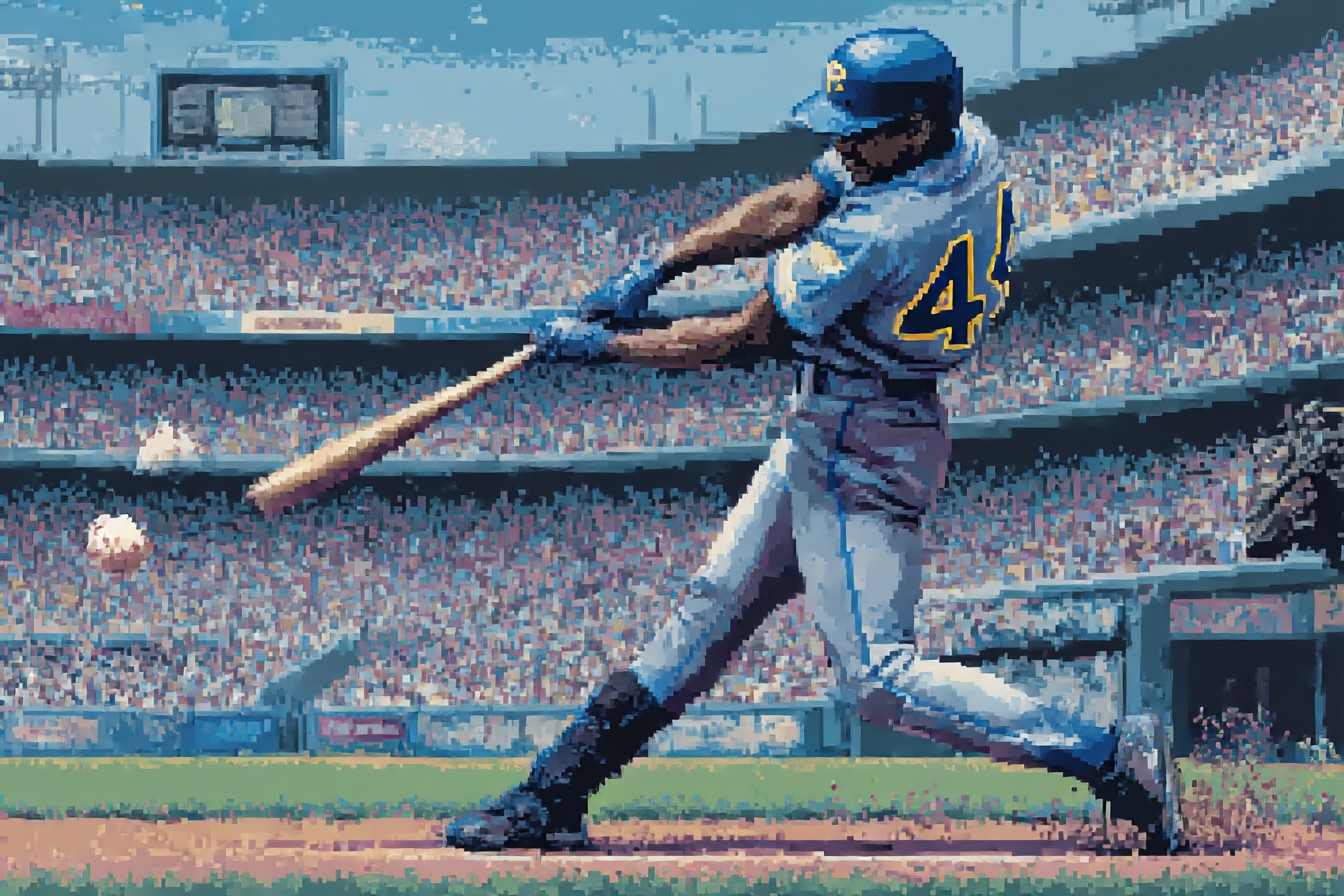
The thing about Ken Griffey Jr.'s slugfest that nobody talks about enough is how it taught you baseball without feeling like homework. The controls were dead simple: one button to swing, timing was everything. But within that simplicity was this massive depth. You'd start swinging at everything like an overexcited kid at a piñata party, missing more balls than a Sunday league goalkeeper. Then slowly—and I mean *slowly*—you'd start to read the pitcher. That fastball had a different wind-up to the curveball. The computer had tells, little animation quirks that gave the game away if you paid attention.
I became obsessed with the pitcher-batter duel. Forget the fielding (which was fine, nothing special), forget the base running (adequate but clunky)—the heart of this game was that moment when the ball left the pitcher's hand and you had maybe half a second to decide: swing or wait? The N64 controller's Z-trigger became my best friend. Press it to swing early for power, wait for contact hitting, or try to time it perfectly for that sweet spot that sent balls screaming into the stands.
My dad wandered in during one of these marathon sessions. I was facing some computer pitcher who kept throwing what I now know were sliders—balls that looked like strikes until the last moment, when they'd dart away like they were allergic to the bat. "What's the point of this?" he asked, settling into his armchair with a cup of tea. I tried to explain: it's timing, it's strategy, it's about reading your opponent. He watched for a while, occasionally making encouraging noises when I connected properly.
Then something magical happened. The computer threw a hanging curveball—what baseball fans call a mistake pitch—and I timed it perfectly. The ball flew off the bat with this gorgeous *ping* sound, sailed over the outfield fence, and triggered this ridiculous celebration animation where Griffey did a little dance around the bases. My dad actually clapped. "That looked quite good," he admitted. "Do it again."
Home Run Derby became our thing. Not because he loved baseball—he still didn't understand the rules—but because he got the satisfaction of perfect timing. It was like a rhythm game disguised as a sports sim. We'd take turns, him getting increasingly frustrated when he'd swing too early or too late, me trying to coach him through the timing. "Wait for it, Dad. Wait… wait… NOW!" When he finally connected for his first proper home run, the man who'd dismissed video games as "electronic nonsense" actually punched the air.
The multiplayer was where Slugfest really shined. Four controllers, four mates, absolute chaos. We'd set up tournaments, complete with a bracket drawn on the back of an envelope and rules about who could pick which teams. The Seattle Mariners were obviously banned because Griffey was basically cheat mode made flesh. Everyone wanted the Colorado Rockies because their home stadium was at high altitude, which somehow made balls fly further. Don't ask me if that's realistic—it felt right, and feeling right was all that mattered.
I remember one particular evening when my cousin Mark came over with his usual cocky attitude. He was older, supposedly better at games, definitely louder about his victories. We fired up a best-of-seven series, and for six games we were dead even. Game seven, bottom of the ninth, two outs, bases loaded. He was pitching, I was batting, and the entire fate of our weekend bragging rights came down to one swing.
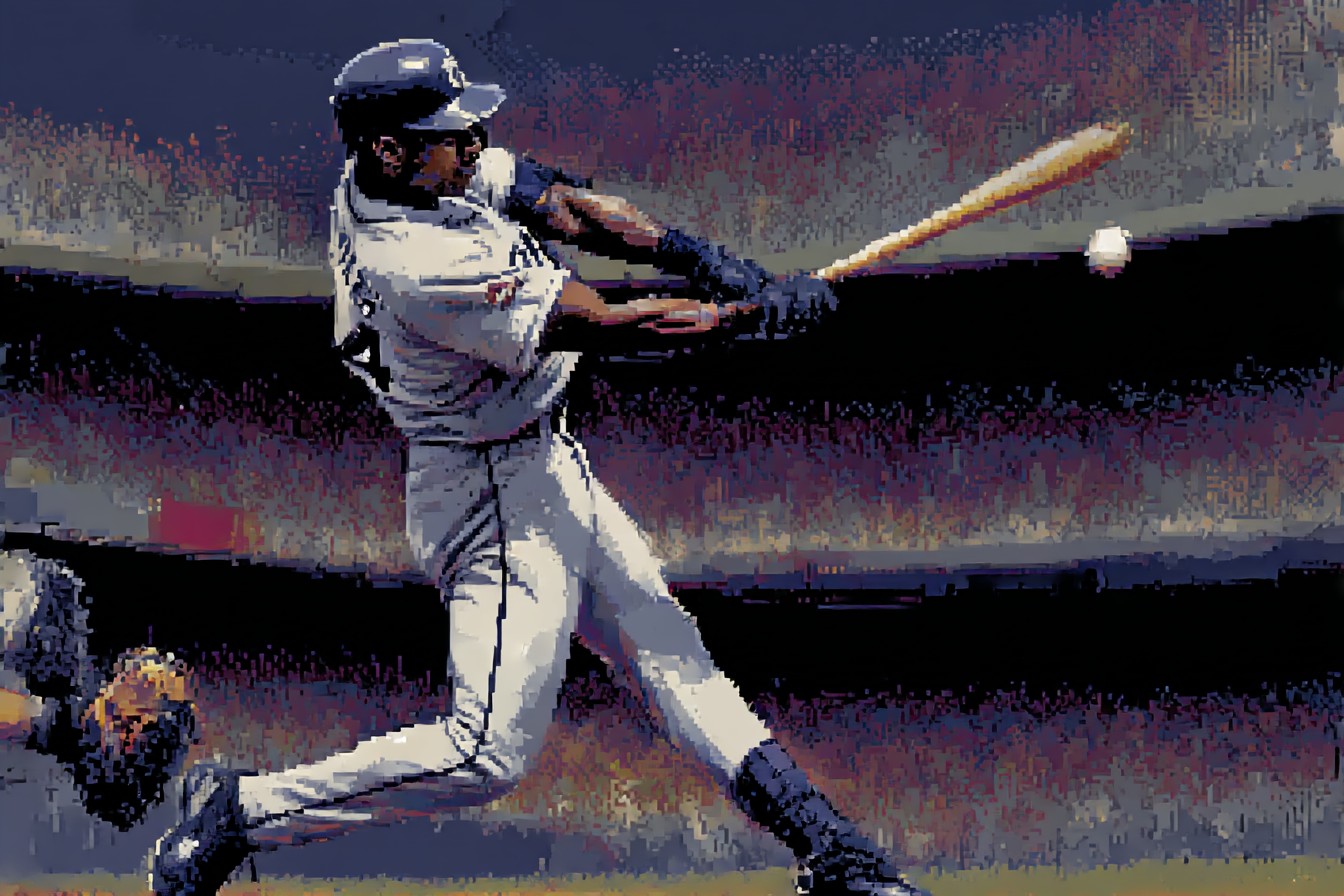
The pitch came in—I can still see it in my mind—a perfect fastball right down the middle. I timed the swing… felt that satisfying controller rumble that meant solid contact… watched the ball sail toward the fence… held my breath as the outfielder ran back… and then: gone. Walk-off grand slam. Mark just stared at the screen for about ten seconds before saying, "Best of eleven?"
That's the thing about great arcade sports games—they compress all the drama of real sport into these perfect little moments. Griffey Jr.'s Slugfest wasn't trying to simulate every aspect of baseball. It was trying to simulate the *feeling* of baseball: the tension, the timing, the pure joy of connecting bat to ball exactly right. When you nailed a home run in this game, it felt like you'd actually done something athletic, even though you were just sitting on a sofa pressing buttons.
Years later, I tried some of the more realistic baseball games. Better graphics, more authentic physics, deeper career modes. They were impressive, sure, but they never captured that arcade magic. Sometimes I wonder if my dad would've understood those games better—all that statistical depth and strategic complexity. But I'm glad we had Slugfest. It taught me that sports games don't have to be simulations to be brilliant. Sometimes they just need to make you feel like a hero, one perfect swing at a time.
These days, when people ask me about N64 sports games, they usually mention FIFA or NBA Hangtime. Fair enough—both classics. But give me Ken Griffey Jr.'s Slugfest any day. It's the game that made me understand why Americans call baseball their national pastime, and why my dad finally got video games. Sometimes the best teacher isn't the most realistic one—it's the one that makes learning feel like pure, ridiculous fun.



