There's something almost mythical about the Sega Genesis Nomad that makes me smile every time I spot one at a retro gaming convention. Picture this: it's 1995, and while Nintendo's pushing the Virtual Boy (yeah, that happened), Sega drops this absolute unit of a handheld that can play full Genesis cartridges. Not cut-down versions. Not "special editions." The actual, honest-to-goodness 16-bit games that were melting faces on TV screens worldwide.
I remember the first time I held one at Electronics Boutique. The weight caught me off guard—this thing felt substantial in a way that made the Game Boy seem like a toy by comparison. And honestly? That's because it basically was a shrunk-down Genesis with a screen bolted on top. The engineering was bonkers in the best possible way.
The screen itself deserves its own paragraph because, wow, what a thing of beauty for the mid-90s. That backlit LCD display was proper sci-fi stuff when most of us were still squinting at grey-green Game Boy screens under streetlights. Sonic 2 running in full color on a handheld? My teenage brain couldn't quite process it. The contrast wasn't perfect—nothing was back then—but seeing those rolling Green Hill Zone loops in actual color while sitting on a bus was like glimpsing the future.
Battery life, though… oh man. Six AAs to feed this beast, and it'd chomp through them like I used to demolish sherbet dips. You'd get maybe two hours if you were lucky, maybe three if you turned the brightness down and played something that wasn't trying to push every sprite the system could manage. Streets of Rage 2 was basically a death sentence for batteries. Worth it? Absolutely. Practical for long journeys? Not unless you packed more batteries than clothes.
The real genius of the Nomad wasn't just that it existed—it's that Sega had the absolute audacity to make it exist. Think about the timeline here. The Saturn's already out in Japan, the 32-bit generation's kicking off, and Sega's like, "You know what? Let's make a portable version of our six-year-old system." In any other context, that sounds mental. But this was Sega being Sega—weird, wonderful, and weirdly ahead of their time.
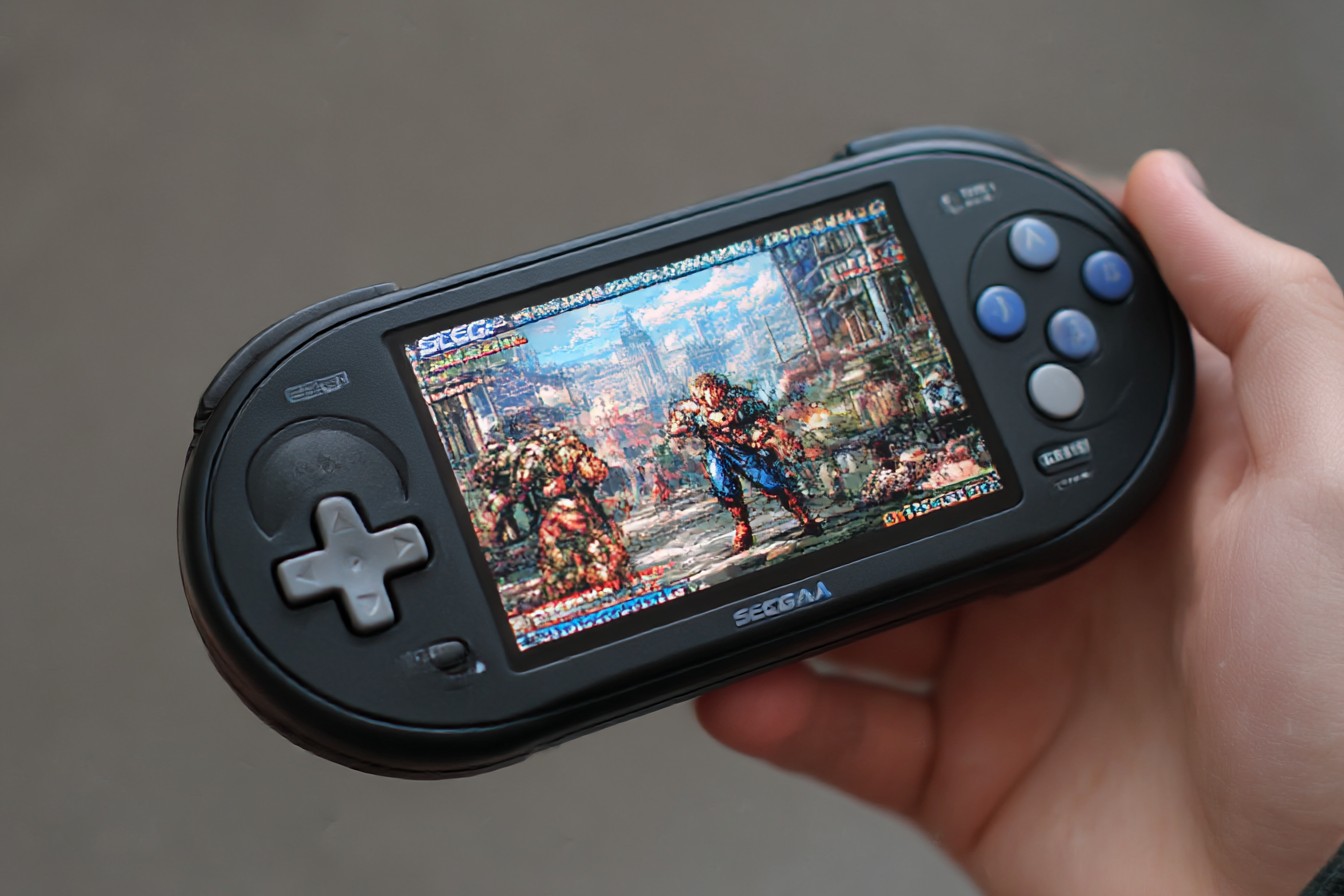
What blew my mind then (and still does now) is how they managed to cram everything into that form factor. The Yamaha sound chip's in there, pumping out those distinctive Genesis tunes through tiny speakers that somehow didn't sound terrible. The graphics processing held up remarkably well on the smaller screen. Even the six-button controller layout worked, though your hands needed a few sessions to adjust to the cramped button arrangement.
I ended up borrowing one from my mate Dave for a summer holiday in Cornwall back in '96. Packed Gunstar Heroes, Contra Hard Corps, and Shinobi III—basically guaranteed to murder any set of batteries within hours. But sitting on a Cornish beach, blasting through Treasure's finest while my parents argued about where we'd parked the car? Pure magic. The sun glare made it nearly impossible to see anything, but that didn't stop me trying.
The cartridge slot was proper Genesis-sized too, which meant compatibility was essentially perfect. No mucking about with special adapters or cut-down versions. If it worked on your home console, it worked on the Nomad. That's the sort of straightforward engineering that feels almost quaint now, when everything needs dongles and updates and seventeen different subscription services just to function.
What's fascinating is how the Nomad predicted gaming's future in ways nobody really appreciated at the time. Portable console gaming with full home console experiences? That's basically what the Steam Deck's doing today, just with about three decades of technological evolution behind it. The DNA's identical—take the big powerful thing, make it portable, accept the compromises in battery life and screen quality because mobility trumps everything else.
The build quality was typical Sega—solid where it mattered, occasionally questionable in the details. The d-pad felt right, the buttons had decent travel, but that screen hinge… let's just say it wasn't designed for the sort of abuse most handhelds endure. I've seen more than one Nomad with a wonky screen assembly, though to be fair, these things are pushing thirty years old now.
Playing it now, through the lens of modern gaming, the Nomad feels simultaneously primitive and prophetic. The screen's tiny by today's standards, the battery life's laughable, and the whole thing weighs more than my current phone. But there's something pure about the experience. No internet connection required, no day-one patches, no microtransactions. Just you, a cartridge, and however many batteries you remembered to pack.
The library, of course, is the Genesis library, which means you've got access to some of the finest 16-bit gaming ever created. Sonic games that still feel fast, shoot-'em-ups that still challenge, RPGs that still tell compelling stories. The Nomad didn't need exclusive games because it had decades of proven classics to draw from.
Collecting-wise, the Nomad's become something of a white whale for retro enthusiasts. Working units in decent condition aren't exactly common, and when they do show up, they're priced like the rare beasts they've become. The screen ribbons are notorious for failing, the battery compartments corrode if you're not careful, and finding one with a screen that isn't either too dim or suffering from dead pixels is increasingly tricky.
But when you do find one in good nick, and you slot in your favorite Genesis cartridge, and that familiar Sega logo chimes through the tinny speakers… it's time travel. Pure and simple. The Nomad represents this beautiful moment in gaming history where ambition met engineering in the most wonderfully bonkers way possible. It shouldn't have worked. It definitely shouldn't have been commercially viable. But it existed, it was brilliant, and it proved that sometimes the craziest ideas make the most sense.
That's Sega for you—never quite fitting the mould, always pushing boundaries, occasionally creating something truly special in the process.



