My mate Terry knocked on our door one Saturday afternoon in '97, clutching a copy of Duke Nukem 64 like it was contraband. Which, honestly, it might as well have been in our house. Mum had already banned Mortal Kombat after catching me practicing Scorpion's fatality on my younger sister's Barbie dolls—apparently "Get over here!" loses its charm when shouted at teatime.
"Your parents home?" Terry whispered, even though he could clearly see Dad mowing the back garden through our kitchen window.
The thing about Duke Nukem 64 was that it arrived during this weird period where console gaming was trying to figure out what it wanted to be when it grew up. The PC crowd had been enjoying Duke Nukem 3D's particular brand of testosterone-fueled chaos for over a year, but bringing that attitude to Nintendo's family-friendly box? That felt like sneaking a hip flask into Sunday school.
I'd played the original on my cousin's 486 during one of those summer holidays where you spent more time waiting for levels to load than actually playing them. Even then, Duke's one-liners felt revolutionary. Not because they were particularly clever—let's be honest, most of them were about as sophisticated as graffiti on a motorway bridge—but because they gave games permission to be stupid in a way that felt deliberate. Before Duke, video game characters either stayed silent or delivered exposition like they were reading the evening news. Duke talked like he was having a laugh down the pub, if the pub happened to be full of alien invaders and explosive barrels.
The N64 version though? That was something different entirely. Nintendo had this reputation to maintain, see. The Big N didn't just make consoles; they were the gatekeepers of wholesome family entertainment. Their seal of approval meant something to parents who'd rather buy their kids an expensive plastic brick than risk exposing them to whatever moral corruption lurked in the shareware scene.
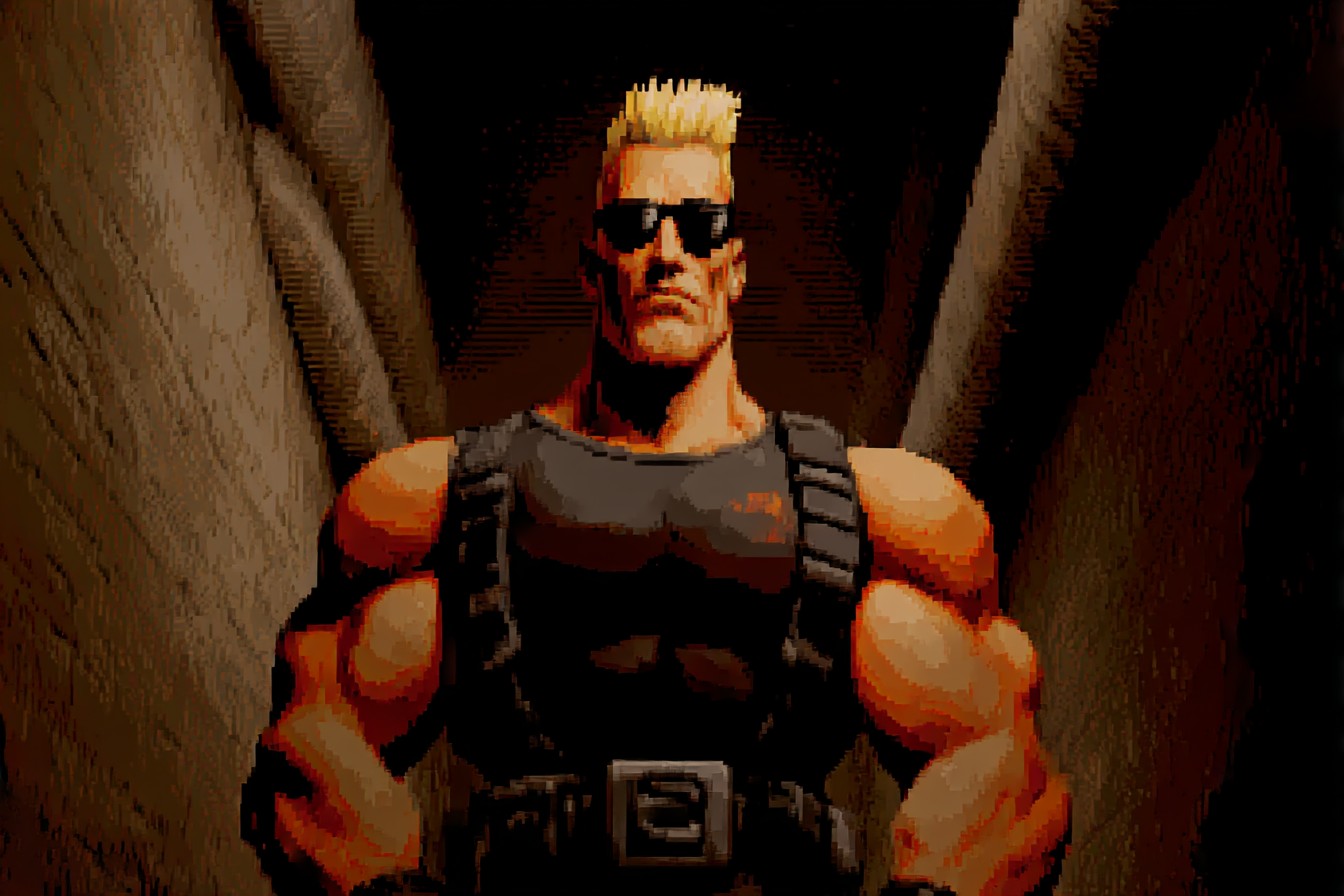
So when Eurocom and 3D Realms started porting Duke to the 64, they faced this impossible challenge: how do you squeeze a deliberately offensive, knowingly crude, gleefully inappropriate action hero through Nintendo's content filters without losing everything that made him worth playing?
The answer was surgical precision with a sledgehammer. They kept the core gameplay—the satisfying thunk of the shotgun, the physics-defying rocket launcher, the sheer joy of finding a hidden room stuffed with health-restoring atomic batteries. But they sanded down the rough edges until Duke sounded less like a construction worker on a stag do and more like… well, a construction worker on a stag do who'd been asked to mind his language around the vicar's wife.
Gone were the strip clubs. The adult bookshops became… regular bookshops, I suppose? The poster girls got clothes. Duke's vocabulary got a wash and brush-up that left him sounding oddly polite, like someone's older brother trying to impress their girlfriend's parents. "Come get some!" became the new "Hail to the king, baby!"—still aggressive, but in that playground way that stops just short of getting you detention.
Playing it felt weird at first. I mean, we all knew what they'd done. Every kid who'd heard whispered stories about the PC version could spot the gaps where the controversy used to live. It was like watching an action film on ITV at Sunday teatime—you could feel the edits, see the shape of what had been cut away.
But here's the thing that surprised me: it still worked. Stripped of its most obvious shock value, Duke Nukem 64 revealed something that the moral panic crowd had missed entirely. Underneath all that manufactured outrage was actually a pretty decent shooter. The level design was clever—interconnected areas that rewarded exploration, secrets hidden behind walls that looked just different enough to make you suspicious. The weapons felt hefty in a way that few N64 games managed. That controller rumble when you fired the devastator? Like holding a small earthquake.
The graphics pushed the N64 harder than most games dared. Those texture-mapped environments looked properly industrial, all concrete and steel and flickering fluorescent lights. Duke himself moved with this swaggering confidence that the limited polygon count somehow made more convincing, not less. Sometimes technical limitations force developers to focus on what really matters—and what mattered in Duke was the feeling that you were an unstoppable force of nature in steel-toed boots.
My parents never quite figured out what they were looking at when I played it. To them, Duke looked like any other space marine shooting any other collection of weird monsters. The alien designs were gross enough to justify the violence, cartoony enough to avoid nightmares. Dad actually watched me play through a few levels one evening, commenting on the "decent graphics" and asking why all the enemies looked like "something from a Hammer Horror film." If he'd seen the original version… well, let's just say our Saturday afternoon gaming sessions might've ended rather abruptly.
The multiplayer was where Duke 64 really came alive. Four-player split-screen deathmatches that turned our living room into a war zone of shouted accusations and desperate controller mashing. "Hollywood Holocaust" became our Facility, "Toxic Dump" our Complex. We developed our own house rules—no camping the devastator spawn, no hogging the jetpack, and absolutely no unplugging someone's controller during a tight match (looking at you, Simon).
Those sessions taught me something important about the nature of controversy in games. Strip away the surface-level shock tactics and you're left with the mechanics underneath. Duke Nukem 64 worked as a multiplayer arena not because of its attitude but because of its fundamentals—tight controls, balanced weapons, cleverly designed maps that rewarded both aggression and cunning.
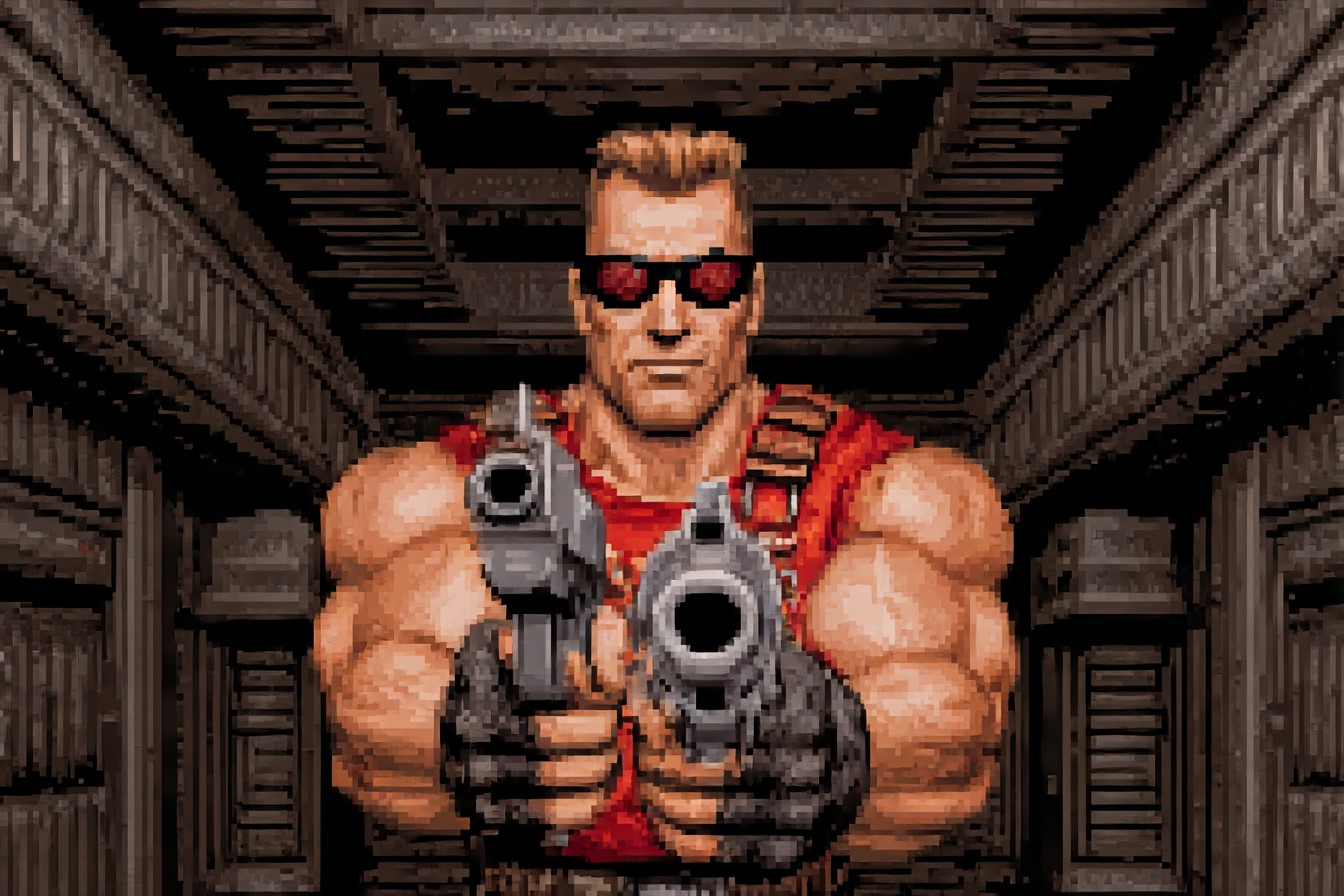
The irony wasn't lost on any of us that Nintendo's censorship had accidentally created the definitive console version of Duke Nukem 3D. By forcing the developers to focus on gameplay over gratuitous content, they'd produced something that felt more complete, more polished than its anarchic older brother. Sometimes limitations breed creativity in ways that total freedom never could.
Years later, I'd discover that Duke Nukem 64 had become something of a cult classic among retro gaming enthusiasts—not despite Nintendo's interference, but because of it. It proved that great game design could survive any amount of corporate sanitization. The swagger was still there, just dressed up in its Sunday best.
Looking back now, Duke Nukem 64 feels like a fascinating historical artifact—a snapshot of an industry trying to grow up while still appealing to its core audience of sugar-fueled teenagers. It showed that controversy, real or manufactured, was never the point. The point was always the game underneath.
And sometimes the game underneath was pretty damn good, even when it had to mind its language.