Something weird happened the other night. I was sorting through a box of old Genesis carts—you know how it is, just meant to grab Streets of Rage 2 for a quick nostalgia hit—when I found my copy of Castlevania: Bloodlines wedged behind some Ecco the Dolphin nonsense. The plastic was slightly yellowed, that distinctive cream that screams "I've lived through the Clinton years," and suddenly I'm sixteen again, arguing with my mate Dave about whether the Genesis could really handle Konami's gothic masterpiece.
See, here's the thing about Bloodlines that nobody talks about enough: it shouldn't have worked. Not on Sega's black plastic beast, anyway. The Mega Drive was built for speed—Sonic's loops, Streets of Rage's punches, anything that could show off that Yamaha sound chip's metallic crunch. Slow, methodical vampire hunting with intricate sprite work and atmospheric dread? That was Nintendo territory, right? Super Castlevania IV owned that space with its Mode 7 swinging and orchestral samples that made your SNES sound like a tiny symphony.
But Konami, mad bastards that they were, looked at the Genesis and said "hold my sake." They gave us Eric Lecarde with his spear (finally, something that wasn't a bloody whip) and John Morris with his traditional Belmont leather. Two hunters, six stages across Europe, and enough gothic atmosphere to make your mum peek over her newspaper and ask if you were "playing something nasty again."
I remember the exact moment Bloodlines clicked for me. First stage, Transylvania—obviously—and that opening music hits. Not the tinny bleeps you'd expect from a 16-bit Dracula tribute, but this driving, urgent melody that the YM2612 somehow made sound both metallic and majestic. Dave was round for the weekend (his Saturn had died, RIP), and we're both just staring at this thing unfold. The backgrounds weren't just pretty—they were alive. Gears turning in the clockwork mechanisms, water flowing down ancient stone, flames that actually flickered instead of just cycling through three frames like budget animation.
The spear changed everything, though. Eric's weapon wasn't just a palette swap of Simon's whip—it played completely differently. Longer reach, different arc, you could thrust it straight ahead like a proper medieval pikeman. I spent hours in that first castle just getting the feel for it, the way it extended and retracted with this satisfying weight. It felt like Konami actually understood that variety wasn't just about graphics; it was about how your thumbs interacted with the world.
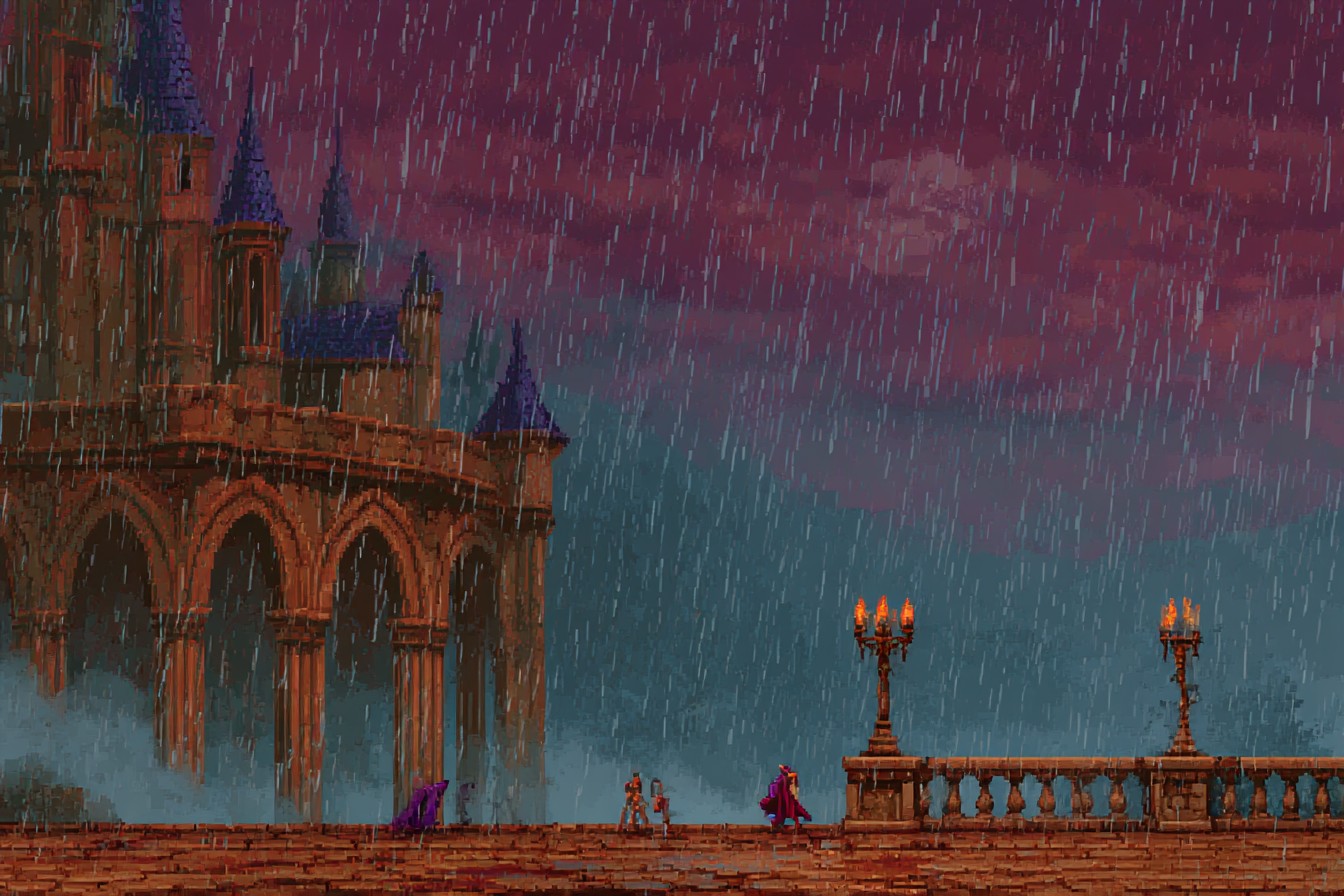
And Christ, those boss fights. The Gear Steamer in the second stage—this massive mechanical monstrosity that filled half the screen—felt impossible until you learned its rhythm. That's Castlevania DNA right there: pattern recognition dressed up as supernatural horror. But on Genesis, everything had this slightly sharper edge, literally. The sprites were more angular, the sound effects had that FM synthesis bite that made every whip crack feel like it could cut glass.
Dave preferred John Morris, said the whip felt "more authentic." Fair enough, but he was missing the point. Bloodlines wasn't trying to be authentic Castlevania—it was trying to be the best Genesis could offer. The graphics pushed the hardware in ways that made Altered Beast look like a tech demo. Those multi-layered backgrounds, the way foreground elements would scroll at different speeds, the sheer amount of stuff happening on screen without slowdown—this was Konami flexing.
The European setting helped too. Instead of yet another Dracula's castle (though we got that as well, obviously), we're traipsing through the Leaning Tower of Pisa, dodging falling masonry while skeleton knights try to lance us. The Tower stage is still burned into my retinas—the way the whole level tilted and shifted as you climbed, making platforming feel genuinely precarious. Not Mode 7 precarious like SNES games, but mechanically clever in that distinctly Genesis way where everything felt like it was held together with smart programming and sheer bloody-mindedness.
The difficulty curve was proper Castlevania too—brutal but fair, if you bothered to learn. Dave never did learn, spent most of our sessions cursing at the Atlantis sinking ship level while I tried to explain that yes, you have to time the jumps with the tilting deck. "It's like Sonic," I kept saying, "but gothic." He didn't buy it, but I still think I was right. Bloodlines had that momentum-based feel that made the Genesis special, just applied to methodical monster hunting instead of loop-de-loops.
Playing it now, decades later, it's wild how much personality Konami squeezed into those 16 bits. The way Eric's coat flutters when he jumps, the satisfying chunk sound when John's whip connects, the absolutely mental final boss that I won't spoil but involves more tentacles than any teenager should have to process. It feels distinctly different from every other Castlevania, like they took the formula and ran it through the Genesis's particular brand of 16-bit weirdness.
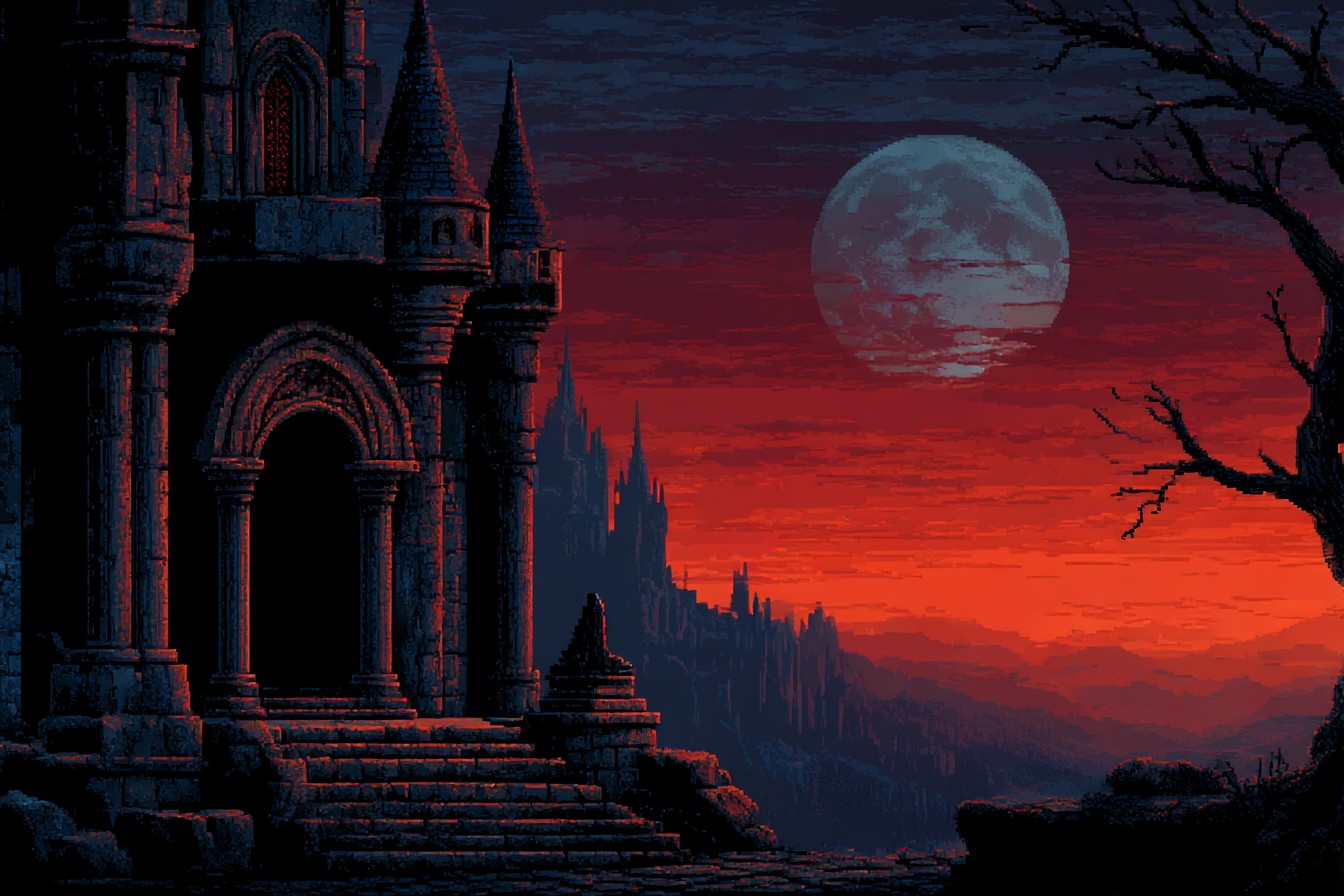
The music deserves its own paragraph, honestly. Michiru Yamane's compositions filtered through that YM2612 sound chip created this unique atmosphere—not quite the orchestral grandeur of Super Castlevania IV, not the chiptune charm of the NES originals, but something altogether more aggressive. The Reincarnated Soul track from the final stage still gives me goosebumps, this driving melody that sounds like prog rock played through a haunted FM radio.
These days, I fire up Bloodlines on my MiSTer—yeah, I'm one of those FPGA purists now, sue me—and it's remarkable how well it holds up. The controls are still tight, the graphics still impressive, the challenge still perfectly calibrated to make you feel clever when you finally nail that tricky section. My kid tried it last month, bounced off the difficulty like most modern gamers do with 90s Konami games, but I saw that moment of recognition when the music kicked in during the first boss fight. That's the hook right there.
Bloodlines proved the Genesis could handle slow-burn, atmospheric gaming just as well as its blue blur mascot. It wasn't trying to be Super Castlevania IV, and thank god for that. Instead, it was uniquely itself—sharp-edged, mechanically interesting, and absolutely gorgeous in ways that only 16-bit pixel art can be. Sometimes the best ports aren't ports at all, but completely new interpretations of what made the original special.
Still got that yellowed cartridge, by the way. Works perfectly, naturally. They don't make them like that anymore.



