There's something oddly therapeutic about organizing old game boxes by chronology, which is exactly what I found myself doing last weekend when my wife politely suggested the loft needed "a proper sort." Between dusty cardboard and that peculiar smell of aging plastic, I ended up tracing Sega's entire console journey from the Master System right through to the Dreamcast's final bow. Amazing how holding these machines again brings back the specific weight of each controller, the particular click of each power switch.
My first encounter with Sega happened through a mate's older brother who'd somehow convinced his parents that the Master System was "educational." The box art for Alex Kidd in Miracle World made it look like Disney had gone mental with a martial arts film, and honestly? That wasn't far off. The built-in game meant instant gratification – no cartridge faff, just power on and you're punching rocks. I remember being fascinated by the card system; felt like cheating but in a sophisticated way, like the console was teaching you about probability theory while you jumped on platforms.
The three-button controller was chunky enough to use as a doorstop, but it had this satisfying heft that made every button press feel important. Plus, the Light Phaser looked properly futuristic – none of that orange toy nonsense Nintendo forced on us. Playing Hang-On in the arcade then coming home to the Master System version felt like magic, even if the bike was now a rectangle and the road looked like it had been drawn with a ruler.
But let's be honest – the Master System was always fighting an uphill battle against Nintendo's stranglehold on the market. Sega's answer? Go bigger, go faster, go louder. Enter the Mega Drive in 1990, and suddenly my living room sounded like a nightclub had exploded in a good way. That Yamaha sound chip didn't just make music; it made statements. Streets of Rage 2's soundtrack could wake the dead, and probably did wake our upstairs neighbors on more than one occasion.
The six-button controller was pure genius wrapped in ergonomic perfection. I've still got muscle memory for Street Fighter II inputs on that pad – the spacing between buttons felt like it was designed by someone who actually played fighting games rather than someone who'd read about them in a manual. And Sonic? Look, I know Mario came first, but there was something about Sonic's attitude that felt properly rebellious. He had personality dripping from every pixel, and when you hit those loop-de-loops in Green Hill Zone, it felt like speed had been distilled into pure joy.
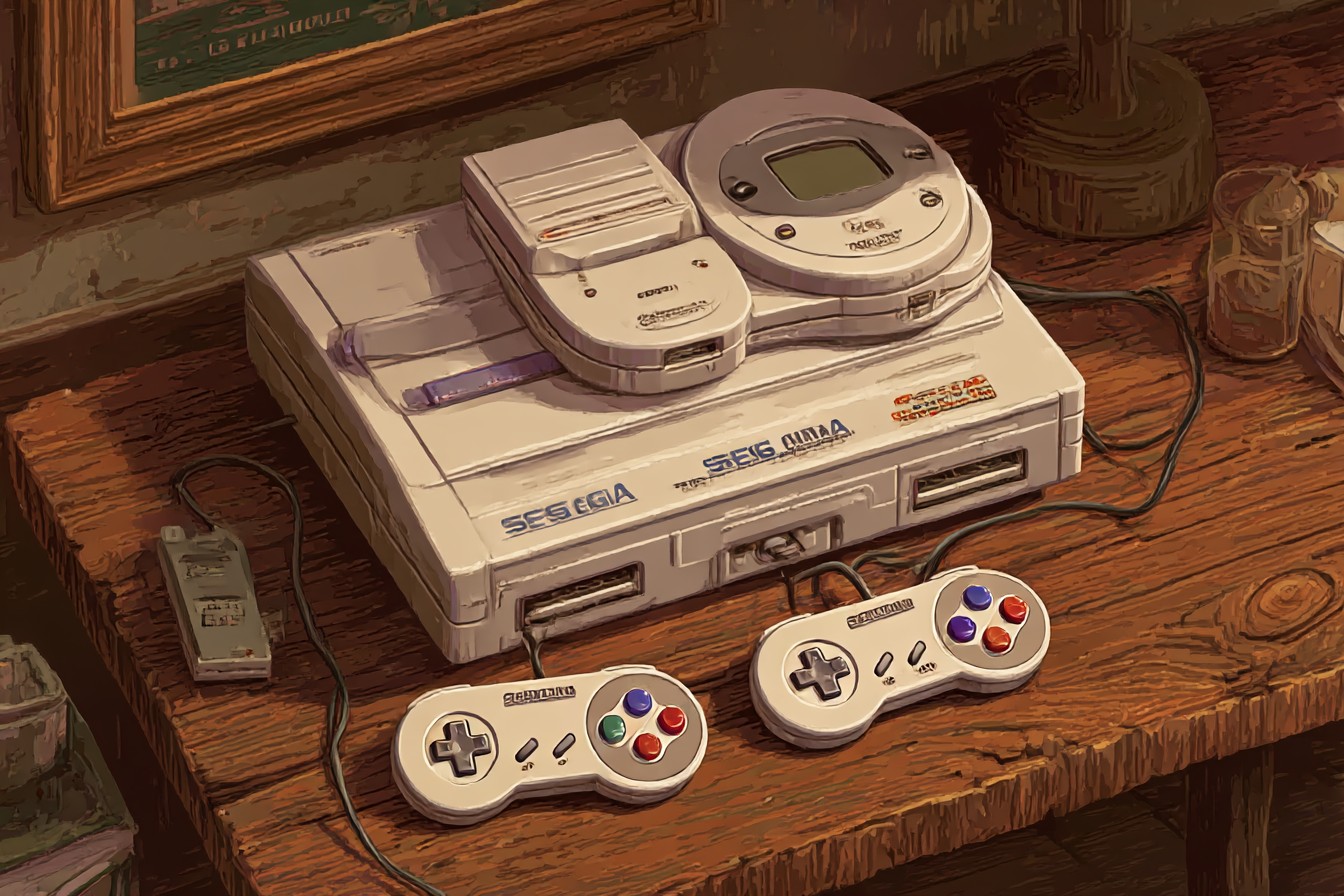
The Mega-CD seemed like science fiction when it landed. Actual CD quality audio! Video cutscenes! Storage capacity that made cartridges look like Post-it notes! Never mind that half the games were barely interactive movies – we were living in the future, and the future had orchestral soundtracks. Night Trap caused moral panic among parents who'd apparently never seen a B-movie, while Sonic CD gave us time travel and a soundtrack that still makes me want to run through shopping centers at inappropriate speeds.
Then Sega did something completely mad and released the 32X. Even at the time, it felt like a desperate move – this massive black mushroom that sat on top of your Mega Drive like some kind of technological parasite. The games looked impressive enough, but you needed the base console, the add-on, separate power supplies, a forest of cables, and the patience of a saint to get everything working. Virtua Racing looked phenomenal, though. Those flat-shaded polygons seemed impossibly smooth compared to anything we'd seen on home hardware.
The Saturn arrived like a beautiful disaster. Here was a machine that could make 2D graphics sing – seriously, the sprite handling was gorgeous – but it launched into a world that had decided polygons were the only thing that mattered. The dual-CPU setup made it a nightmare to program, but when developers got it right, you'd get something like Panzer Dragoon that looked like concept art come to life. The controller was perfect for 2D fighters, with a d-pad that made quarter-circle motions feel like poetry.
I imported so many Saturn games it became embarrassing. Radiant Silvergun, Guardian Heroes, Dragon Force – the Japanese library was stuffed with gems that never made it west. The import scene taught me about region modifications and swap discs, turning console gaming into a proper hobby rather than just entertainment. Loading times were brutal, mind you. Making a cup of tea during Sega Rally's startup became ritual.
But the Dreamcast – ah, now that was Sega's final love letter to gaming. It arrived in 1999 looking like it had been designed by aliens who actually understood fun. The VGA adapter meant crystal-clear visuals on a PC monitor, which was revolutionary when most consoles still thought composite was acceptable. That little screen in the controller wasn't just showing off – the VMU made portable gaming feel integrated rather than separate.
Crazy Taxi with The Offspring blasting while you launched taxis off bridges? Perfect. Soulcalibur making everyone's jaw drop with graphics that seemed impossible on home hardware? Legendary. And Shenmue – despite its reputation for forklift driving and asking about sailors – created a living world that felt more real than reality sometimes. The attention to detail was obsessive: you could open every drawer, inspect every can of soda, waste entire afternoons playing arcade games within your arcade game.
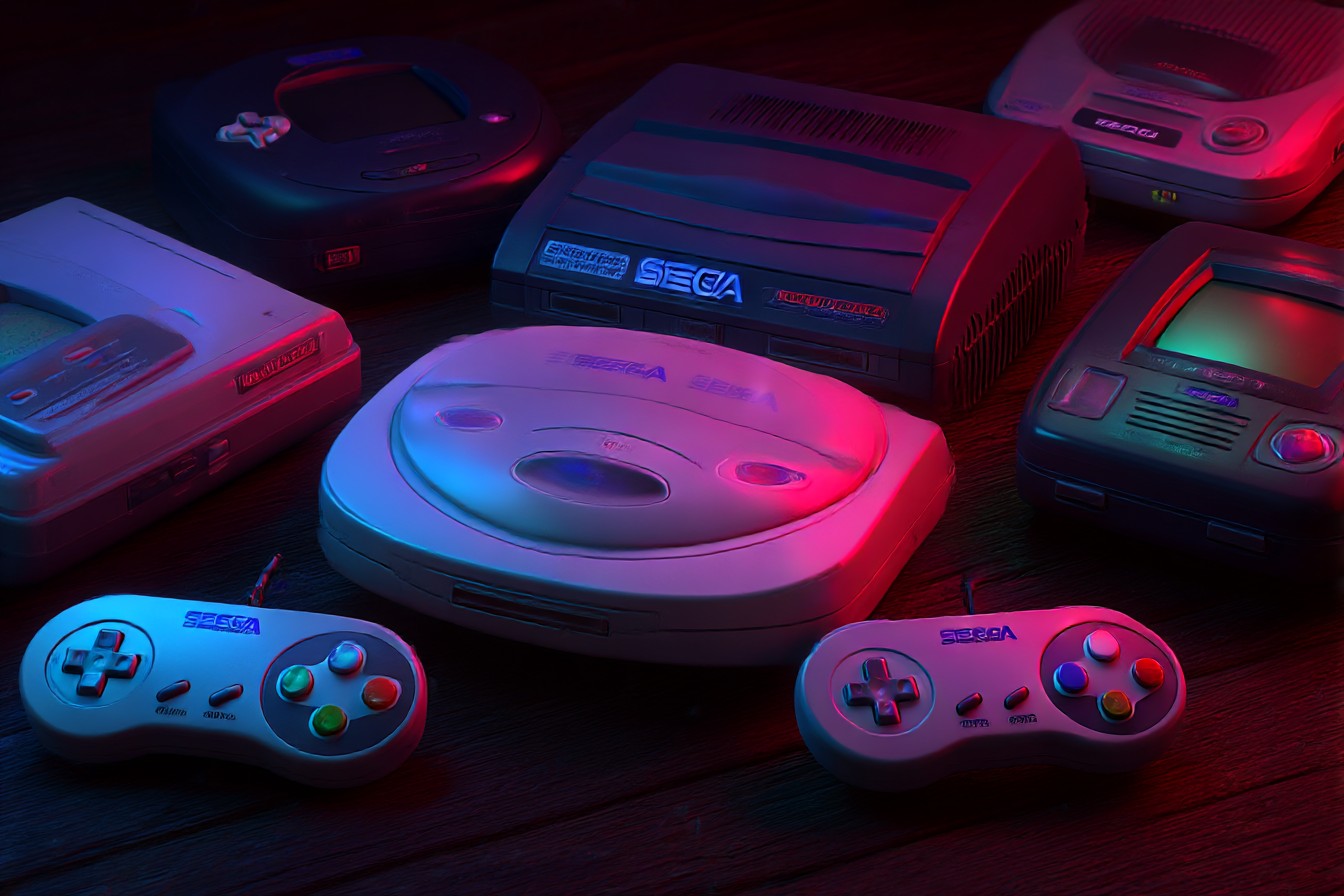
The built-in modem was properly ahead of its time. Phantasy Star Online showed us what online console gaming could be, complete with all the social dynamics that would dominate gaming for the next two decades. I spent embarrassing amounts of time in that game, not just playing but chatting with people from different continents about drop rates and rare weapons. The community felt intimate in a way that massive modern online games never quite capture.
What strikes me most about Sega's console era is how willing they were to take risks. Sometimes spectacularly wrong risks, sure, but at least they were interesting failures. Every machine had personality, usually too much personality for its own commercial good. They never quite cracked Nintendo's family-friendly appeal or Sony's mainstream success, but they created hardware that felt properly distinct.
These days, I fire up my Dreamcast more than I probably should, usually late at night when the house is quiet and I can appreciate the soft hum of the GD-ROM drive. There's something poignant about playing the final console from a company that tried so hard to be different. Sega's arcade DNA never quite translated to living room dominance, but by god, they made the journey interesting.
Each of these machines sits in my collection now like a chapter in gaming's most ambitious autobiography – flawed, fascinating, and absolutely irreplaceable.



