Looking back at those chunky CRT monitors and wondering exactly what we were staring at for hours on end? The numbers might surprise you—or maybe they'll make you feel ancient. Either way, let's talk pixels.
I was cleaning out my old tech drawer last weekend (you know, the one where cables go to die), and I found this ancient VGA cable that got me thinking about resolution. Back then, we didn't obsess over 4K or argue about HDR standards. We just knew some games looked sharper than others, and if you were lucky enough to have a decent monitor, you could actually make out what was supposed to be a face instead of a beige blur.
Most PC games in the early 90s were running at 320×240. That's it. Roughly 77,000 pixels total, which sounds laughable now, but honestly? Doom looked absolutely incredible at that resolution. I remember upgrading to a 486 DX2/66 and cranking Doom up to 640×480—doubling both dimensions meant four times the pixels, and it felt like stepping into the future. The demons looked so crisp I could practically count their polygons. Well, if they'd had polygons back then.
Console resolutions were even more interesting because they weren't really "resolutions" in the PC sense. The Super Nintendo output 256×224 for most games, though some clever developers pushed it to 512×224 for certain modes. That wider format was mostly used for text screens or special effects—I distinctly remember being blown away by the crystal-clear menus in Secret of Mana compared to the slightly fuzzier gameplay graphics.
The Mega Drive (Genesis, if you're stateside) typically ran at 320×224, which gave Sega a slight edge in horizontal detail. You could see it in games like Sonic—those background parallax layers had this crisp definition that made Nintendo's offerings look a bit soft by comparison. Not better or worse, just different. Like comparing a sharp knife to a well-worn chisel—both get the job done, but the feel is completely different.
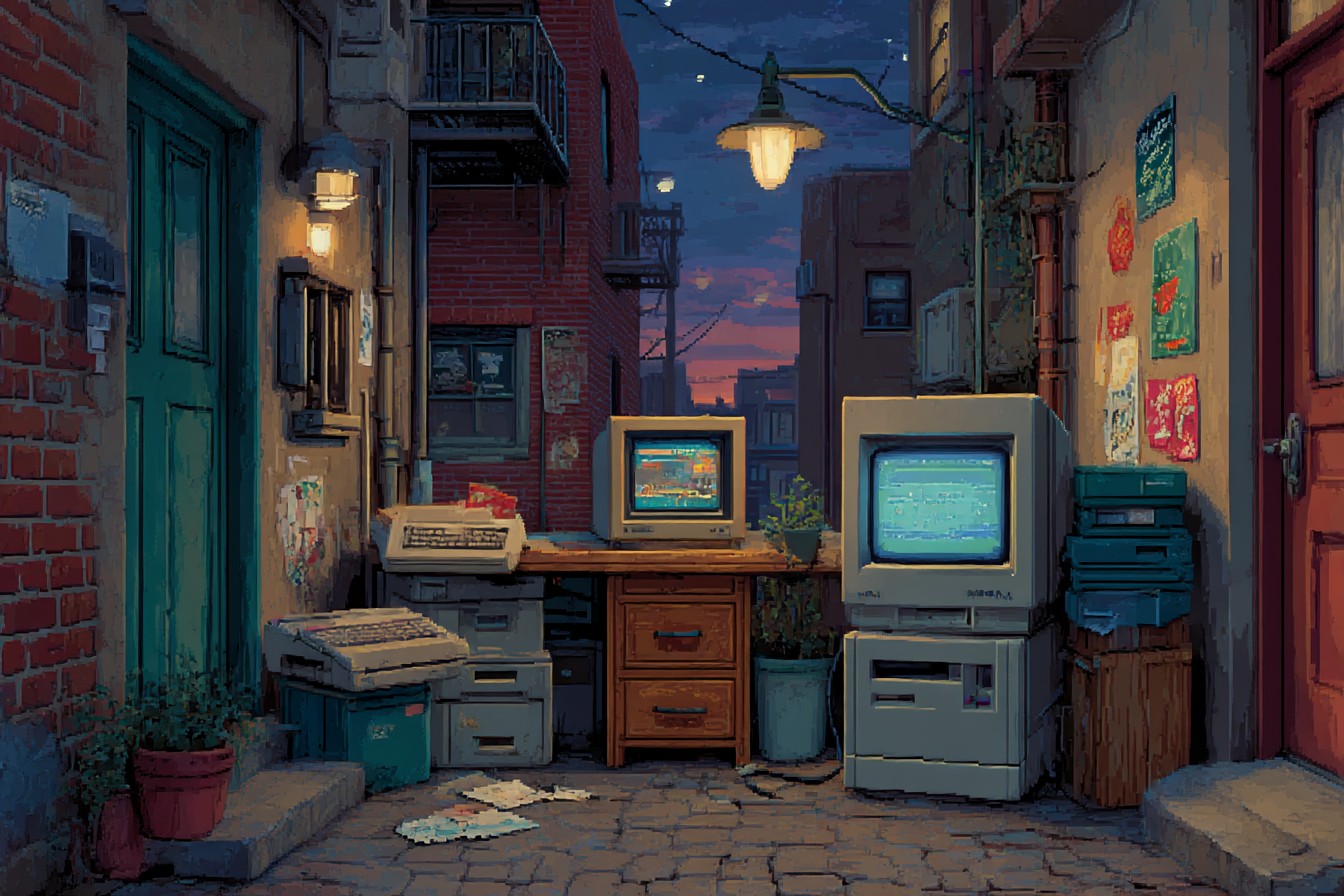
Here's where it gets properly nerdy: these weren't fixed resolutions like we think of them today. Developers could mess with scanlines, interlacing, and all sorts of display trickery. Some SNES games used Mode 7 to create pseudo-3D effects that technically weren't any higher resolution, but looked absolutely magical. Super Mario Kart's track rotation still makes my brain happy in ways I can't properly explain.
I had this ancient Commodore monitor—a 1084S, if memory serves—that could handle both composite and RGB signals. The difference between plugging in my Amiga via composite versus RGB SCART was like getting glasses for the first time. Suddenly I could read the tiny text in Monkey Island without squinting, and the pixel art in games like Shadow of the Beast revealed details I'd never noticed. Those 320×256 Amiga graphics were gorgeous when displayed properly, though getting there required more cables than a recording studio.
The transition to higher resolutions wasn't smooth, either. I remember upgrading to a 1MB graphics card (yes, one whole megabyte) that could supposedly handle 1024×768 in 256 colors. Great in theory, but most games either didn't support it or ran like they were swimming through treacle. Wing Commander at 640×480 was playable, but bump it up to 800×600 and you'd have time to make a cup of tea between frames.
DOS gaming was particularly wild because resolution support was all over the place. Some games gave you a menu of options, others were hardcoded to specific modes. I had a notebook where I'd written down which games worked at which resolutions, because there was nothing quite like booting up a new game only to discover it was locked to 320×200 and looked absolutely dreadful stretched across a 17-inch monitor.
The really clever developers found ways to make low resolutions sing. Look at something like Another World—gorgeous, atmospheric, running at 320×200 but designed so perfectly that every pixel mattered. Compare that to some lazy port that just scaled up arcade graphics without any consideration for how they'd look on a home display, and you could see the difference proper pixel art made.
Console manufacturers weren't sitting still, though. The Neo Geo was pushing 320×224 with 4,096 simultaneous colors, making everything else look pale by comparison. Those arcade-perfect conversions came at a price—literally, the games cost more than some people's entire console collections—but man, they looked incredible. Fatal Fury Special on Neo Geo versus the SNES version wasn't even a fair fight visually.
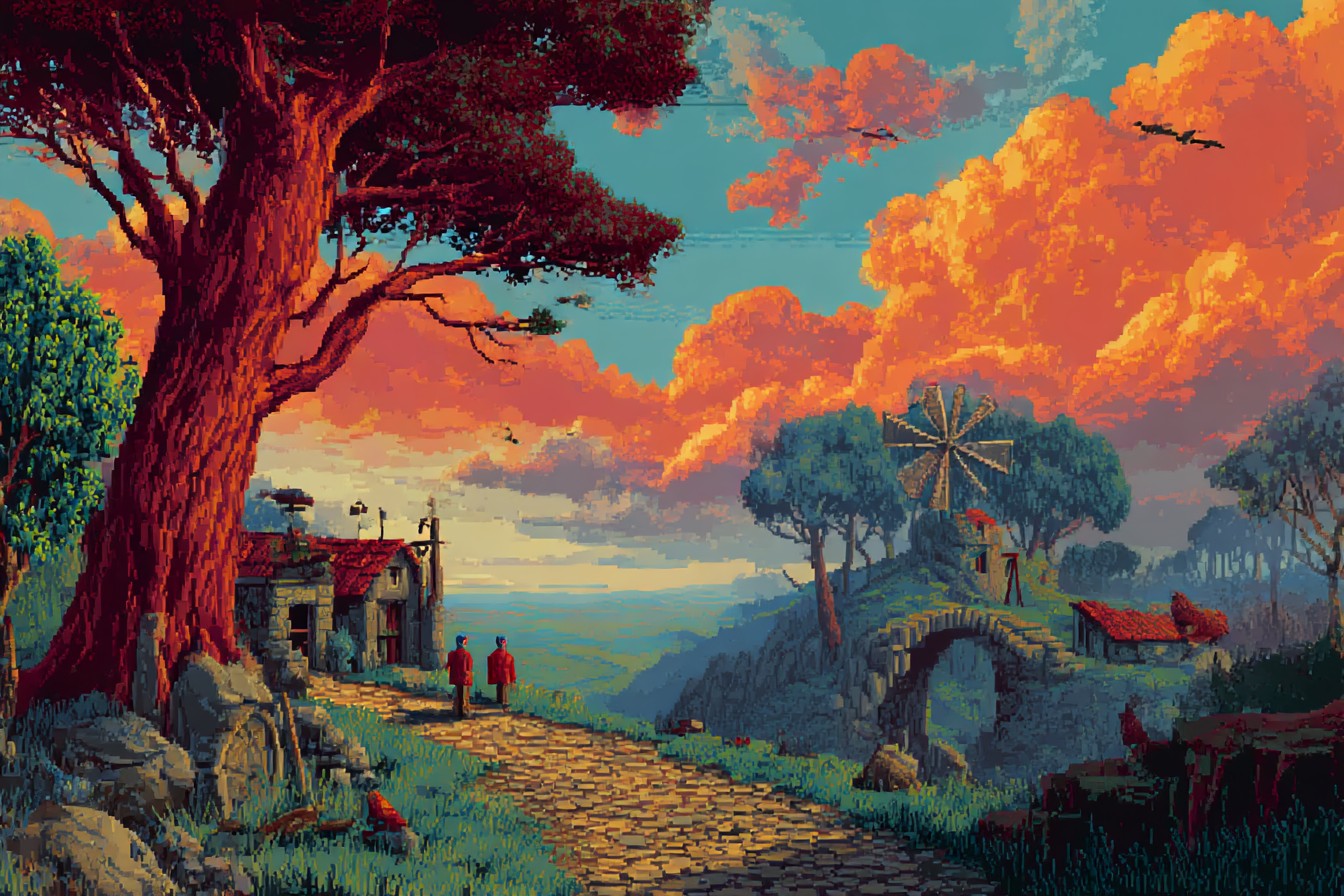
Then 1996 rolled around and changed everything. The Nintendo 64 launched with Super Mario 64 running at 320×240, but in full 3D. Suddenly, resolution became just one part of a much more complex equation. Texture filtering, polygon counts, frame rates—we had new metrics to obsess over. The Saturn could push higher resolutions in 2D games, but struggled with 3D, while the PlayStation found a sweet spot around 320×240 for most titles, occasionally dropping to 256×240 when things got hectic.
I spent way too much money on a multisync monitor that could handle everything from 15kHz console signals to 31kHz PC modes. Worth every penny, though—being able to see Tekken 3 in RGB was like discovering color television. Those character models weren't just collections of flat-shaded triangles anymore; they had depth, definition, personality.
Looking back, I think we were spoiled by the creativity those limitations forced. When you've only got 77,000 pixels to work with, every single one has to count. Modern pixel art games that deliberately restrict themselves to 16×16 sprites understand something important—sometimes the best graphics aren't the most technically impressive ones, they're the ones that make the most of what they've got.
These days, I've got a modified OSSC that can take those old console signals and display them pixel-perfectly on modern displays. Playing Super Metroid at its original 256×224 resolution, scaled up with clean 5x integer scaling, looks exactly like I remember it—which is to say, absolutely beautiful.



