The other night I was cleaning out my game room—well, it's really just the spare bedroom with too many consoles stacked on IKEA furniture—when I stumbled across my old Dreamcast VMU. That little memory card with the screen still works, by the way. Thirty minutes of Chao Adventure before the CR2032 gives up, but still. There's something poetic about Sega's last proper console being remembered through a memory card that outlasted the system itself.
I bought my Dreamcast on launch day in the UK. September 14th, 1999. I remember because I'd booked the day off work specifically, which felt ridiculous at the time but absolutely essential in retrospect. The bloke at Electronics Boutique—remember those?—handed me that white box like he was passing along state secrets. "VGA cable's extra," he said, and I nodded like I had any idea what that meant. Best £200 I spent that decade, honestly.
What hit me first wasn't the graphics, though they were mental compared to what we'd been used to. It was the speed of everything. No more sitting through PlayStation loading screens that felt like eternity wrapped in black static. The Dreamcast just… went. Pop in Crazy Taxi, straight to mayhem. No logos, no faffing about, just The Offspring screaming at you while you hurled a yellow cab through San Francisco like physics were optional.
Soulcalibur was the party trick, though. I'd drag anyone within earshot over to witness Mitsurugi's intro sequence—all that flowing fabric and particle effects running at 60fps on a home console. My mate Dave, who'd been banging on about his PlayStation for months, went quiet for about ten minutes. Just sat there watching the attract mode like it was hypnotic. "That's not possible," he kept muttering. Oh, but it was.
The online stuff felt like science fiction made real. Okay, so you needed a phone line adapter that cost more than some games, and yes, the dial-up connection sounded like R2-D2 having a breakdown, but once you were connected? Magic. Playing Quake III against strangers across the country while your mum shouted about the phone bill from downstairs—that was the future, right there in your living room.
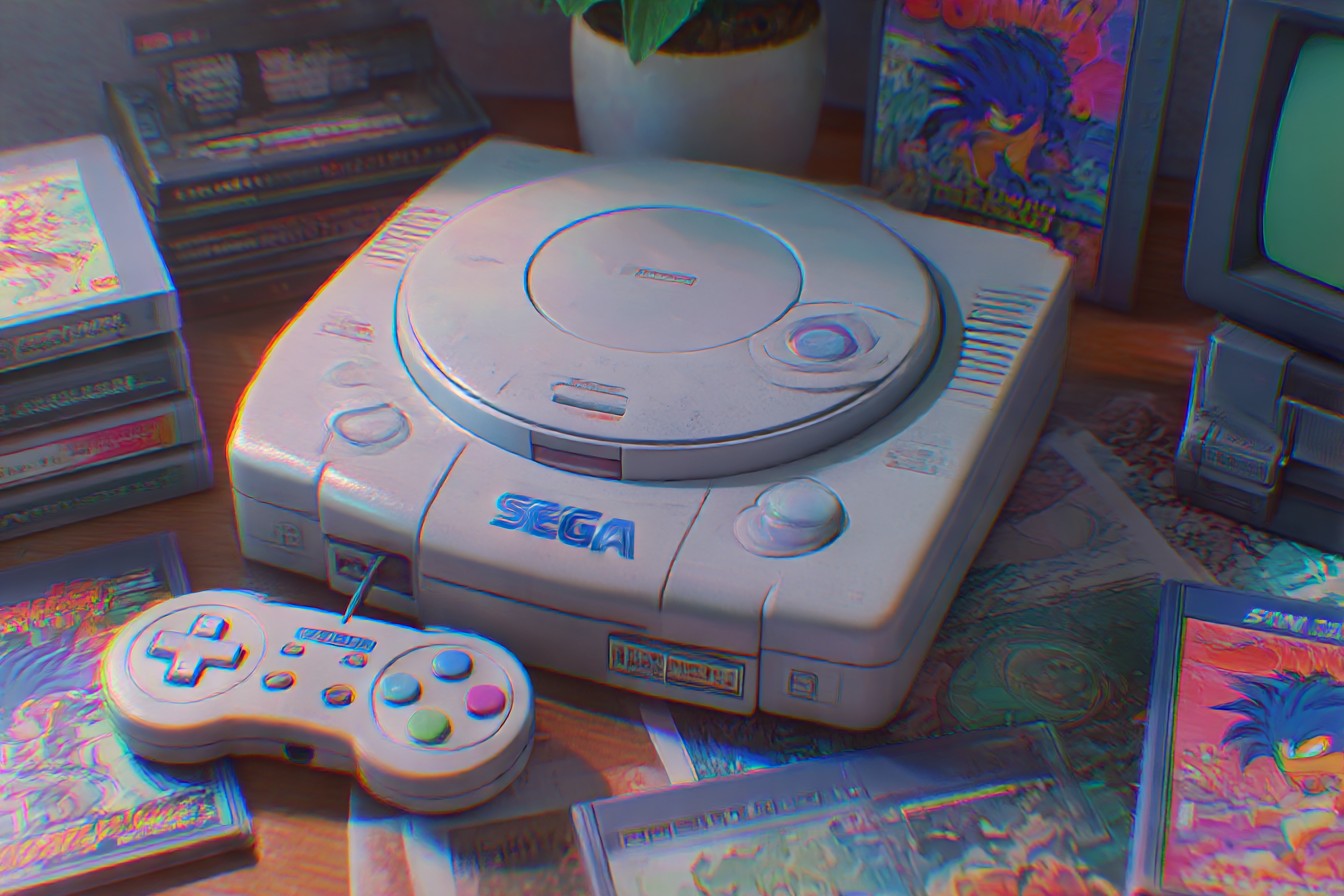
Phantasy Star Online changed everything for me, though. Not just because it was an RPG you could play with people from Japan at 2 AM (though that was brilliant), but because it proved consoles could do complex online worlds. I spent entire weekends wandering around Pioneer 2, chatting with folks whose usernames I still remember: CrimsonMage, BlueHedgehog99, that one person who always played as a FOmarl and never used voice chat. The community felt genuine in a way that modern online gaming sometimes struggles to capture.
Then there was Shenmue. Christ, where do I even start with Shenmue? I bought it expecting something like Virtua Fighter with a story mode. Instead, I got this bizarre life simulator where you could examine every drawer in Ryo's house, play Space Harrier in the arcade, and drive a forklift for what felt like hours. The attention to detail was obsessive—weather that matched real-world forecasts, shops that opened and closed on schedule, NPCs who actually seemed to have lives beyond waiting for you to talk to them.
I spent an entire Sunday afternoon just playing with the toy capsules you could win from the machines. Proper Sega figures—Sonic, Alex Kidd, characters from games I'd never even heard of. You could line them up in Ryo's room and they'd stay there, like little trophies of your dedication to wasting time in the most beautiful way possible.
The VMU was pure Sega madness, and I loved every ridiculous bit of it. Not content with just storing saves, they stuck a tiny screen on the thing and made it into a miniature Game Boy. Chao Adventure let you raise your Sonic Adventure pets even when the console was off. Completely bonkers, totally unnecessary, absolutely brilliant. I used to take mine to work and play it during lunch breaks, which probably looked mental to anyone watching me stare at a grey brick with LCD numbers.
Jet Set Radio was another revelation. Not just the cel-shaded graphics—though they still look gorgeous today—but the whole attitude of the thing. The soundtrack, the graffiti mechanic, the way it made skateboarding feel like urban rebellion rather than just another sports game. I'd spend hours just grinding rails and spraying tags, not caring about objectives, just vibing to Hideki Naganuma's electronic madness.
What kills me is how ahead of its time the whole system was. VGA output when most people still had 14-inch CRT TVs. Online gaming when broadband was something you'd heard about but never experienced. 128-bit architecture when the competition was still bragging about polygons per second. Sega wasn't just thinking outside the box—they'd left the box in another dimension entirely.
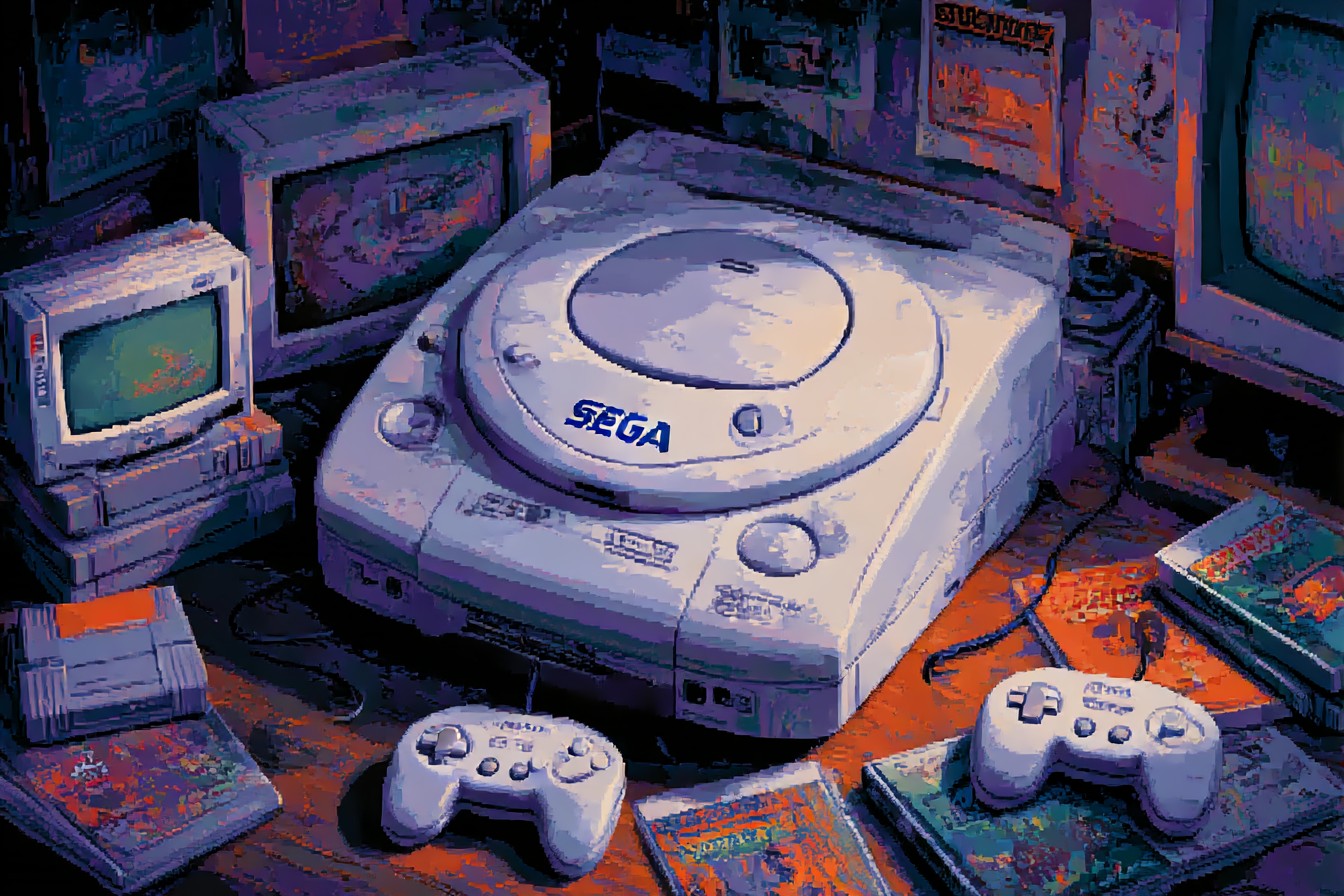
But that was always Sega's problem, wasn't it? They'd create something genuinely innovative, then watch as Sony or Nintendo took the same ideas and made them mainstream five years later. The Dreamcast had everything—DVD support planned for later models, a built-in modem, games that looked like they'd time-traveled from 2005. Yet it lasted barely two years in most markets.
I kept mine plugged in long after Sega announced they were done with consoles. Bought import games from Lik-Sang, downloaded homebrew demos from obscure websites, anything to keep the magic alive. There was something romantic about supporting a dead system—like being in a tiny, exclusive club where everyone understood why Ikaruga was worth importing even if you couldn't read the instructions.
Even now, twenty-odd years later, I fire it up occasionally. Usually when I want to show someone what passionate game development looks like, or when I need reminding that taking risks sometimes creates the most beautiful failures. The Dreamcast was Sega's love letter to gaming, written in code and burned onto GD-ROM discs that still spin like they're desperate to prove something.
It wasn't just Sega's final console—it was their final argument for why gaming needed companies willing to be weird, ambitious, and completely mental. They lost that argument commercially, but historically? I reckon they were absolutely right.



