My mate Dave had this habit of picking the weirdest games at the rental shop. While everyone else was grabbing the obvious choices—Sonic, Streets of Rage, whatever had the shiniest box art—Dave would emerge from the Genesis section clutching something called General Chaos, grinning like he'd discovered fire. I thought he'd lost his mind. The box looked like a Saturday morning cartoon had exploded all over it, complete with tiny pixelated soldiers that seemed more suited to a toy commercial than serious gaming.
Boy, was I wrong.
General Chaos turned out to be one of those beautiful accidents that only seemed to happen in the 16-bit era, when developers were still figuring out what the hell you could actually do with all those extra colors and sound channels. Game Refuge—a studio I'd never heard of before or since—had somehow crammed real-time strategy gameplay into a console that was supposed to be all about blast processing and attitude. This wasn't Command & Conquer with a joypad awkwardly bolted on. This was something entirely different, something that felt like it belonged on the Mega Drive from day one.
The premise sounds bonkers when you say it out loud: you control a squad of five commandos in top-down view, real-time battles that play out like a cross between Rambo and a particularly violent episode of G.I. Joe. Your little soldiers—each with their own specialty, from the heavy gunner to the demolitions expert—would scurry around these brilliantly detailed battlefields, shooting everything that moved while you frantically tried to keep them alive and focused on the objective. It was chaos, alright. General Chaos.
What made it work was the control scheme, which shouldn't have worked at all. You'd think trying to manage five individual units with a three-button controller would be like performing surgery with oven mitts, but Game Refuge found this sweet spot where complexity met playability. You could select all your troops, split them into groups, or micromanage individuals when the situation demanded it. The cursor moved smoothly around the battlefield, and there was this satisfying snap when you clicked on targets or waypoints. It felt… right. Natural, even.
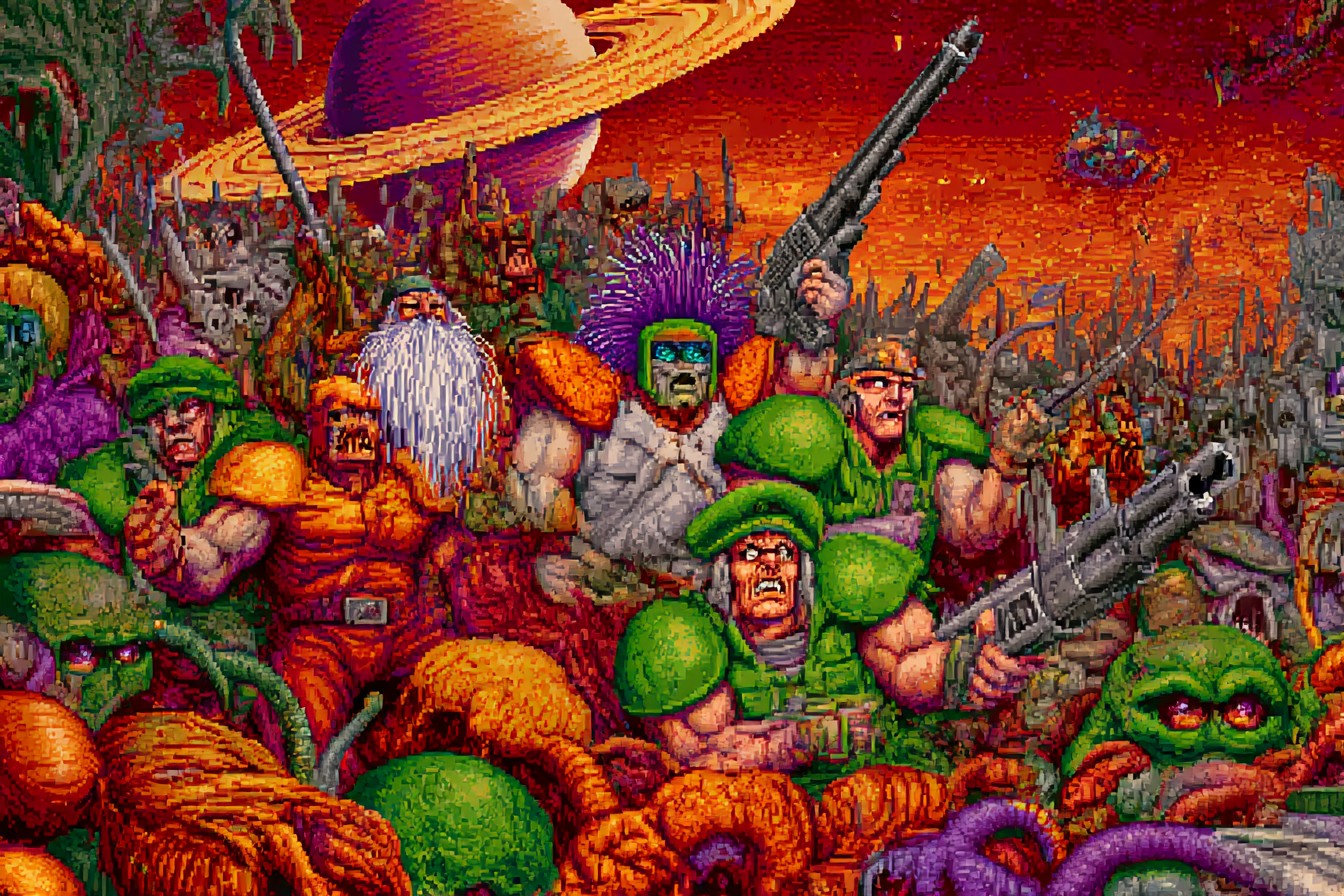
The battles themselves were pure adrenaline. Your commandos would lay down covering fire while the demolitions guy crept toward an enemy bunker, or you'd send the heavy weapons specialist to suppress a machine gun nest while the rest of the squad flanked around. When everything clicked—when your carefully planned assault actually worked—it felt like you'd just directed your own personal action movie. When it went wrong? Well, that's where the "chaos" part really earned its keep.
I remember this one mission where you had to capture an enemy airfield. Dave and I must've attempted it fifteen times that Saturday afternoon, taking turns at the controller while the other one shouted increasingly useless advice. "Send the flamethrower guy around the back!" "No, you need to take out that guard tower first!" The AI wasn't particularly clever by today's standards, but it was aggressive enough to punish sloppy play and smart enough to make you think tactically. Every restart felt like we were getting closer to cracking the code, like we were actually learning something about small-unit tactics rather than just memorizing patterns.
The presentation helped sell the whole experience. General Chaos looked fantastic on the Mega Drive, with detailed sprite work that made each commando feel like an individual character rather than a collection of pixels. The animations were smooth, the explosions were satisfying, and the sound effects… man, the sound effects. That Yamaha chip made machine gun fire sound properly chunky, explosions had real punch, and when your flamethrower guy let loose, you could practically feel the heat through the controller. The music, meanwhile, had this military march quality that somehow managed to be both dramatic and slightly tongue-in-cheek. It knew it was a game about toy soldiers come to life, and it embraced that completely.
But here's what really separated General Chaos from every other strategy game I'd encountered: it never forgot to be fun. This wasn't some dry tactical exercise where you spent twenty minutes setting up supply lines before anything interesting happened. This was immediate, visceral, and gloriously unpredictable. Your best-laid plans would fall apart the moment contact was made with the enemy, and suddenly you'd be frantically improvising while tracer rounds flew overhead and your demolitions expert was trapped behind a burning jeep.
The campaign mode told this silly little story about two nations—apparently called "Chaos" and "Order"—locked in eternal conflict, but really it was just an excuse to string together increasingly challenging scenarios. Urban warfare in bombed-out cities, jungle operations, desert battles, arctic missions where visibility was reduced and movement slowed. Each environment changed the tactical equation just enough to keep you thinking, to prevent you from falling into comfortable routines.
Dave eventually bought his own copy, naturally, and we'd spend hours in two-player mode trying to out-general each other. Split-screen multiplayer strategy gaming was pretty much unheard of at the time—most RTS games were still firmly rooted on PC, where you had a mouse and keyboard and presumably infinite patience for micromanagement. General Chaos proved that real-time tactics could work brilliantly on console, that you didn't need a dozen hotkeys and a GUI cluttered with menus to create something genuinely tactical.
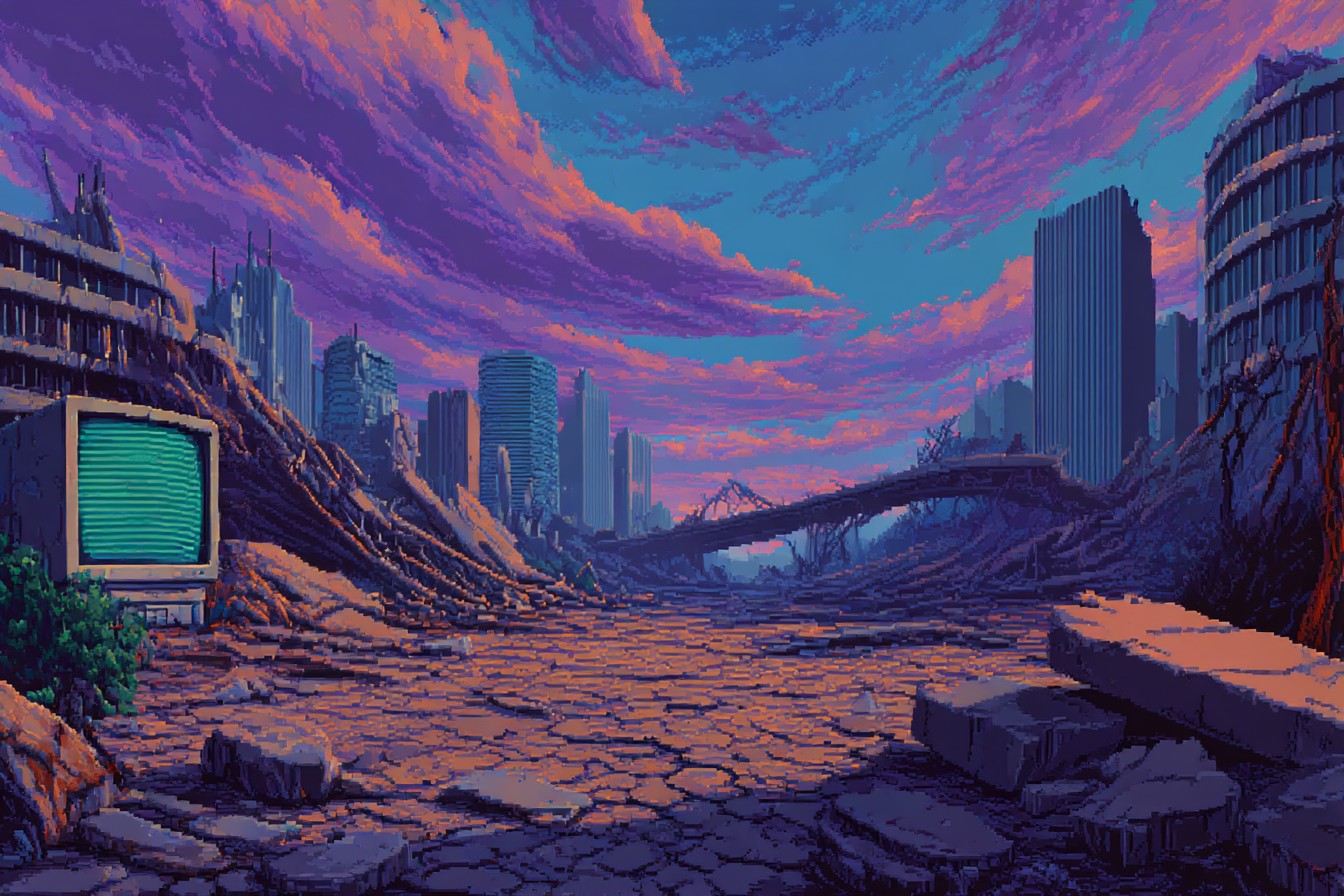
Looking back now, General Chaos feels like a fascinating evolutionary dead end. Real-time strategy would go on to conquer the PC gaming world with titles like Warcraft and Command & Conquer, but console RTS largely withered on the vine. Sure, there were attempts—Dune II got a decent Mega Drive port, and later systems would see games like Halo Wars trying to crack the same nut—but nothing quite captured that specific blend of accessibility and tactical depth that Game Refuge achieved in 1993.
Maybe it was just timing. General Chaos arrived when the 16-bit wars were in full swing, when every game had to scream and shout to get noticed in an increasingly crowded marketplace. Strategy games were seen as slow, cerebral affairs that belonged on computer monitors, not living room TVs. General Chaos was neither slow nor cerebral, but try explaining that to someone browsing the rental shop shelves.
These days, you can play General Chaos on pretty much anything with an emulator, and it holds up surprisingly well. The graphics still pop, the gameplay still engages, and that sense of controlled chaos—the feeling that you're barely keeping disaster at bay while orchestrating tiny miracles of timing and positioning—remains as compelling as ever. It's a reminder that innovation doesn't always come from the biggest studios or the most obvious concepts. Sometimes it comes from someone like Game Refuge, a developer willing to ask "what if?" and follow that question wherever it leads.
Even if it leads to tiny pixelated commandos laying waste to everything in sight while you frantically try to remember which button switches between unit groups.



