The other night I was digging through a cardboard box that's been following me around since university moves, and there it was—a slightly yellowed N64 cartridge with that familiar blue spine. Toy Story 2: Buzz Lightyear to the Rescue. Just seeing it brought back the smell of my cousin's front room, circa Christmas 1999, where we spent an entire Boxing Day afternoon trying to master the double-jump timing while arguing over whose turn it was to hold the good controller.
You know how some movie tie-in games feel like they were cobbled together in a fortnight by people who'd only seen the film's trailer? Well, Toy Story 2 wasn't one of those disasters. Activision and Traveller's Tales actually gave a damn, and it shows in every polygon-stretched texture and every perfectly timed voice clip. This wasn't some cash-grab shovelware—it was proper platforming crafted by folks who understood what made both Pixar's storytelling and Nintendo's hardware tick.
The thing that struck me first, even back then, was how the game captured that specific Toy Story magic where ordinary suburban spaces become epic adventure playgrounds. Andy's house wasn't just a level; it was this lived-in space where you could genuinely believe toys came to life the moment humans left the room. The way Buzz moved through these environments—that slightly stiff, action-figure swagger combined with his laser sound effects—felt authentically toy-like rather than just "video game character in a Pixar skin."
I remember spending ages just messing about in the opening tutorial area, getting used to Buzz's moveset. The double-jump had this satisfying weight to it, not floaty like some platformers but with enough hang-time to clear those tricky gaps. And that spin attack—proper useful for clearing out groups of those green army men enemies, plus it looked dead cool when you got the timing right. The laser targeting system worked brilliantly too, none of that frustrating auto-aim nonsense that makes you feel like the game's playing itself.
What really got me was the attention to detail in recreating the film's visual style. This was 1999, remember—we were still getting used to what the N64 could actually pull off in terms of 3D graphics. But somehow they managed to capture that slightly plastic, toy-box aesthetic that made everything feel authentically Pixar-ish. Buzz's animations had that perfect mix of heroic posturing and slight mechanical stiffness that made him feel like an actual Space Ranger action figure rather than just another platforming mascot.
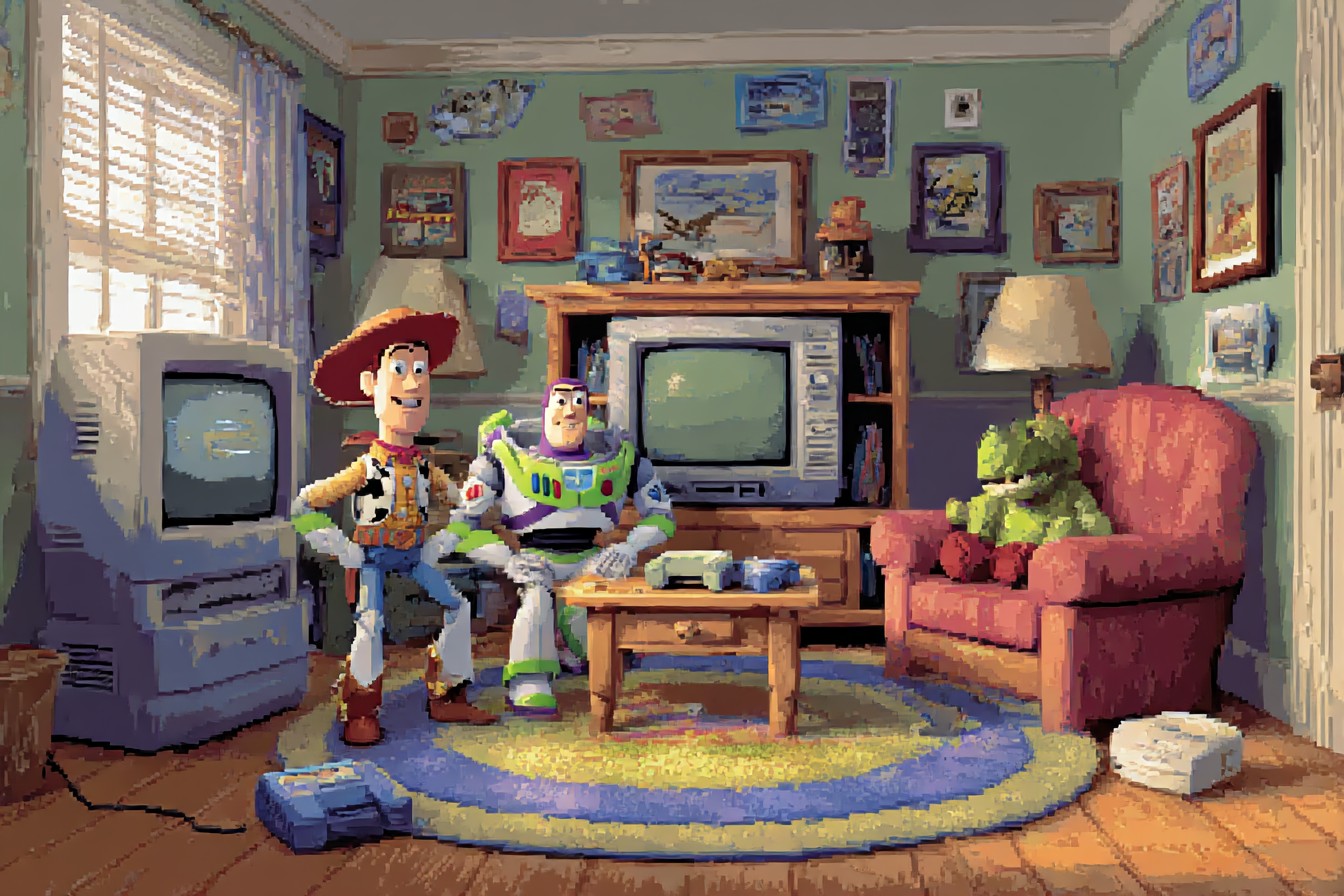
The level design borrowed heavily from the film's best moments but expanded them into proper playable spaces. That airport sequence—blimey, that was something else. Racing through conveyor belts and dodging luggage while the clock ticked down, it felt like being inside one of those elaborate Rube Goldberg contraptions that Pixar loves so much. And the Pizza Planet truck chase? Absolute chaos in the best possible way, with enough near-misses and last-second saves to make your palms properly sweaty.
But here's what separated it from the usual movie game mediocrity: the original content actually worked. Those levels that weren't directly lifted from the film felt like genuine extensions of the Toy Story universe, not like filler content designed to pad out the playtime. The construction site level, for instance—pure video game logic, but it made perfect sense as somewhere Buzz might end up during his adventures. Plus, navigating those half-built structures and avoiding the various hazards required genuine skill, not just mindless button-mashing.
The collectibles system hit that sweet spot between rewarding exploration and not being completely overwhelming. Those Star Chips scattered throughout each level gave you proper reasons to poke around in corners and try alternative routes, but they never felt like busy work. And the Pizza Planet tokens—collecting enough to unlock bonus content actually mattered because the extras were worth having, not just throwaway concept art nobody cares about.
Voice acting deserves a proper mention here. Getting Tim Allen back as Buzz was crucial—his delivery had that perfect mix of sincere heroism and oblivious comedy that made the character work in the films. None of that slightly-off soundalike nonsense you got in so many licensed games. When Buzz shouted "To infinity and beyond!" during a particularly epic jump, it genuinely felt like the real deal, not some budget substitute.
The music, too—Randy Newman's compositions from the films were woven throughout the game in ways that enhanced the action rather than just playing in the background like elevator music. That "Strange Things" melody during the more mysterious sequences, the triumphant fanfares when you completed a particularly tricky section—it all felt cohesive, like the audio team actually understood how to use music to support gameplay rather than just licensing popular tracks.
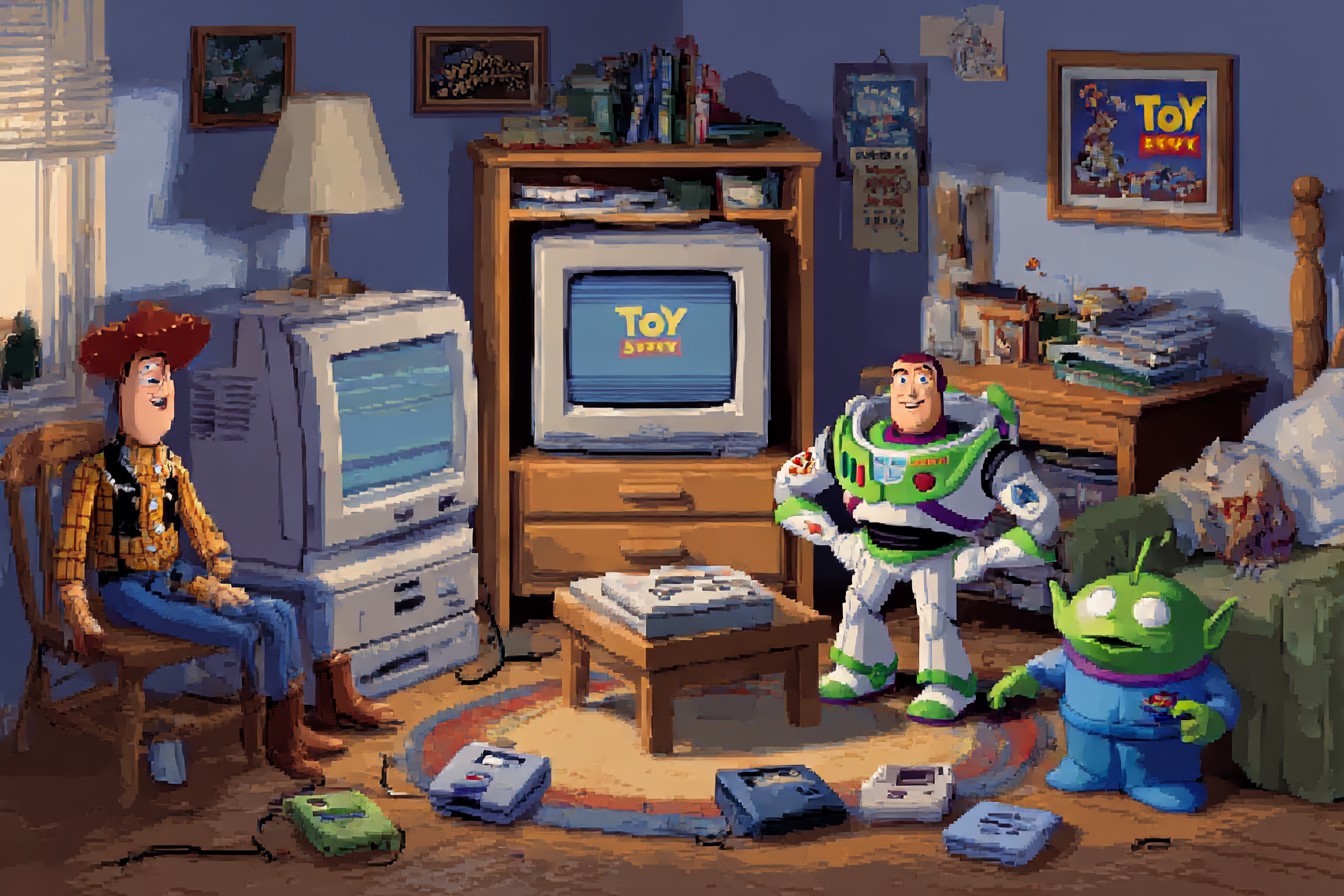
Technical performance on the N64 was surprisingly solid, considering how many platformers of that era suffered from wonky cameras or inconsistent frame rates. The camera system here was actually quite clever—it knew when to pull back for platforming sections and when to get up close for the more cinematic moments. Sure, you'd occasionally get stuck in a corner or have to wrestle with the view angle, but nothing game-breaking.
What I appreciate even more now, looking back, is how the game respected both its source material and its medium. It never felt like a film awkwardly shoehorned into game form, nor did it feel like a game that happened to have Toy Story characters stuck on top. The platforming challenges grew naturally out of the story scenarios, and the story scenarios felt like genuine extensions of Pixar's world-building.
Playing through it again recently on original hardware—because yes, I still have that slightly temperamental N64 hooked up to a CRT that makes the right noises—I was struck by how well it holds up. The graphics are obviously dated now, but the core gameplay loop remains satisfying. That feeling of nailing a tricky jump sequence or perfectly timing a spin attack to clear a group of enemies hasn't diminished one bit.
Toy Story 2 proved that movie games didn't have to be disappointing cash-grabs. When developers actually cared about the source material and understood how to translate cinematic storytelling into interactive entertainment, magic could happen. It's the sort of game that made Christmas morning feel properly special, you know? Pure platforming joy wrapped up in Pixar's storytelling excellence.



