The day I first heard the Imperial March crackling through my CRT's blown speakers, courtesy of an N64 cartridge, I knew something special was happening. Here was the console that had already blown my mind with Mario's polygonal face, now promising to deliver the galaxy far, far away right into my living room. And you know what? It mostly delivered.
Star Wars games on the Nintendo 64 weren't just ports or afterthoughts—they were proper attempts to capture the essence of what made those films legendary. I'm talking about that specific era when developers were still figuring out 3D but had enough ambition to swing for the fences anyway. The results were… well, let's just say some aged better than others.
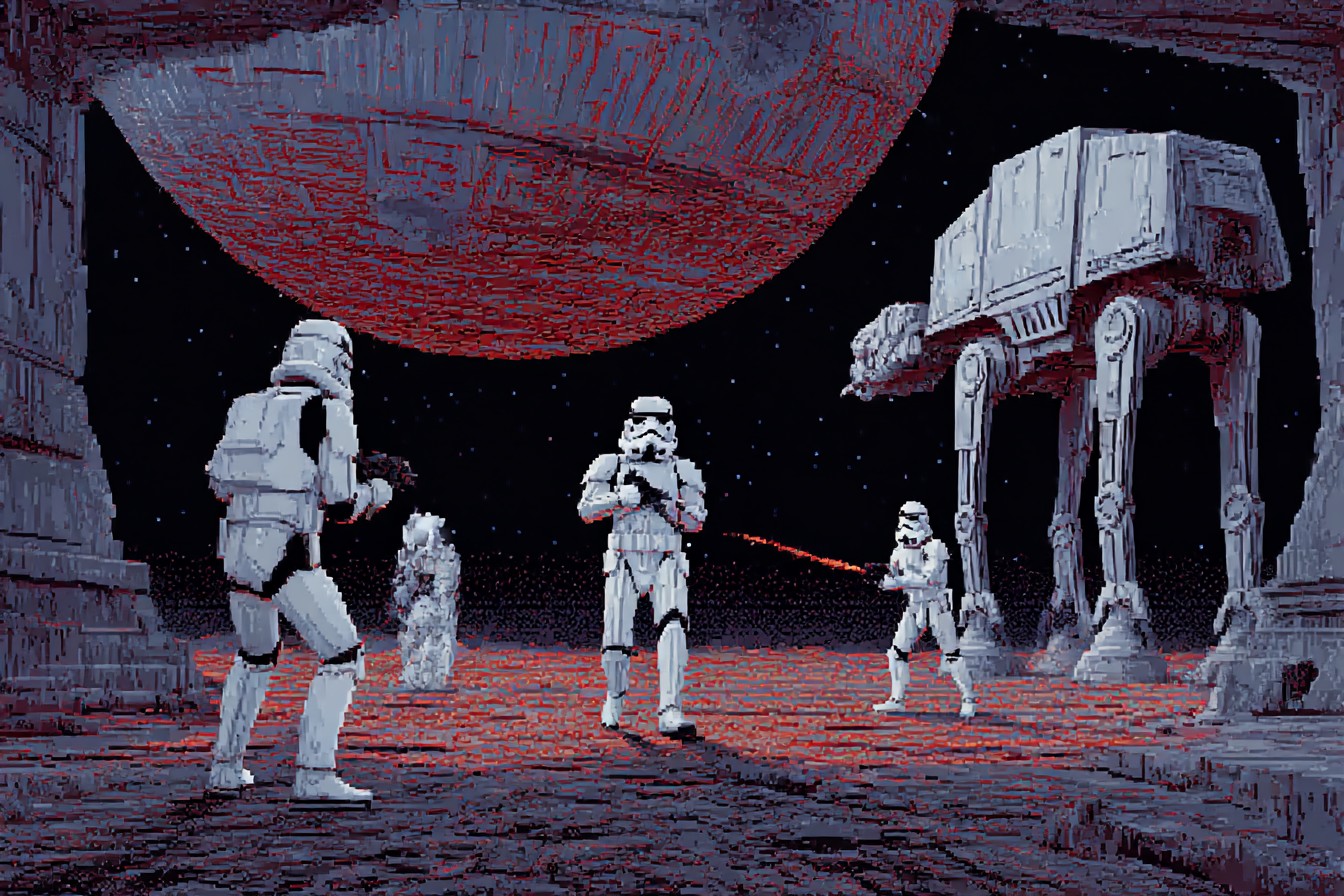
*Star Wars: Shadows of the Empire* landed first, and I remember the hype being absolutely mental. This wasn't just any Star Wars game—this was going to bridge the gap between *Empire Strikes Back* and *Return of the Jedi*. Playing as Dash Rendar felt like stepping into an extended universe that actually mattered. The opening level on Hoth? Pure magic. That moment when you're piloting a snowspeeder, tow cables ready, AT-ATs stomping across the battlefield—it was everything eight-year-old me had dreamed about while playing with action figures in the back garden.
The controls took some getting used to, mind you. That N64 controller wasn't exactly designed for traditional third-person shooters, but somehow the weird three-pronged setup worked. Z-trigger for shooting, C-buttons for strafing—it was like learning a new language, but once it clicked, it *really* clicked. I spent hours in that first level, just perfecting my AT-AT takedown technique. The satisfaction of watching those massive walkers topple never got old.
But here's where things got interesting: *Shadows* wasn't content to just recreate movie moments. The speeder bike chase through Mos Eisley, the battle with IG-88 aboard the *Outrider*—these were entirely new experiences that somehow felt authentically Star Wars. The game had this knack for capturing the universe's aesthetic without just copy-pasting scenes we'd already seen a dozen times.
Then came *Star Wars Episode I: Racer*, and bloody hell, what a ride that was. I'd been skeptical about the podracing sequence in *The Phantom Menace*—seemed like unnecessary CGI showing off—but the game version? Absolutely brilliant. This was pure speed translated into controller form, the kind of racing that made you lean into turns like you were actually piloting Anakin's cobbled-together death trap.
The sense of speed was genuinely breathtaking. Flying through Boonta Eve Classic at what felt like light speed, engines screaming through those tiny TV speakers, was an experience that made everything else feel pedestrian by comparison. *F-Zero X* was fast, sure, but *Podracing* had this raw, barely-controlled-chaos feeling that perfectly captured what those scenes were supposed to convey. When your engines started smoking and you're frantically hitting R to repair mid-race while Sebulba tries to ram you into a canyon wall—that's proper adrenaline gaming right there.
What really impressed me was the variety. Twenty-three different podracers, each with their own handling characteristics, upgrade paths, and repair requirements. Sebulba's machine felt completely different from Anakin's, which felt nothing like Gasgano's weird four-engine setup. I became genuinely attached to certain racers, developing preferences based on track layouts and my own ham-fisted piloting style.
The upgrade system was brilliant too. Prize money earned from races could be spent on better engines, control cables, repair tools—it gave the whole experience this lovely progression curve that kept you coming back. Just one more race to afford those new engines. Just one more tournament to unlock Ody Mandrell's beast of a machine.
*Star Wars: Rogue Squadron* was the other major player, and in many ways, it was the most purely satisfying of the bunch. This was what space combat was supposed to feel like—swooping through asteroid fields, taking down Star Destroyers, protecting evacuation transports. The mission variety kept things fresh too. One level you're racing through the Death Star trench (again, but somehow it never got old), the next you're providing air support for ground troops on some backwater planet.
The attention to detail was remarkable for its time. Different ships had genuinely different flight characteristics—the X-wing felt nimble and responsive, the Y-wing was slower but packed more punch, the snowspeeder was a fragile speed demon perfect for hit-and-run tactics. I spent ages just flying around in free flight mode, getting a feel for how each craft handled, practicing maneuvers I'd probably never need but enjoyed mastering anyway.
What struck me most about these N64 Star Wars games was how they captured something essential about the films without just aping them directly. Sure, there were plenty of recreated scenes and familiar locations, but the best moments were when they expanded the universe in ways that felt natural and earned. *Shadows* gave us new characters and storylines that slotted perfectly into existing continuity. *Racer* took what was essentially a five-minute sequence from the films and turned it into a full racing career. *Rogue Squadron* let us live out every space combat fantasy the movies had planted in our heads.
The graphics haven't aged particularly well, I'll admit. Going back now, those polygon counts look pretty rough, and the texture work is… well, it's very much of its time. But there's something charming about that early 3D aesthetic, that sense of developers pushing hardware to its absolute limits and somehow making it work. The art direction was strong enough that even with limited resources, you always knew you were in the Star Wars universe.
Playing these games today, whether on original hardware or through emulation, there's still something special there. They captured a specific moment in time when Star Wars games were allowed to be weird and experimental, when developers weren't afraid to try new things with beloved properties. The N64 controller might seem bizarre now, but it enabled control schemes that simply wouldn't have worked on traditional gamepads.
I keep these cartridges in my collection not just for nostalgia's sake, but because they represent something important: the moment when home consoles became powerful enough to deliver genuine cinematic experiences. They might not look like much compared to modern games, but that first time hearing John Williams' score kick in as you're dogfighting TIE fighters or threading the needle on a particularly tricky podrace turn? That feeling never really goes away.



