The green case caught my eye first. Not the sleek black of the console itself, not the distinctive font on the front – just that bright, almost neon green plastic cartridge sitting there in the Blockbuster rental section like it was daring me to pick it up. Ecco the Dolphin, it said. I was maybe eleven, had saved up enough pocket money for a weekend rental, and something about that weird cover art – this dolphin swimming through what looked like an alien landscape – made me forget about Sonic 2 entirely.
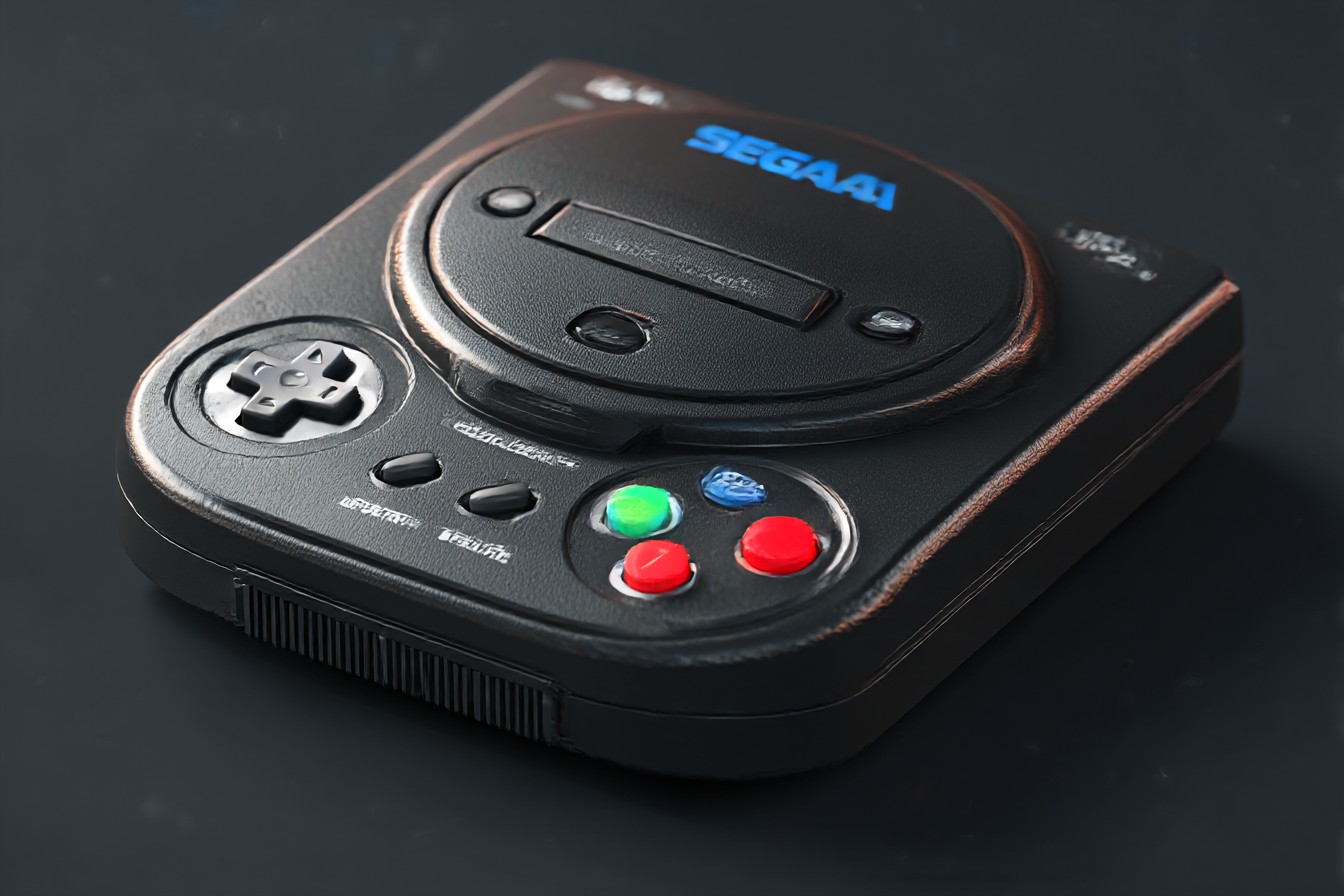
I'd been riding the 16-bit wave for about a year at that point. My Mega Drive sat under the telly like a black spaceship, connected through one of those RF switches that made my dad grumble about "all these bloody wires." The thing is, I thought I knew what the console could do. Streets of Rage had blown my mind with its thumping soundtrack. Sonic had shown me speed I didn't know was possible. Golden Axe made me feel like a barbarian warrior in our suburban living room.
But Ecco? Christ, Ecco changed everything.
The first few minutes seemed normal enough. Swimming around, making dolphin sounds – echolocation, the game called it – bouncing sonar off rocks and fish. The water looked incredible, these rippling blues and greens that made our old CRT seem magical. The sound design was something else entirely. Every splash, every call, every bubble rising to the surface felt real in a way that made me lean forward on the carpet.
Then I hit the first proper puzzle, and my brain had to recalibrate what a Sega game could be. This wasn't about running fast or beating up bad guys. This was about communication, about understanding an alien language of clicks and whistles. The other dolphins would swim up to me, sing these haunting melodies, and somehow I had to figure out what they meant. No text boxes, no obvious hints – just pure audio storytelling that made me feel like I was learning to speak underwater.
The graphics hit different too. I mean, I'd been impressed by Sonic's loops and speed effects, but Ecco's underwater world felt… vast. Endless. Swimming through those caverns with shafts of light filtering down from above, watching schools of fish part around me like living curtains – it was the first time a game made me feel small in a good way. Like I was exploring something genuinely alien rather than just jumping through levels.
But it was the music that really did it. Spencer Nilsen's soundtrack – though I wouldn't learn his name until years later – was unlike anything pumping through the Mega Drive's sound chip. These ethereal, ambient pieces that made the ocean feel mysterious and ancient. The title screen alone, with that haunting melody playing over footage of real dolphins, gave me goosebumps every time. It wasn't the punchy, driving beats I'd come to expect from 16-bit games. This was atmospheric in ways I didn't have words for at eleven.
The story, when it finally revealed itself, completely broke my expectations of what games could be about. Aliens? Time travel? A dolphin having to save not just his pod but all of Earth's oceans? I'd been raised on Mario's simple "save the princess" plots and Sonic's "stop the bad scientist" adventures. Suddenly here was this epic, cosmic narrative that started with me trying to find my missing family and ended with… well, I won't spoil it for anyone who hasn't experienced it, but let's just say it gets properly weird.
The difficulty nearly broke me though. This wasn't the kind of challenging that felt fair, like learning to time jumps in Mario or memorizing enemy patterns in Streets of Rage. Ecco was obtuse, cryptic, sometimes downright cruel. I'd spend hours swimming in circles, trying to figure out what the game wanted me to do. The infamous "Asterite" level still gives me flashbacks – this nightmare maze where one wrong turn meant starting over, and the game never bothered to explain the rules.
But that's what made it special, isn't it? In an era where most games telegraphed everything, Ecco demanded that you actually think. Really think. About space, about time, about communication itself. I remember sitting on the floor, controller in hand, having these weird philosophical moments about what it meant to be intelligent, to be alien, to be lost in something bigger than yourself.
The sequel, Tides of Time, pushed things even further. Better graphics, weirder story, more of that incredible music. By then I was completely hooked on this bizarre franchise that nobody else seemed to talk about. While my mates were arguing about Mortal Kombat fatalities or Street Fighter move lists, I was trying to explain why swimming around as a dolphin talking to ancient crystals was actually the most mind-blowing gaming experience you could have.
Looking back now, with decades of gaming behind me, I can see how Ecco was doing things that wouldn't become common for years. Environmental storytelling, atmospheric world-building, gameplay that trusted the player's intelligence rather than holding their hand every step of the way. It was art masquerading as entertainment, philosophy dressed up as a kids' game about a dolphin.
The funny thing is, I never actually finished it that first weekend. Took it back to Blockbuster on Sunday evening still stuck on some impossible maze level, but my head was spinning with possibilities. Games could be beautiful. Games could be strange. Games could make you think about your place in the universe while you tried to figure out how to talk to a prehistoric shark.
I ended up buying it eventually, of course. Spent countless hours over the following months gradually working through its mysteries, getting lost in its gorgeous underwater worlds, letting that incredible soundtrack wash over me like digital waves. It taught me patience in ways no other game had. It showed me that the Mega Drive – hell, that gaming itself – was capable of things I'd never imagined.
That green cartridge sitting in the rental case didn't just give me a weird weekend. It opened my eyes to what interactive entertainment could become when developers were brave enough to try something completely different. Everything else felt a bit ordinary after Ecco. Still fun, sure, but ordinary.
And yes, I still have that cartridge. Still works perfectly.