My N64 controller still bears the scars of barrel rolls. There's a slight depression in the Z-trigger where my index finger lived for what felt like entire summers, and if you look closely at the stick, you can see where years of frantic banking left tiny grooves in the plastic. That's the mark of Star Fox 64, a game that turned my living room into a cockpit and made me understand why my dad always gripped the armrests during airplane turbulence.
When Nintendo announced Star Fox 64 3D for the 3DS back in 2011, I felt that familiar flutter of anticipation mixed with protective anxiety. You know the feeling—when something you love gets a makeover and you're not sure if they'll mess with the recipe that made it special. I'd been burned before by remakes that polished away the soul along with the rough edges.
But then I got my hands on it, and something remarkable happened. Nintendo hadn't just ported Star Fox 64—they'd done what felt impossible. They'd made it better while keeping everything that mattered intact. The combat, that perfect dance of lock-on targeting and evasive maneuvers, felt like slipping on a favorite jacket that somehow fit even better than you remembered.
The original Star Fox 64 was already a masterpiece of arcade-style space combat. That lock-on system—man, what a revelation that was in 1997. Before that, 3D dogfighting felt clumsy, like trying to thread a needle while riding a bicycle. But Star Fox 64's targeting system made you feel like you were piloting something that actually wanted to be flown. The way your crosshairs would snap to enemies, the satisfying chunk of the Z-trigger as you painted targets—it turned space combat into a rhythm game where the beat was pure adrenaline.
The 3DS version takes all of that muscle memory and enhances it without breaking it. The stereoscopic 3D effect—and I know opinions are divided on the 3DS's screen, but hear me out—actually adds tactical awareness to the combat. When enemy fighters are screaming toward you in formation, that depth perception helps you pick your targets more intuitively. It's like having peripheral vision in a medium that previously flattened everything into guesswork.
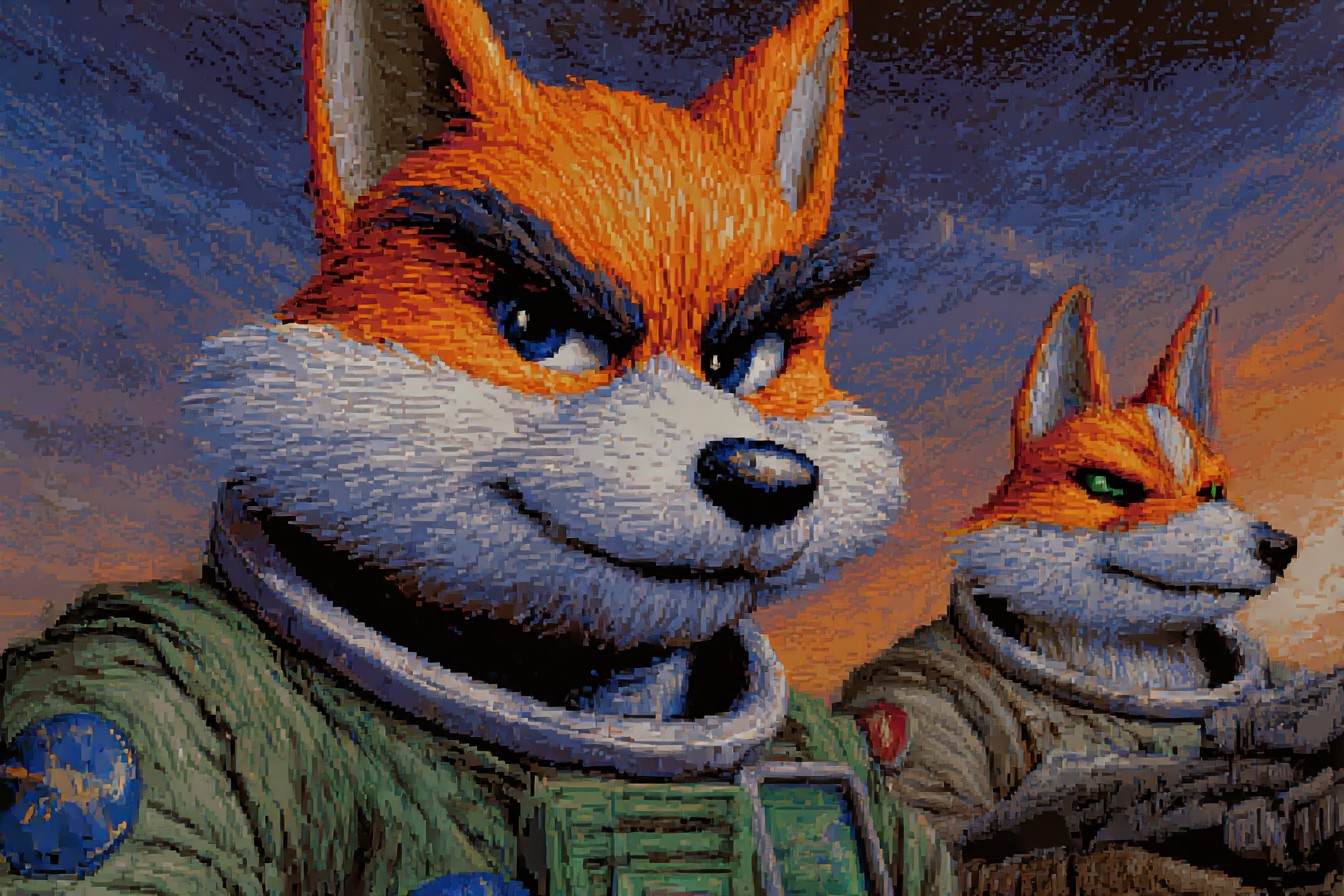
I remember the first time I played through the Corneria level on the 3DS. Same music, same radio chatter, same basic layout, but everything felt more immediate. The Arwing's cockpit view benefits enormously from the 3D effect—you're not just looking at a screen anymore, you're looking through a window. When you're threading through the metal arches or diving under that massive robot's legs, the spatial relationships feel real in a way that the original, brilliant as it was, could only approximate.
The enhanced graphics deserve mention too, though they're not the real story here. Nintendo wisely resisted the urge to completely overhaul the art style. Instead, they sharpened and refined what was already there. The Arwing still looks like the Arwing—angular, purposeful, like a dart designed by someone who understood both aerodynamics and intimidation. But now you can see the panel lines, the way light catches the metal. Corneria City doesn't look like a completely different place; it looks like Corneria City with the fog lifted.
But the real genius of Star Fox 64 3D lies in how it handles the enhanced controls without abandoning what made the original special. The circle pad gives you analog movement that the N64's stick pioneered, but refined through years of iteration. It's more precise, less prone to developing dead zones, and it feels natural in a way that makes you wonder how we ever managed with d-pads for flight sims.
The gyro controls were Nintendo's bold addition, and honestly? I was skeptical. Tilting the 3DS to steer felt gimmicky in my hands at first, like motion controls forced into a game that didn't need them. But there's an option to use them, and I found myself switching back and forth depending on the situation. For precision targeting and tight maneuvers, the circle pad remains king. But for those moments when you're barrel-rolling through asteroid fields or pulling off dramatic swooping attacks, the gyro controls add a physical connection to the action that's surprisingly engaging.
What really impressed me was how the remake handles the game's famous boss battles. The 3D effect makes spatial relationships clearer, which matters enormously when you're circling around massive mechanical monstrosities looking for weak points. The Star Wolf encounters, already highlights of the original, become even more intense when you can judge distances and trajectories more accurately. Andross—that floating nightmare head that haunted my teenage dreams—benefits enormously from the enhanced visuals and depth perception. You can see his attacks coming from further away, but that just makes the final approach feel more dramatic, not easier.
The sound design deserves special mention. Nintendo didn't just port the audio; they remastered it. The Arwing's laser fire has more punch, the explosions have more boom, and that iconic music—still gives me goosebumps every single time. Through good headphones, the 3DS version actually sounds better than the original running through my TV speakers, which says something about how much care went into the audio treatment.
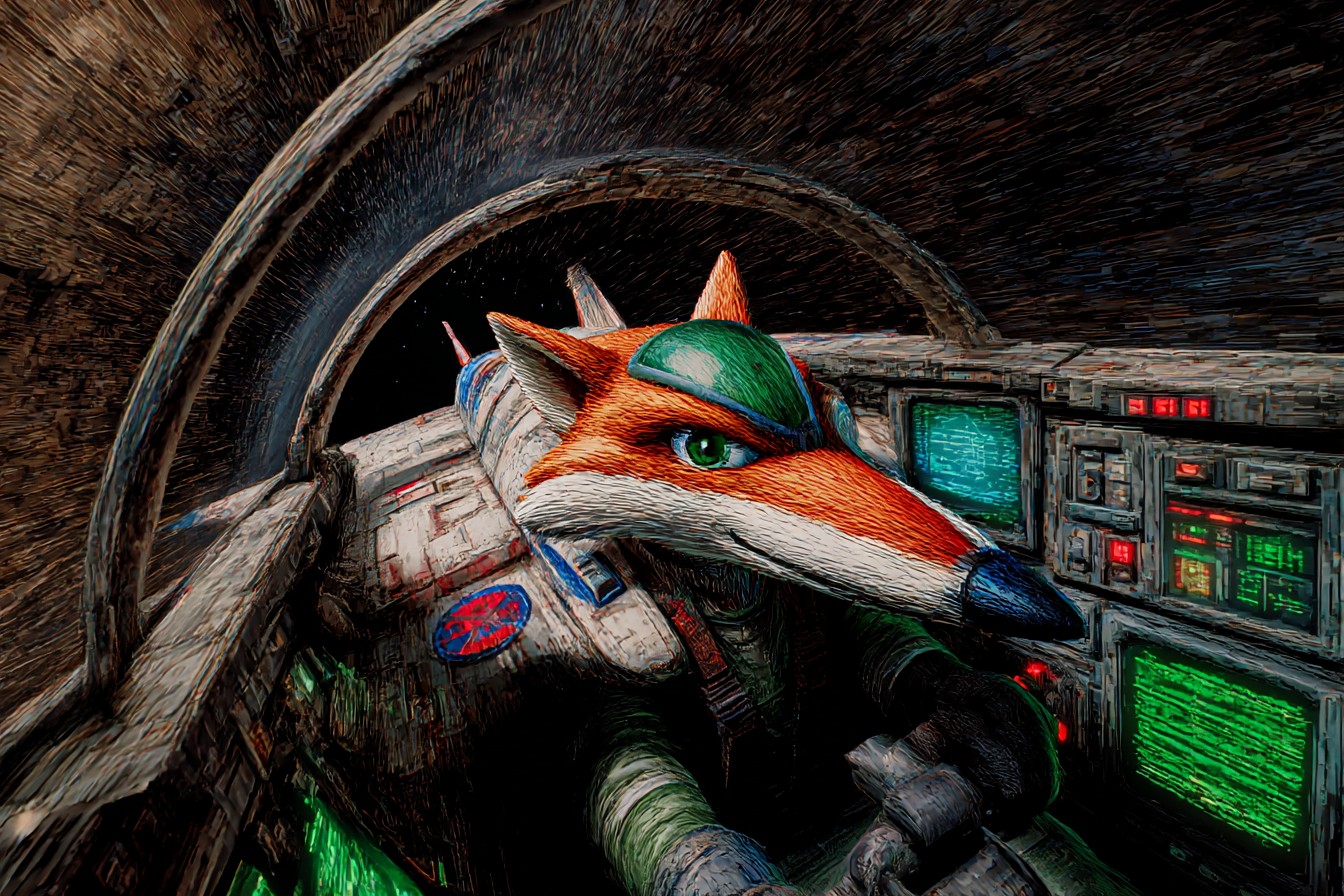
I spent countless hours with both versions, and here's what struck me most: Star Fox 64 3D doesn't feel like a nostalgia trip. It feels like playing the game I remembered, not the game that actually existed. Our memories tend to fill in gaps that technology couldn't bridge at the time, and this remake somehow captures that idealized version that lived in our heads.
The scoring system remains intact, encouraging multiple playthroughs to find different routes through the Lylat system. The branching paths still matter, the medal requirements still push you to play aggressively rather than defensively. Nintendo understood that Star Fox 64 wasn't just about the technology—it was about the pacing, the escalation, the way each level builds to moments of pure arcade bliss.
Playing it again reminded me why the original was special, and why this remake works so well. It's not trying to be a different game; it's trying to be the same game, just more so. Every enhancement serves the core experience rather than competing with it. That's increasingly rare in an era where remakes often feel compelled to justify their existence through wholesale changes.
Star Fox 64 3D proves that sometimes the best way to improve a classic is simply to let it be itself, just clearer, sharper, more immediate. The combat still sings, the targeting still feels perfect, and that Z-trigger—well, my 3DS bears those same familiar marks now too.



