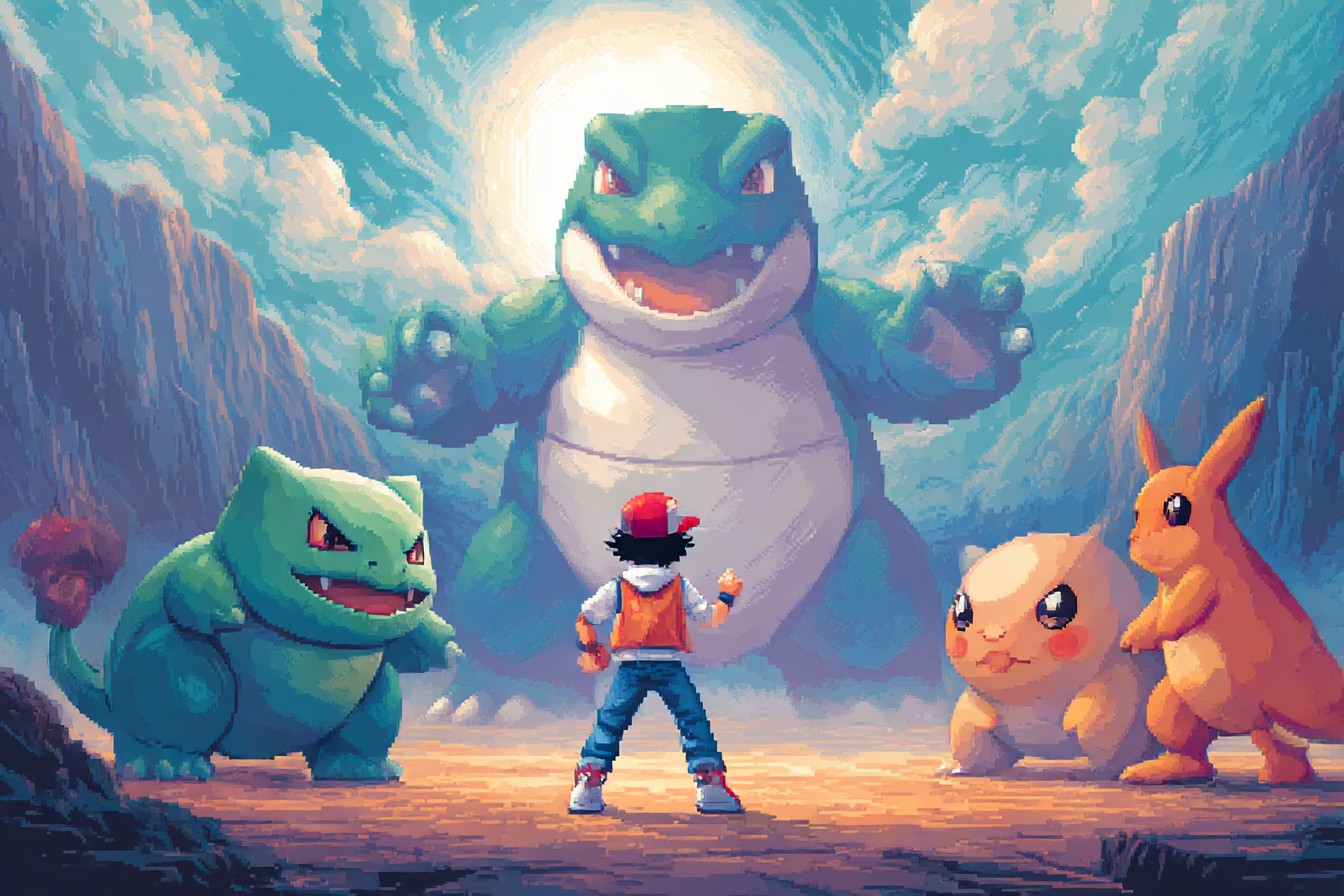
The first time I saw a Pokémon moving around in full 3D, I nearly dropped my third cup of tea that morning. It was Stadium, obviously, and watching my carefully trained team of Game Boy sprites suddenly become these chunky, polygonal creatures with actual animations… well, it felt like magic had upgraded its graphics card.
See, by '99 I'd already sunk hundreds of hours into Red and Blue on my Game Boy. That grey brick had seen me through train journeys, lunch breaks, and more than a few late nights under the covers with a worm light that made everything look like I was gaming inside a fish tank. But the N64 brought something completely different to the table—it made Pokémon feel real in a way that tiny monochrome sprites never could, no matter how much personality Game Freak crammed into those few pixels.
Stadium wasn't just a tech demo either, though it certainly felt like one the first time Charizard breathed fire and you could see individual flame particles. The battles had weight to them. When Snorlax hit the arena floor, you heard it through the TV speakers and felt it in your chest. The announcer—bless his overly enthusiastic soul—made every Thunderbolt sound like the wrestling match of the century. "It's super effective!" never got old, especially when you'd been hearing it as a text prompt for months.
But here's the thing about Stadium that nobody talks about enough: it was basically Pokémon homework. You couldn't just rock up with your story team and expect to steamroll the competition. The rental Pokémon were deliberately mediocre, forcing you to either grind your Game Boy cartridge until your thumb went numb, or learn the deeper mechanics you'd been ignoring. Suddenly, IVs and EVs weren't just letters—they were the difference between victory and watching your Alakazam get one-shot by a Tauros.
I spent an embarrassing amount of time in the Gym Leader Castle, getting absolutely demolished by what should have been easy fights. Turns out my Venusaur with three Grass moves and Sleep Powder wasn't the tactical mastermind I thought it was. The N64 had a way of humbling you while making it look spectacular.
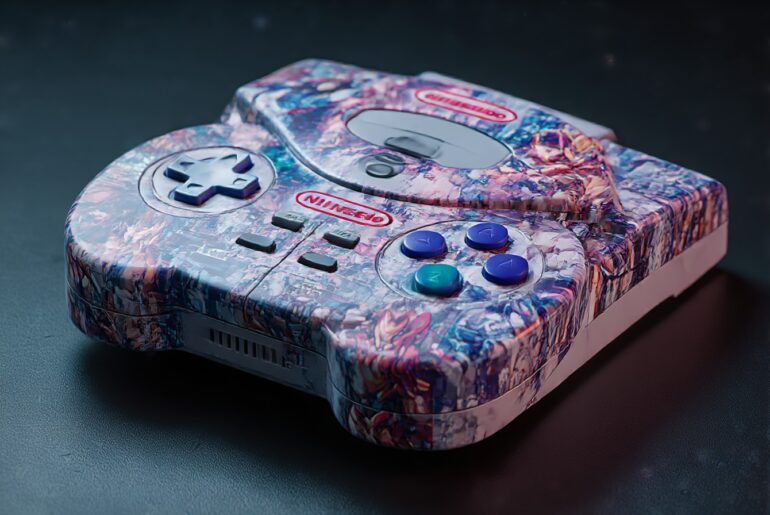
Then there was the Transfer Pak—that chunky little dongle that bridged two worlds. Sliding your Game Boy cartridge into that plastic cradle felt like docking a space shuttle. The technology seemed impossible at the time: how could the N64 read my save file? How did it know about my secret level 78 Mewtwo that I'd definitely obtained through completely legitimate means and not via a Game Genie? Pure witchcraft, as far as I was concerned.
Stadium's mini-games deserve their own monument somewhere. Ekans' Hoop Hurl was simple enough—toss rings onto posts—but add three mates and suddenly it became the most intense competitive experience since GoldenEye's Facility. Lickitung's Sushi was deceptively brutal; whoever designed the conveyor belt physics clearly had a PhD in frustration. And don't get me started on Pikachu's Beach volleyball—I'm pretty sure that game cost me at least one friendship over disputed line calls.
Stadium 2 came along and fixed most of the original's rough edges while adding more Pokémon and better animations. The battle animations got smoother, the rental teams became slightly less useless, and the mini-games somehow got even more addictive. But by then, something else had captured my attention completely.
Pokémon Snap was the game nobody asked for that everyone needed. Who thought "let's make a rail shooter but replace bullets with camera clicks" would work? Yet there I was, spending entire evenings trying to get the perfect shot of a Charizard emerging from a volcano, or figuring out how to wake up that sleeping Snorlax without getting trampled.
The thing about Snap was how it made you slow down. After years of turn-based battles and grinding for levels, here was a Pokémon game that rewarded patience and observation. You couldn't button-mash your way to better photos. You had to learn each Pokémon's behavior, understand the island environments, and time your shots perfectly. That moment when you finally captured a Pikachu surfing on a Rapidash—pure gaming gold.
Professor Oak's scoring system was harsh but fair. A blurry Magikarp splashing in the corner of frame scored lower than a perfectly centered, action-packed shot of Pikachu riding Electrode like a bowling ball. The game taught me composition rules I didn't even know existed. Rule of thirds? Never heard of it until Snap rewarded me for not centering every single Pokémon in the viewfinder.
The photo album feature was genius too. Being able to save your best shots and show them off felt revolutionary in an era before social media. I printed out screenshots of my favorite photos using one of those janky early printers that took about ten minutes per page and made everything look like it was viewed through a screen door. Worth every noisy minute.
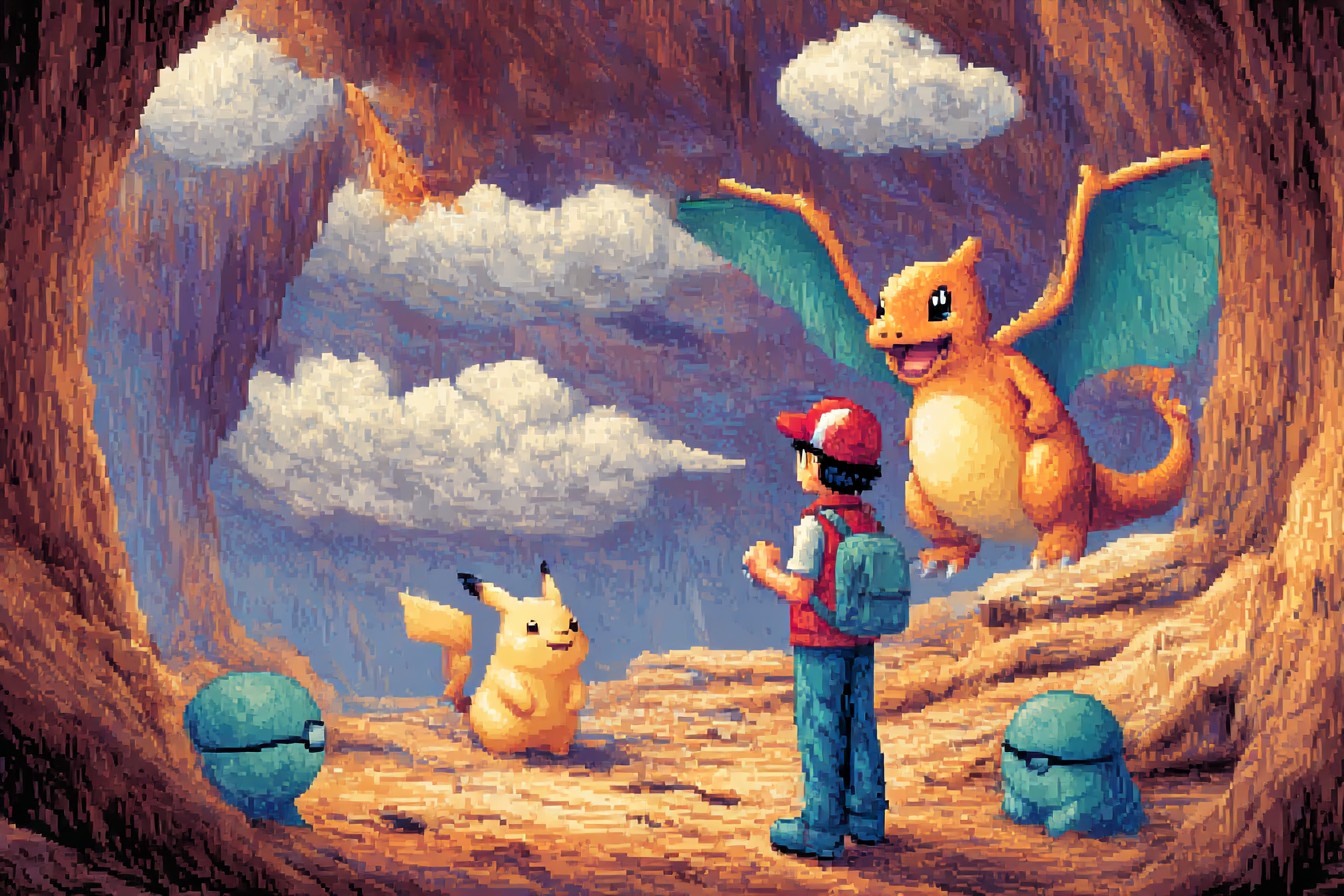
What struck me most about both Stadium and Snap was how they expanded what Pokémon could be. The Game Boy games were brilliant, but they lived in your imagination as much as on screen. The N64 versions made that imagination tangible. Suddenly, Pokémon had voices—well, electronic cries that sounded like R2-D2 having various emotional breakdowns, but voices nonetheless. They had personalities expressed through movement and animation rather than just static poses and text descriptions.
These games also proved that the Pokémon formula could stretch beyond traditional RPGs without breaking. Stadium showed that the battle system could work in full 3D with proper presentation. Snap demonstrated that the world itself was interesting enough to explore without any combat at all. Both games felt essential rather than just cash-grab spin-offs, which wasn't always guaranteed in the late '90s licensing landscape.
Looking back now, through the haze of several generations and countless remakes, those N64 Pokémon games occupy a special place in my memory. They bridged the gap between the imagination-heavy Game Boy originals and the fully realized 3D worlds we take for granted today. They weren't perfect—Stadium's difficulty spikes could be cruel, and Snap was criminally short—but they showed us a future where Pokémon could live and breathe in three dimensions.
Plus, they gave us our first real taste of Pokémon as a social experience on the big screen. No more hunching over tiny screens or tangling link cables. Just four controllers, a bag of crisps, and the eternal question: who forgot to bring their Transfer Pak again?