Remember that kid on the school bus with the massive Game Gear who'd burn through six AAs before reaching the next stop? That was me, clutching Sega's nuclear-powered handheld like it was going to solve world hunger. The thing weighed more than my school bag and had the battery life of a mayfly, but bloody hell, it had a backlit color screen when everyone else was squinting at green-tinted Game Boy pixels.
I've been chasing that portable Genesis experience ever since, and let me tell you—it's been a proper journey through some bizarre hardware choices and engineering compromises that make you wonder what Sega's R&D department was drinking back then.
The Genesis Nomad arrived in my life via a sketchy import shop that smelled like cigarettes and broken dreams. Picture this: it's 1995, I'm saving lunch money like a man possessed, and this beautiful black brick promises to run actual Genesis cartridges on a tiny screen. The sales bloke—who definitely wasn't telling his mum what he did for work—assured me it would change my life. He wasn't entirely wrong, though probably not in the way he meant.
First boot-up was magical. Sonic 2 running in my hands, actual Genesis audio pumping through tinny speakers that somehow made Chemical Plant Zone sound even more frantic. The screen was crisp enough to make out Tails spinning, and the six-button layout felt familiar under my thumbs. For about twenty minutes, anyway. Then the batteries died.
See, the Nomad had this adorable quirk where it consumed power like a small furnace. Six AAs would give you maybe two hours if you were lucky and kept the screen brightness down to "barely visible." The AC adapter became my best mate, which rather defeated the point of "portable" gaming. I spent more time tethered to wall sockets than my nan's old Hoover.
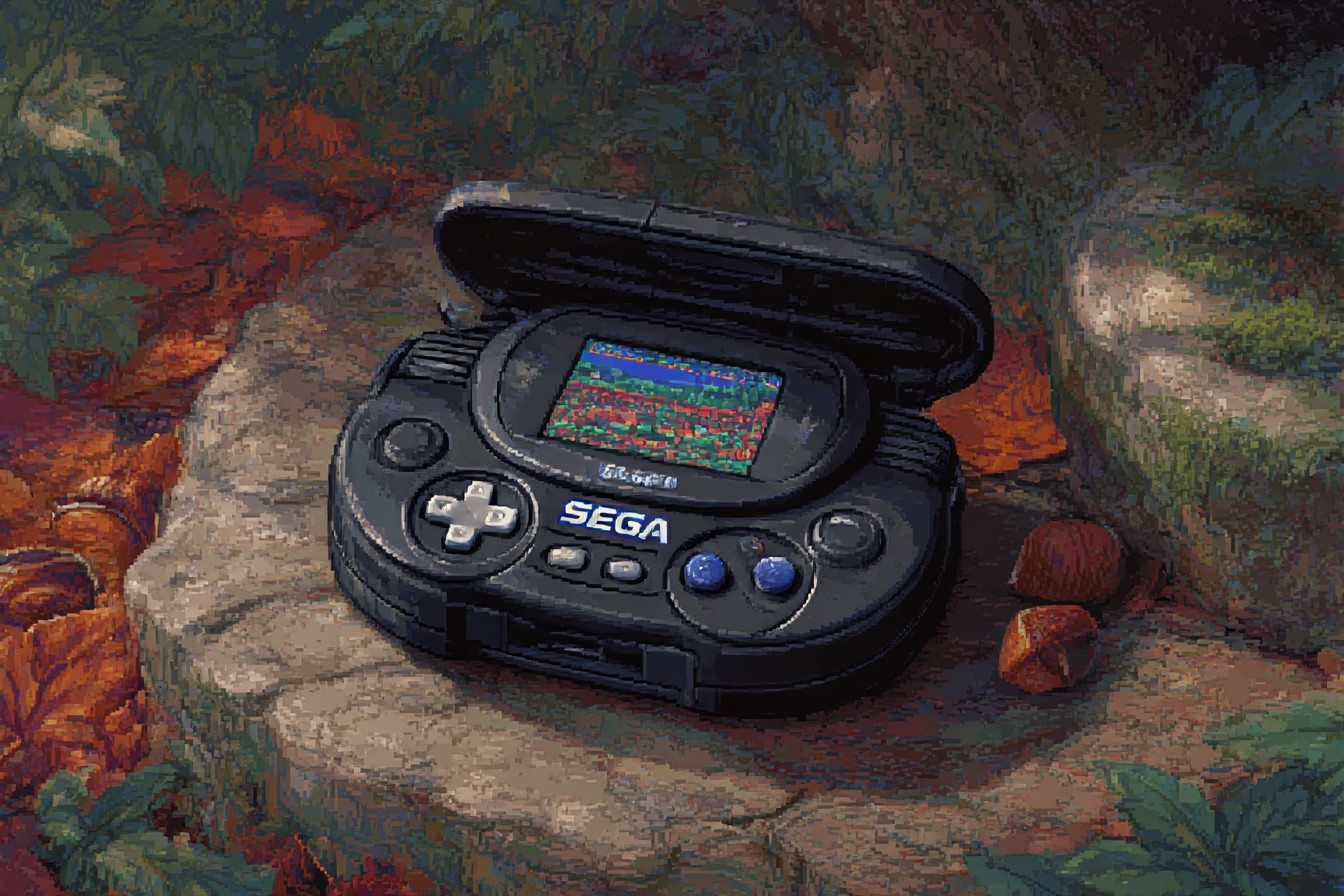
But when it worked—and I mean really worked, with fresh batteries and a comfortable chair near a power outlet—it was pure magic. Streets of Rage 2 felt different handheld. More intimate, somehow. The bass-heavy FM synthesis that made our living room windows rattle was contained in this personal bubble of sound. I'd lose entire Saturday afternoons to Phantasy Star IV, the tiny screen making those gorgeous anime cutscenes feel like secret messages meant just for me.
The build quality was proper Sega though—solid as a brick and twice as heavy. Mine survived countless drops, a cup of tea incident that we don't talk about, and my younger cousin's creative interpretation of "careful handling." That thing was built like they expected it to survive nuclear winter, which given the power consumption, it probably would've caused one.
Fast-forward to today, and I'm knee-deep in the modern retro handheld scene, trying to recreate those Nomad feelings without the chronic back pain. The Anbernic RG35XX sits on my desk right now, loaded with every Genesis ROM known to humanity and running off a USB-C cable that would've blown my teenage mind. It's smaller than a paperback, runs for hours, and cost less than I spent on batteries for that bloody Nomad.
But here's the thing that gets me—it's almost too good. The screen is sharp, the emulation is pixel-perfect, and the battery lasts longer than some relationships I've had. Yet something's missing. Maybe it's the weight, the ceremonial slot-loading of an actual cartridge, or the genuine fear that your save might disappear if you jiggle the wrong connection.
I've tried them all, honestly. The Miyoo Mini with its Game Boy Micro cosplay. The Steam Deck running Genesis Plus GX at settings that would make a NASA computer weep. The Retroid Pocket series with their Android shenanigans and surprising competence. Each one gets closer to that perfect portable Genesis experience, but they're all chasing the ghost of hardware that was fundamentally flawed to begin with.
The real breakthrough came when I stopped trying to recreate the past and started appreciating what these modern devices do differently. Save states mean I can actually finish Ecco the Dolphin without throwing the device across the room. Sleep mode lets me pause mid-Shinobi level when the postman arrives. Rewind features turn Contra: Hard Corps from controller-snapping torture into something approaching fun.
My current setup involves a hacked PlayStation Vita running PicoDrive, and honestly, it's probably the closest I've come to Nomad perfection. The OLED screen makes Genesis games pop like they're running through expensive RGB cables. The controls feel substantial without being cumbersome. Battery life is reasonable, and the thing fits in a jacket pocket without requiring architectural modifications to my wardrobe.
But I keep that old Nomad around, batteries removed to prevent the inevitable leak apocalypse, sitting on a shelf like a monument to ambitious engineering. Sometimes I'll slot in Gunstar Heroes just to hear that distinctive cartridge click, feel the weight of it in my hands, remember what portable gaming felt like when it was still figuring itself out.
The modern handhelds have solved every practical problem the Nomad had—battery life, size, cost, game availability. They've made portable Genesis gaming accessible to anyone with fifty quid and a YouTube tutorial. Yet they can't replicate that specific feeling of carrying around a piece of actual Sega hardware, knowing that somewhere in Japan, someone designed this beautiful disaster and thought, "Yeah, this'll work."

Sometimes I wonder if the Nomad's flaws were part of its charm. The weight made it feel important. The battery drain created urgency. The heat output reminded you that serious gaming was happening inside that plastic shell. Modern emulation is clinical by comparison—efficient, accurate, soulless.
Then my back twinges from hunching over another tiny screen, and I remember why progress is generally a good thing. The New Player Ready's spine wasn't built for sustained handheld sessions, whatever the hardware.
These days, portable Genesis gaming finally feels properly portable. Just don't expect it to feel exactly like it used to—and maybe that's okay. Maybe it's better. The games are still brilliant, the music still slaps, and nobody's wallet is crying over battery costs anymore.
That's got to count for something, right?



