The Mega Drive sat beneath our telly like some kind of sleek spacecraft that had crash-landed between mum's ceramic dog collection. Black plastic, those gorgeous curves, and that power LED that glowed red like HAL's evil twin. But when Sonic 2 arrived in November 1992—wrapped in that brilliant blue box with Miles "Tails" Prower spinning alongside our blue blur—everything I thought I knew about speed got rewritten.
I'd already worn grooves into the original Sonic. Green Hill Zone was muscle memory by then, every loop and spring etched into my thumbs. But Sonic 2? Christ, this was different. The moment that title screen music kicked in—that triumphant, soaring melody that somehow managed to sound both nostalgic and impossibly futuristic—I knew something special was happening. The Yamaha chip in our Mega Drive was singing its heart out, those FM synths layering brass and strings like some kind of 16-bit orchestra.
Emerald Hill Zone still gives me goosebumps. Not just because it's gorgeous (though those checker-patterned cliffs and that perfect blue sky are pure eye candy), but because it taught me what the spin dash could really do. See, the original Sonic made you wait. You had to build momentum, find your rhythm, hope the level design wouldn't interrupt your flow with a badly placed enemy or platform. But that spin dash? Game changer. Hold down, tap jump, release—and suddenly you're firing Sonic across the screen like a blue cannonball.
I remember discovering it by accident, naturally. My little brother was trying to "help" during one of my runs, mashing buttons while I navigated a tricky section. Instead of ruining everything (as brothers tend to do), he accidentally triggered this new move I'd completely missed in my rush to get playing. The rev-up sound, that satisfying mechanical whirr building to crescendo, then WHOOSH. Sonic tears off like he's been shot from a circus cannon.
That's when Tails wandered into frame, orange fur bright against the green grass, twin tails spinning like helicopter rotors. Miles Prower—get it? "Miles per hour"? Subtle as a brick, but somehow perfect. Having him tag along changed everything about how the game felt. Suddenly you weren't just controlling Sonic; you were leading this little orange fox on the adventure of his lifetime. When Tails got left behind (and he always got left behind when you really got moving), there was this brief moment of guilt before the pure joy of speed took over again.
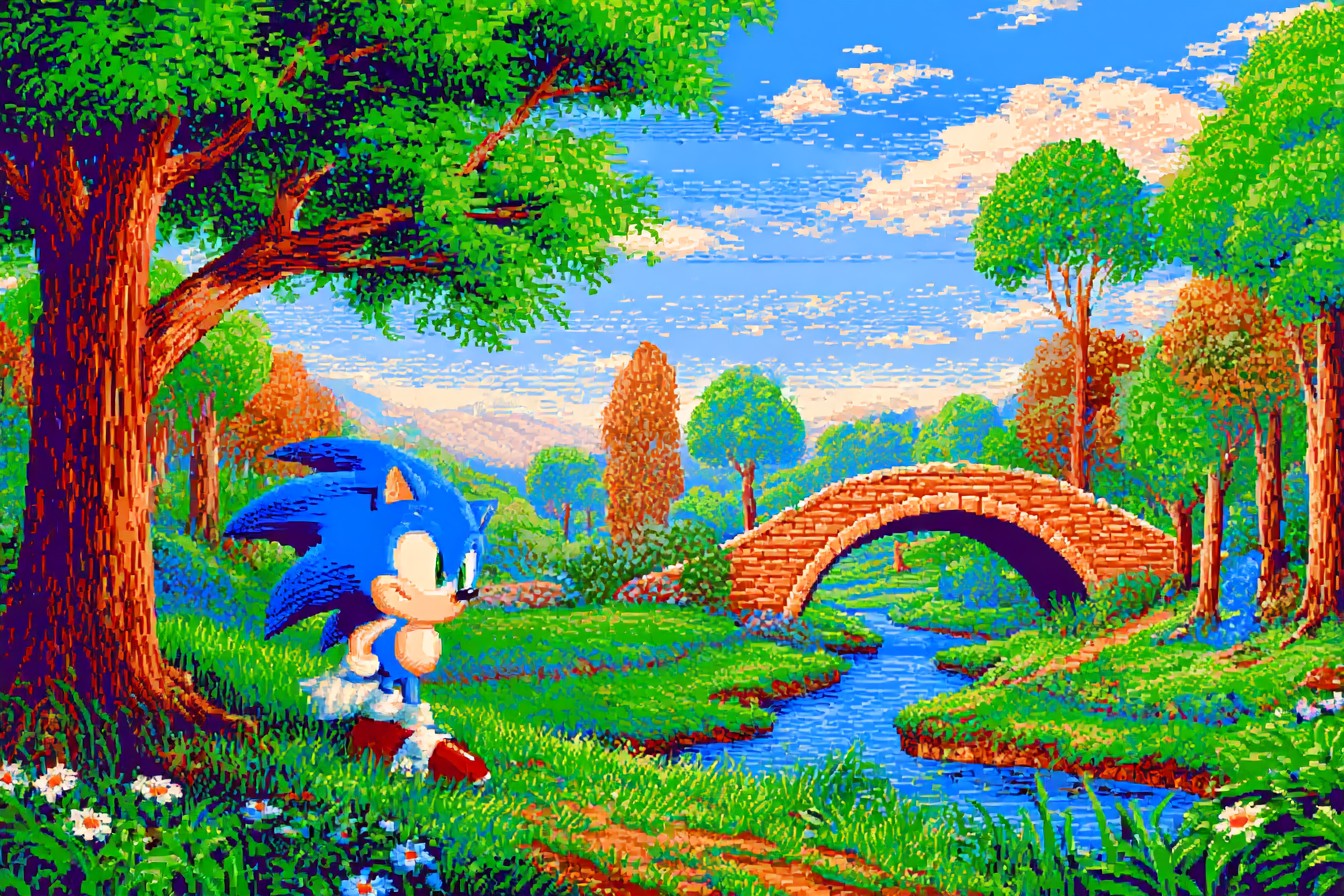
The two-player mode was revelation wrapped in sibling warfare. Finally, a proper way to play together without taking turns or arguing over who got the next life. Player two got Tails, who could fly—actually fly!—and suddenly every level became this mad dash where I'm tearing through loops as Sonic while my brother's taking the scenic route above, occasionally swooping down to grab rings or show off. Course, Tails could also die, which led to the inevitable "you're rubbish at this" arguments, but that's beside the point.
Casino Night Zone, though. That's where Sonic 2 showed its true colors. Pinball physics in a platformer shouldn't work—it's chaos theory made manifest, all bouncing balls and flippers and slots that actually paid out. But somehow, miraculously, it did work. Every bumper hit felt satisfying, every multiball sequence was pure euphoria. The music—oh god, the music—all jazz club sophistication with that underlying electronic pulse. I'd spend ages in those slot machine sections, not because I needed the rings, but because the sound effects were so perfectly chunky, so tactile through our old CRT's speakers.
Then Aquatic Ruin Zone arrived to mess with your head completely. Ancient ruins, mysterious totems, that haunting underwater music that made you feel like you were exploring some lost civilization. The hammer totems that chased you were genuinely unsettling—these stone faces rolling after you with murderous intent, forcing you to sprint and spin-dash your way to safety. But it was the music that really sold it. That ethereal, almost mystical melody floating over deep bass tones. The Mega Drive's sound chip could do things Nintendo's setup simply couldn't match, and Aquatic Ruin was the proof.
Oil Ocean Zone, mind you, was where things got properly mental. Purple crude oil that actually moved like liquid, submarines lurking beneath the surface, platforms that sank when you stood on them. The level felt alive, dangerous in ways Green Hill never was. And those submarine enemies shooting homing missiles? Proper threat, that. No casual running and jumping here—you needed to think, plan your route, use that spin dash tactically rather than just for speed.
But Wing Fortress Zone. Jesus. This was 16-bit spectacle turned up to eleven. You're on Robotnik's flying battleship, wind howling past, the ground a blur miles below. Those jet engines in the background, roaring away while you navigate laser cannons and mechanical hazards. The music matched perfectly—urgent, militaristic, but with this underlying sense of adventure that made you feel like you were storming some kind of sky castle from a fairy tale.
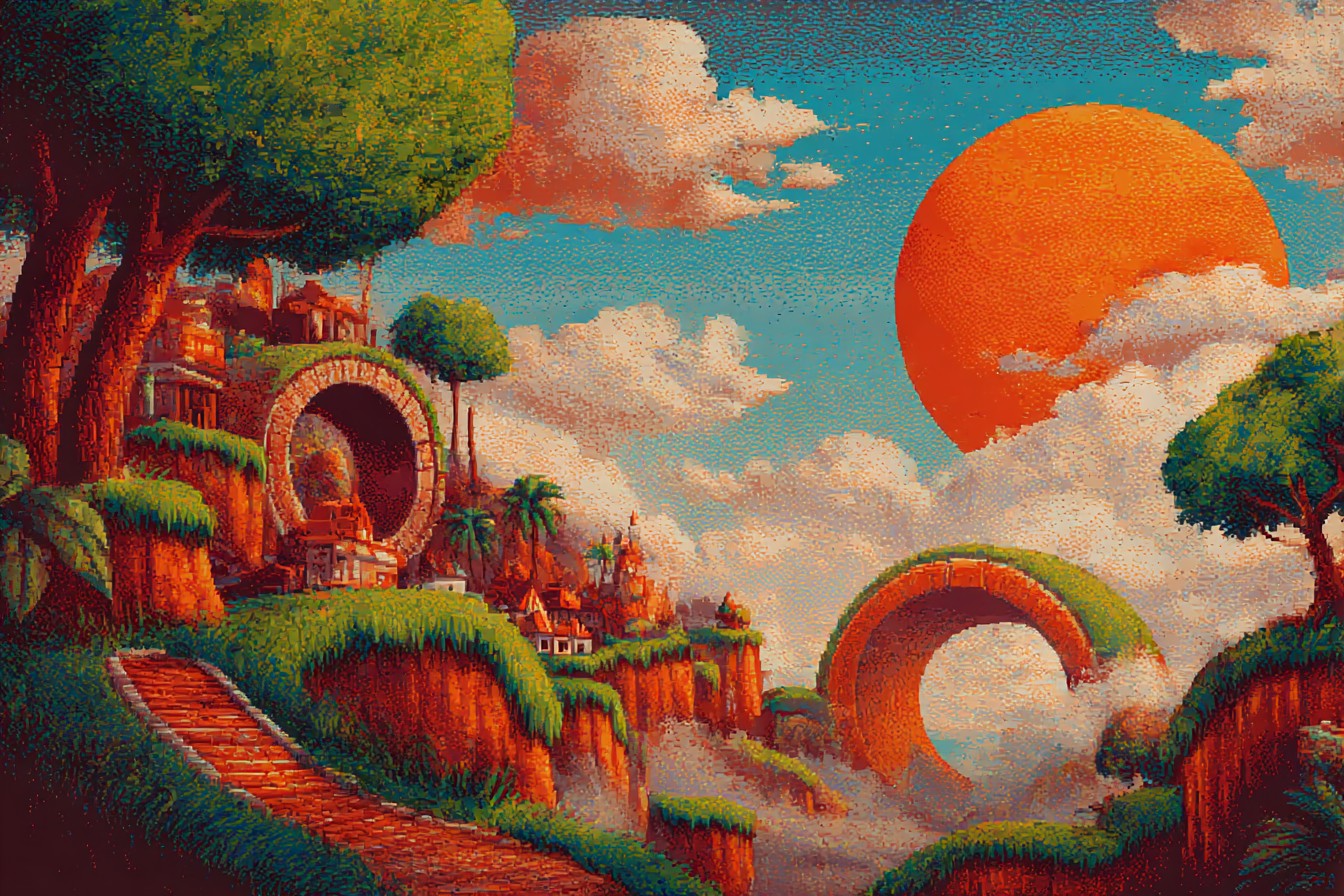
The special stages deserve their own paragraph, frankly. Those pseudo-3D tube runs, collecting rings while dodging bombs, all rendered in that gorgeous mode 7-style effect that made the Mega Drive feel properly next-gen. The way the tube twisted and curved, the sensation of speed as you rolled through collecting those precious rings—it was like being inside a kaleidoscope designed by someone who understood that video games could be art.
What made Sonic 2 perfect wasn't just the speed, though. It was how every element supported that speed. The level design flowed like water, each platform and loop and spring placed with mathematical precision. The music drove you forward, never letting up, never breaking the spell. The graphics were bright and bold and utterly confident. And Tails—dear little Tails—made the whole adventure feel less lonely, more like a proper buddy movie.
Even now, thirty-odd years later, I'll fire up Sonic 2 on the original hardware (through my trusty OSSC, scanlines perfect on the modern telly), and within seconds I'm eight years old again, sitting cross-legged on that carpet with the geometric pattern, controller cable trailing across to the Mega Drive like some kind of electronic umbilical cord.
Speed gaming perfection? Absolutely. Nothing before or since has quite captured that same feeling—that perfect marriage of velocity, music, and pure kinetic joy. Sonic 2 didn't just raise the bar; it launched it into orbit and left it there, spinning like Tails' helicopter flight.



