Right, let me tell you something about Kirby that might surprise you—the pink puffball's jump to 64-bit wasn't just another platformer getting the polygon treatment. It was something special, something that caught me completely off guard when I first got my hands on it.
I remember walking into Electronics Boutique (yeah, that was still a thing) sometime in 2000, looking for something to justify the N64 controller gathering dust beside my telly. The salesman—probably seventeen, definitely knew more about import dates than I did—handed me this chunky cartridge with what looked like a children's book cover. "Kirby 64," he said, "just came in. Different from the usual stuff."
Different was right. The Crystal Shards felt like someone had taken everything I thought I knew about Kirby games and rebuilt it from the ground up, but somehow kept all the bits that made sense. You know how some series just fumble the transition to 3D? Think about it—how many beloved 2D mascots turned into wonky camera disasters when they tried to go polygonal? Kirby sidestepped that entire mess by staying 2.5D, which sounds like a compromise but felt like genius.
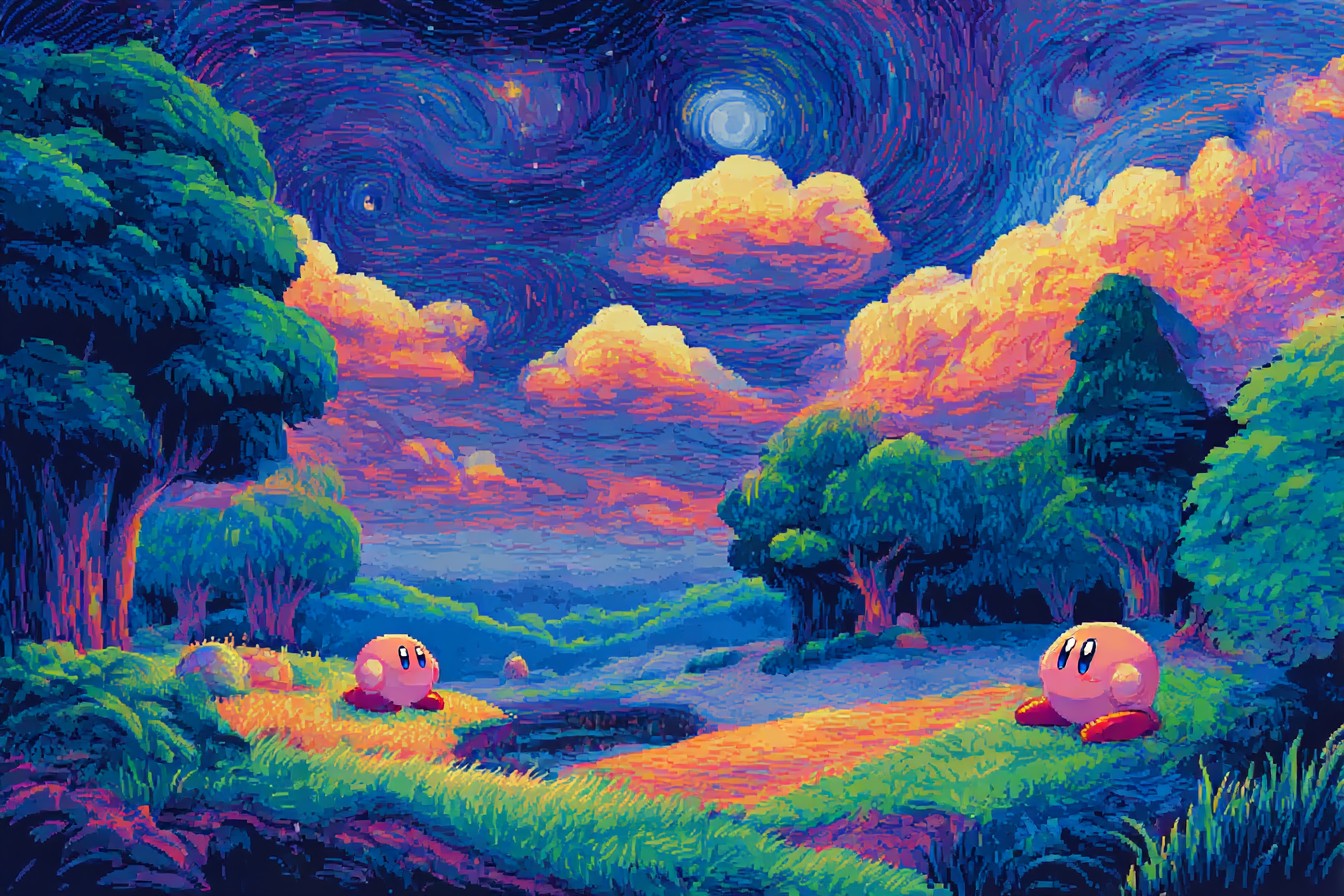
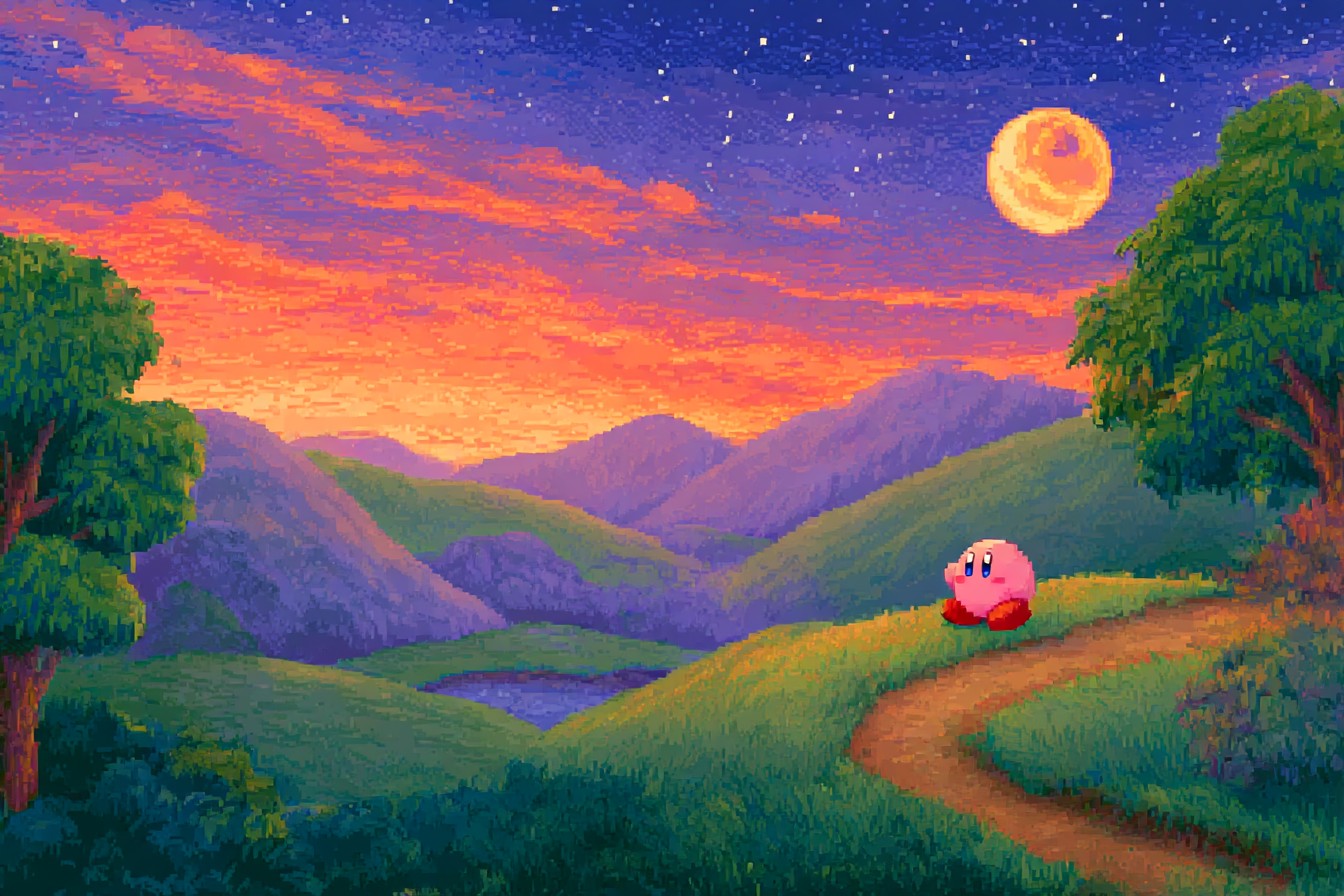
The first thing that hit me was how the game moved. Not just Kirby himself—though watching that pink balloon float through a world that felt tangible was oddly satisfying—but everything. Backgrounds scrolled in layers that made the N64's limited texture memory feel almost limitless. I'd catch myself just standing there, watching distant mountains drift past while foreground elements bobbed and swayed. It wasn't showing off; it was just… right.
But here's where things got proper interesting. The power combination system wasn't just a gimmick—it was practically a mini-game built into every level. You'd swallow two different enemies and Kirby would spit out something that made you go "oh, brilliant" every single time. Fire plus ice gave you this volcano attack that looked like it belonged in a completely different genre. Needle plus electric created this lightshow that made my little CRT practically sing. I spent entire evenings just experimenting, ignoring the actual objectives while Kirby turned into a walking chemistry set.
The thing is, this wasn't just button-mashing fun. Each combination had its own personality, its own physics, its own way of interacting with the world. Some were obviously powerful—rock plus fire was basically cheating—but others were subtle, almost puzzle-like. You'd come across a section that seemed impossible until you realized that double-cutting ability could slice through specific barriers, or that spark-spark created this orbital shield that deflected attacks you couldn't see coming.
What really got me, though, was how the game felt confident enough to be gentle. Not easy—there were moments that had me gripping that three-pronged controller like it owed me money—but gentle. Kirby games have always been about joy first, challenge second, and The Crystal Shards understood that better than most. Death wasn't punishment; it was just a brief interruption before you got back to the good stuff.
I'd play this thing late at night, volume turned down so I wouldn't wake the house, and there was something almost meditative about it. The soundtrack helped—these soft, dreamy pieces that made exploration feel like drifting through someone's pleasant dream. Rock Star was my favorite track, this bouncing melody that perfectly matched Kirby's weightless movement through caverns that sparkled with the N64's surprisingly decent lighting effects.
And speaking of those effects—whoever was working the technical magic deserves more credit than they got. The Crystal Shards managed to look lush and detailed despite running on hardware that usually made everything look like it was carved from colored butter. Particle effects actually looked like particles instead of chunky squares. Water had transparency. Fire had… well, it had fire to it, you know what I mean?
The boss fights were another revelation. Instead of the usual "jump on head three times" routine, you'd have these massive encounters that felt like they belonged in a completely different game. The final boss sequence—without spoiling anything—was this epic multi-stage affair that had me questioning whether I was still playing the same cute platformer I'd started with. It wasn't harder, necessarily, but it was… bigger. More cinematic. More everything.
Here's something that really stuck with me: the game never talked down to you. Yeah, it looked like it was designed for kids, and maybe it was, but it respected your intelligence. Hidden crystal shards weren't just tucked behind obvious walls—they required you to think about your power combinations, to experiment with different approaches, to actually engage with the systems instead of just collecting tokens. Some of the later puzzles had me scratching my head for ages before I realized I'd been overthinking them.
Playing it now, through emulation or on original hardware (and yes, I've still got my copy, complete with that slightly sticky label where someone tried to peel off a price sticker), the game holds up remarkably well. The frame rate's solid, the controls are still responsive, and those power combinations are just as satisfying as they were twenty-odd years ago. It's one of those rare games that aged gracefully because it wasn't trying to be cutting-edge—it was trying to be itself, and it nailed it.
The Crystal Shards proved something important about the N64 era that we sometimes forget: not every game needed to reinvent the wheel to justify existing in 64-bit. Sometimes the best approach was taking everything that worked about a beloved formula and just… doing it better. Smoother animations, richer backgrounds, more complex systems, all wrapped up in that same gentle Kirby philosophy that made stress melt away like butter on toast.
That's probably why I keep coming back to it, even now. In a gaming landscape that often feels designed to spike your cortisol levels, there's something beautifully refreshing about a game that just wants you to have a good time while occasionally making you think. Pure gaming comfort food, served on Nintendo's most beautifully weird console.



