Last night I was rifling through a dusty box in the spare room—you know, that archaeological dig we all promise to do "next weekend"—when I found my old N64 cartridge collection wrapped in a tea towel like precious gems. There it was: Mario Kart 64, the plastic slightly yellowed but the label still crisp. I held it up to the light, and suddenly I was sixteen again, cramped on a mate's bedroom floor with three other lads, arguing over who got the good controller and whether Wario Stadium was even legal.
The thing about Mario Kart 64 is it's probably the most perfect four-player game ever made. I don't say that lightly. I've tested this theory across decades, different living rooms, various states of sobriety, and it holds up every single time. Stick four people round a telly with that game and within minutes you've got drama, betrayal, and the kind of laughter that makes your ribs ache.
These days, though, finding three other people who can physically sit in the same room is like organising a royal wedding. Everyone's scattered across postcodes, busy with mortgages and toddlers and the general admin of being an adult. That's where emulation becomes not just convenient but essential. I've got Mario Kart 64 running beautifully on my PC through Project64, and honestly? It feels like archaeological preservation. This isn't about piracy or cutting corners—I own the original cart, it's right there on my shelf—this is about keeping something brilliant alive when the original hardware starts getting temperamental.
The first time I fired up four-player split-screen through an emulator, I'll admit I was sceptical. Would it feel right? Would the timing be off? Would it just be… sad? But then that opening fanfare kicked in, those familiar character voices started chattering, and suddenly I was grinning like an idiot at my monitor. The muscle memory kicked in immediately. Left stick for steering, shoulder buttons for powersliding, Z-trigger for hop-turning round tight corners. My thumbs remembered things my brain had filed away.
What's mental is how well the game's aged. I mean, graphically it looks like it was assembled from coloured blocks by a cheerful robot, but the gameplay? Pure silk. The physics engine still feels perfect—weighty enough that you believe in the karts, floaty enough that you can pull off those satisfying shortcuts. The rubber-band AI that everyone moans about? It's genius, actually. Without it, the best player would disappear into the distance and the other three would spend four minutes staring at their back. Instead, you get these incredible last-lap scrambles where positions change six times in the final stretch.
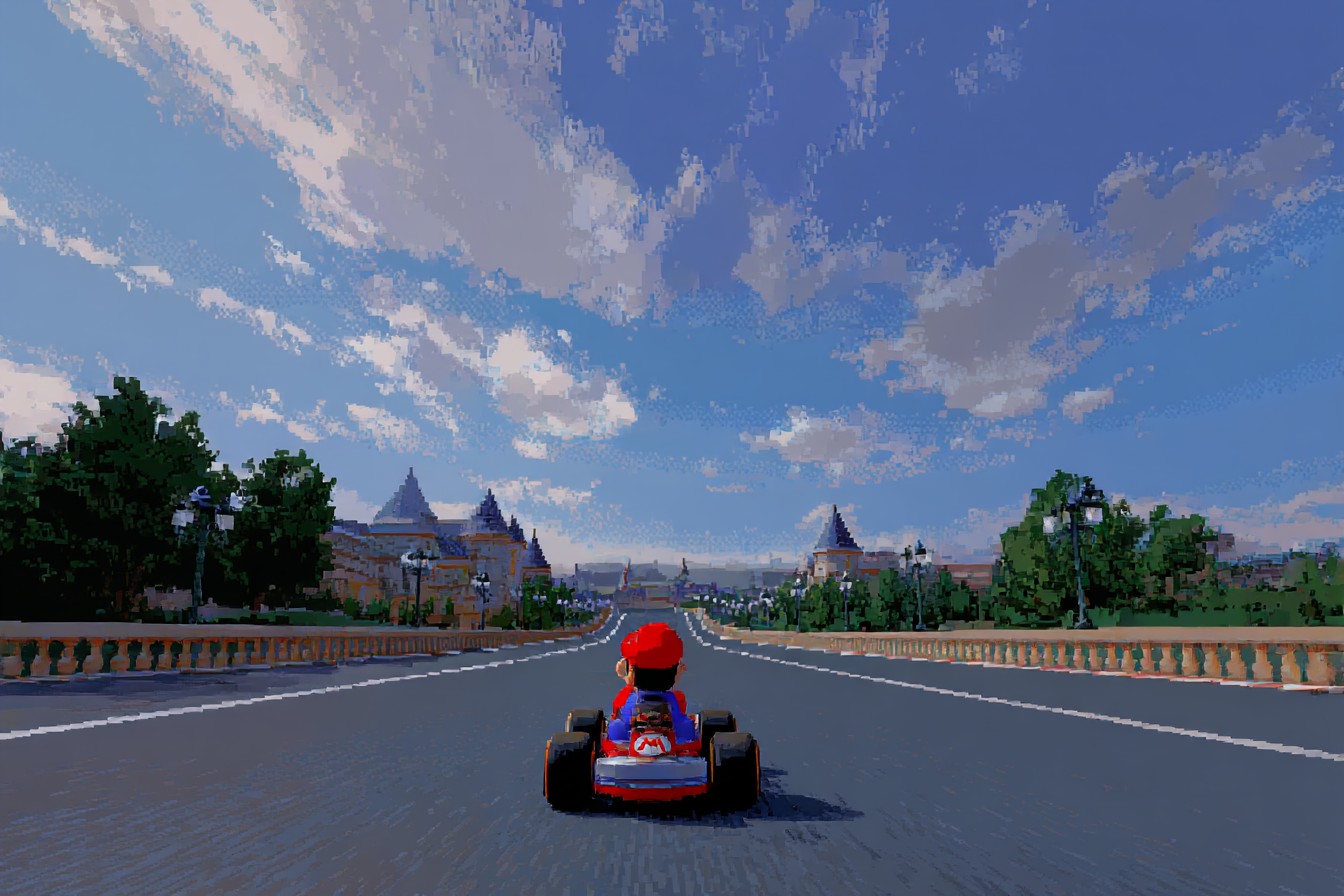
I've introduced this game to my eight-year-old nephew recently. Kid's grown up on Fortnite and Minecraft, all these impossibly detailed modern games, and yet he absolutely lost his mind over Mario Kart 64. We played it on my laptop connected to the living room TV—dead easy setup, nothing fancy—and within two races he was asking if we could play "every day forever." Kids get it immediately. That pure, distilled fun doesn't need ray tracing or 4K textures.
The emulation scene has done incredible work preserving this game. Not just making it run—that's the easy bit—but making it run properly. The timing, the frame pacing, the controller response, it all needs to be spot-on or the whole thing falls apart. I remember early N64 emulation being a bit of a lottery; you'd get games that looked right but felt wrong, or felt right but sounded like robots having nightmares. These days, with a decent emulator and a proper controller (none of that keyboard nonsense, thanks), it's indistinguishable from the original experience.
Actually, it's often better. Save states mean you can preserve those perfect four-player sessions when someone has to leave early. You can rewind that moment when your mate gets a blue shell right before the finish line—not to cheat, just to savour the injustice again. You can run it in higher resolutions if you want everything crisp and clean, or apply filters if you're feeling nostalgic for that fuzzy CRT look. Options everywhere, all of them valid.
The genius of Mario Kart 64's track design becomes even more obvious when you're playing it regularly again. Rainbow Road isn't just pretty—it's a masterclass in building tension through architecture. That long, vulnerable straightaway where you're constantly checking your mirrors for incoming shells. The narrow sections where one banana peel can ruin everything. The way the track curves gently left and right just enough to hide what's coming next. And don't get me started on the shortcuts. Finding that secret tunnel in Wario Stadium for the first time was like discovering buried treasure.
I've been running online tournaments with old gaming buddies using emulation and it's brought back something I thought was lost forever. That competitive spirit mixed with genuine affection. When Dave (who moved to Scotland about five years back) nails me with a perfectly timed red shell, I can hear him cackling through Discord exactly like he did when we were teenagers. When Sarah pulls off that ridiculous Royal Raceway shortcut that requires frame-perfect timing, we all go mental just like we did in her mum's front room in 1997.
The four-player split-screen experience translates surprisingly well to emulation, actually. Yeah, each player's view is smaller than it would be on the original hardware, but modern monitors are bigger and sharper, so it balances out. Plus, you can customise the setup—some emulators let you run each player's view on separate screens if you've got the hardware for it. Fancy stuff that would've seemed like science fiction back when we were fighting over who had to use the MadCatz controller.
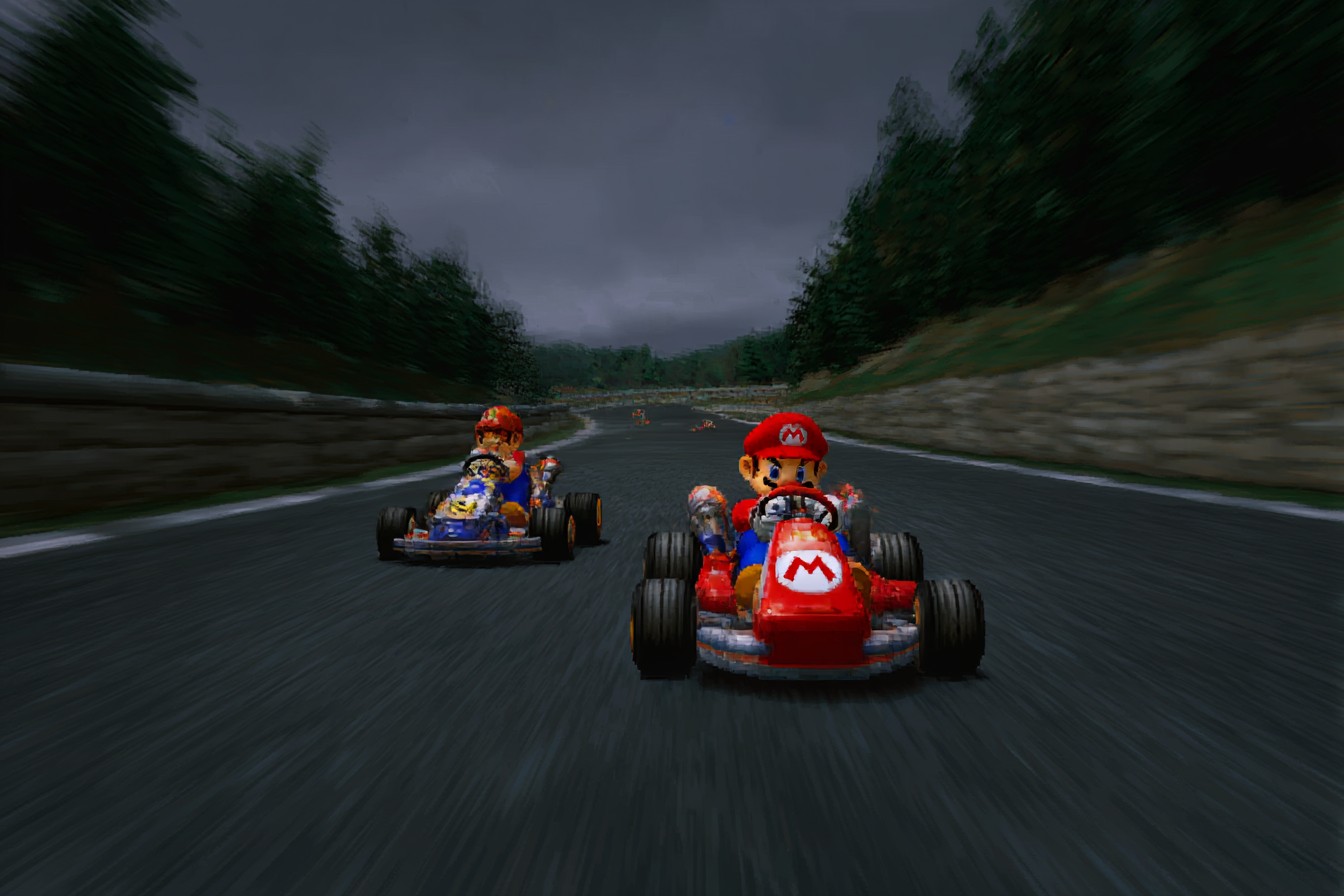
What really gets me is how this game creates instant memories. Last month I had some old uni mates over—first time we'd all been in the same room for about three years—and someone suggested firing up Mario Kart. Within twenty minutes we were shouting at each other like teenagers, developing elaborate revenge strategies, forming temporary alliances that dissolved the moment someone got a lightning bolt. My wife wandered through and just shook her head at four grown men losing their minds over cartoon go-karts.
That's the magic, though. Mario Kart 64 doesn't just simulate racing—it simulates friendship. The shared experience of triumph and disaster, the communal groans when someone gets a perfectly-timed blue shell, the way everyone leans forward during the final lap like body language affects lap times. Emulation hasn't just preserved the game; it's preserved the social ritual. Different screens, same energy, same ridiculous arguments about whether using the Toad shortcut on Royal Raceway counts as cheating.
Even playing alone has its charms. Sometimes I'll fire it up just to cruise round Moo Moo Farm at a leisurely pace, no items, no pressure. There's something properly meditative about those rolling green hills and that cheerful countryside music. Or I'll practice the more technical tracks, trying to nail perfect racing lines I never bothered with as a teenager. The game rewards that kind of attention even now.
Every time someone asks me about retro gaming or emulation, Mario Kart 64 is my first recommendation. Not because it's the most technically impressive or historically significant, but because it's the most purely, immediately, stupidly fun. Fire it up with three friends and within seconds you'll remember why video games exist in the first place: to make ordinary people feel extraordinary, if only for one perfectly-timed powerslide round Toad's Turnpike.



