There's something magical about the first time you hear that distinctive Yamaha YM2612 sound chip fire up through modern speakers. I'm talking about that metallic, slightly gritty FM synthesis that made every Mega Drive game sound like it was beamed in from some cyberpunk future. Last weekend, I finally got my Genesis emulation setup dialed in perfectly, and honestly? It hit me harder than I expected.
You know how certain smells can transport you instantly? Well, that opening synth blast from Streets of Rage did the same thing. Suddenly I'm eight years old again, sitting cross-legged on our brown shag carpet, desperately trying to convince my mum that "just five more minutes" wouldn't hurt anyone. The muscle memory kicked in too – my thumbs automatically went for the six-button controller layout, even though I was holding a modern gamepad.
Setting this up properly took longer than I'd care to admit. I mean, you'd think after decades of tinkering with hardware and software, getting an emulator running would be straightforward. Ha. The rabbit hole goes deeper than you imagine, especially if you're the type who obsesses over cycle accuracy and authentic sound reproduction. Which, let's face it, I absolutely am.
First challenge was choosing the right emulator. Genesis Plus GX gets recommended everywhere, and for good reason – it's solid, compatible with nearly everything, and the audio is spot-on. But I also spent way too much time comparing it against Kega Fusion, which has this lovely interface that feels properly retro. There's also BlastEm if you want something that'll make your CPU sweat while delivering pixel-perfect accuracy. I ended up going with Genesis Plus GX through RetroArch because, well, sometimes the popular choice is popular for a reason.
The ROM hunting phase brought back memories I'd forgotten I had. Not the dodgy download sites – though let's be honest, we've all been there – but the actual detective work involved in tracking down specific versions. Did you know there are regional differences in Sonic games that actually matter? The Japanese version of Sonic 1 has a completely different soundtrack, and Streets of Rage 3 is basically a different game depending on which region you grab. I spent an embarrassing amount of time making sure I had the "right" versions of everything.

My collection ended up being a proper nostalgic hodgepodge. Obviously the Sonic trilogy, because you can't have a Genesis setup without the blue blur. Streets of Rage 2 was non-negotiable – that soundtrack alone justifies the entire endeavor. Then there's the stuff that really takes you back: Earthworm Jim with its absolutely bonkers animation, Gunstar Heroes proving that Treasure could make magic on any hardware, and Phantasy Star IV because sometimes you need forty hours of turn-based comfort food.
But here's where things got interesting. Save states changed everything. I know, I know – purists will say it ruins the authentic experience. And maybe they're right about some games. But you know what? Being able to save right before that impossible jump in Earthworm Jim, or creating a checkpoint before attempting the final boss in Contra: Hard Corps without lives… it's liberating. Suddenly these games I remembered as brutally difficult became playable again. Not easy, mind you. Just… accessible.
The rewind function is even more controversial, but it's absolutely brilliant for learning. Made a mistake in a tricky Sonic section? Just roll it back a few seconds and try again. It's like having a patient older sibling who doesn't mind letting you practice the same bit over and over. I used it to finally master some of the trickier platforming sections that had stumped me as a kid.
Getting the audio settings right was crucial. The Genesis sound chip has this particular character – it's not as warm as the SNES, but it's got this aggressive edge that made every game sound like it meant business. Too much filtering and everything sounds muddy. Too little and the high frequencies will make your ears bleed. I spent ages tweaking the low-pass filter settings until that Streets of Rage bassline hit just right.
Display settings were another rabbit hole entirely. Do you go for pixel-perfect scaling, or do you add some CRT-style scanlines for authenticity? I tried both, honestly. The clean pixel approach looks stunning on a modern display – every sprite sharp and defined. But there's something about adding subtle scanlines and just a touch of curvature that makes it feel more like the original experience. I settled on a compromise: clean pixels most of the time, but scanlines when I'm feeling particularly nostalgic.
Controller configuration took me right back to those playground arguments about six-button versus three-button pads. The six-button controller was obviously superior for fighting games – try playing Street Fighter II with just three buttons and you'll understand the struggle. But for platformers? The original three-button layout had this simplicity that just worked. I mapped both configurations and switch between them depending on the game.
The first proper session was revelatory. Fired up Sonic 2, and within seconds I was in that zone we used to call "Sonic time" – where the world narrows down to pure reflexes and rhythm. Hill Top Zone's music kicked in and suddenly I'm remembering specific Saturday afternoons, the smell of toast from the kitchen, my younger brother asking if he could have a go (the answer was always "after this level").
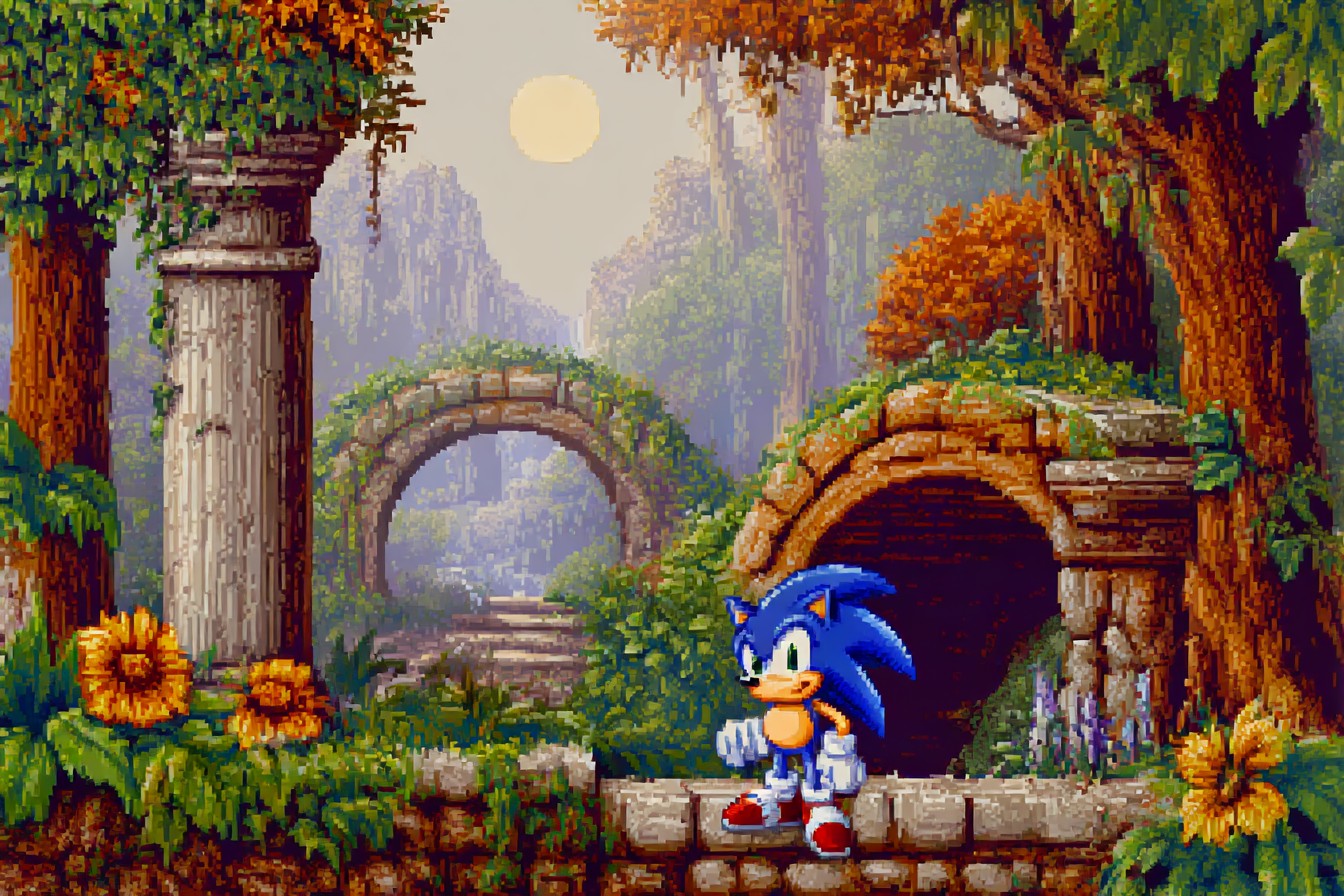
What really surprised me was how well some of these games hold up. Gunstar Heroes is still absolutely mental in the best possible way. The sprite work in Streets of Rage 2 remains gorgeous. And Phantasy Star IV's storytelling feels more sophisticated than I remembered – turns out eight-year-old me missed quite a lot of the political subtlety.
But it's not just about the games themselves. It's about having this perfect little time capsule sitting on my hard drive, ready to transport me back whenever I need it. Modern life gets complicated – work stress, bills, the general weight of being an adult. Sometimes you just need to be Sonic for twenty minutes, collecting rings and moving fast enough that nothing else matters.
The whole setup taught me something about preservation too. These games exist in this weird space between abandoned and actively maintained. Official rereleases are hit-and-miss, and original hardware is getting expensive and temperamental. Emulation isn't just about convenience – it's about making sure these experiences don't disappear entirely.
Sure, there's something lost in translation. The physical ritual of blowing cartridges, the specific feel of original controllers, the warm glow of a CRT screen. But there's also something gained: accessibility, convenience, and the ability to experience these games in ways their original creators never imagined. Save states, rewind, pixel-perfect scaling – these aren't betrayals of the original vision. They're tools that let us engage with that vision in our own way, in our own time.



