I was twelve when I first heard the distinctive *plink* of a quarter hitting the coin slot at Chuck E. Cheese. That sound still triggers something primal in me—part excitement, part financial dread. My mum had given me five dollars in quarters for my birthday party, which felt like absolute fortune until Street Fighter II arrived and taught me that being good at video games and being good at *arcade* games were completely different beasts.
The thing about arcade games in the 80s—they weren't designed to be fair. They were designed to be hungry. Quarter-eating machines built with one purpose: separate kids from their pocket money as efficiently as possible while keeping them coming back for more. And bloody hell, did they succeed.
Pac-Man was my gateway drug. Our local pizza joint had this cabinet tucked between the jukebox and the cigarette machine (yeah, different times), and I must've fed it enough coins to finance a small car. The attract mode with its *waka waka waka* sound was basically a siren song. I'd watch other kids play, studying their patterns, convinced I'd cracked the ghost AI. Spoiler alert: I hadn't.
What killed me wasn't the ghosts—it was the perfectionism. You'd get into this flow state, chomping dots with methodical precision, and then Blinky would pull some nonsense move that felt completely random. Years later I learned there was actual strategy involved, but at twelve? Pure torture. I'd slam another quarter in, muttering about "stupid pink ghost" under my breath while my pizza got cold.
Donkey Kong was worse for my wallet but better for my ego. Something about Mario's little *oof* when he got hit felt more fair than Pac-Man's sudden death. Plus, you could see Kong winding up to throw those barrels. The physics made sense in a way that ghost movement never did. I got pretty decent at the first level—decent enough to impress girls, anyway, which was the entire point of arcade prowess at that age.
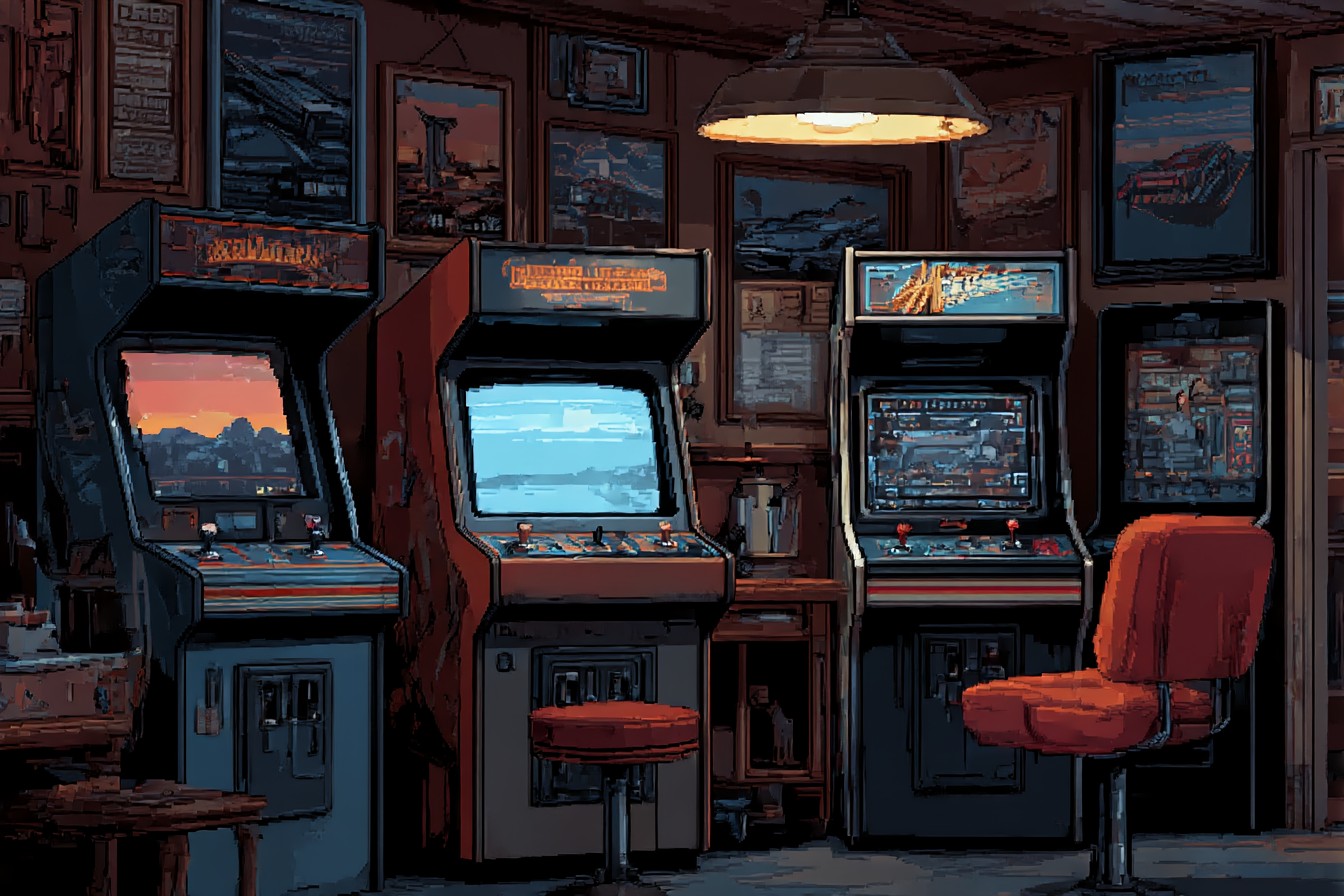
But then Galaga showed up and ruined everything.
That bloody ship formation flying in at the start of each level looked so simple. Just move left and right, shoot things, don't die. Easy, right? Wrong. The enemy patterns were like evil choreography, designed to lull you into a false sense of security before absolutely destroying you. I'd watch kids pump quarter after quarter into that cabinet, chasing high scores with the dedication of religious converts.
The real killer was when they introduced the "capture" mechanic—where the boss Galaga could tractor-beam your ship and you'd have to rescue it later. Half the time I'd deliberately let them capture my ship just to see if I could pull off the rescue. Probably cost me twenty quid over the years, but when you successfully freed your ship and got that satisfying double-firepower? Pure magic.
Street Fighter II changed the entire game, though. This wasn't about high scores anymore—this was about dominance. About standing at that cabinet with a line of quarters balanced on the screen bezel like some kind of medieval challenge system. Winner stays, loser walks away with lighter pockets and wounded pride.
I'll never forget the first time I saw someone pull off Ryu's dragon punch. This older kid—maybe fifteen or sixteen—was absolutely destroying everyone with these impossible moves that seemed to defy the game's physics. We'd crowd around him like he was performing actual magic. The sound effects, the screen shake, the way his character would yell… it was like watching someone speak a secret language.
Learning those moves became an obsession. I'd practice in single-player mode, burning through quarters just to spend thirty seconds in training trying to nail the timing on a hadouken. The quarter-circle forward motion had to be perfect, and the punch timing was absolutely critical. Miss it by a frame and you'd just throw a regular punch like some kind of amateur.
Mortal Kombat took that obsession and cranked it to eleven. The fatalities were playground currency—knowing how to perform Scorpion's "Get over here!" spear move or Sub-Zero's spine-rip finishing move made you temporarily famous. I'd write the button combinations on scraps of paper and trade them like contraband.
The violence was cartoonish enough that it felt silly rather than disturbing, but the technical precision required was absolutely real. Each character had their own timing, their own rhythm. Johnny Cage's shadow kick required a completely different muscle memory than Kano's cannonball. I'd go home with sore wrists from gripping those stiff arcade buttons, practicing the same combinations over and over.
OutRun was my dad's weakness. He'd drop me off at the arcade and end up feeding more quarters into that driving cabinet than I spent on everything else combined. Something about that Ferrari Testarossa and the branching road system just hooked him completely. He'd let me choose the music—usually "Magical Sound Shower"—and then proceed to crash spectacularly on every single turn.
The steering wheel had this perfect weight to it, and the force feedback when you hit barriers felt genuinely violent. We'd take turns, him grumbling about the "bloody sensitive steering" while I'd try to show off by taking corners without slowing down. Neither of us ever made it to the end, but we probably funded that machine's electricity bill for months.
Double Dragon was quarters well spent, especially when you could convince someone to play co-op. The satisfaction of perfectly timing a jump kick or grabbing an enemy for your partner to punch was worth every coin. Though I'll admit, friendly fire incidents were… frequent. Nothing quite like accidentally punching your best mate off a platform because you mistimed a combo.
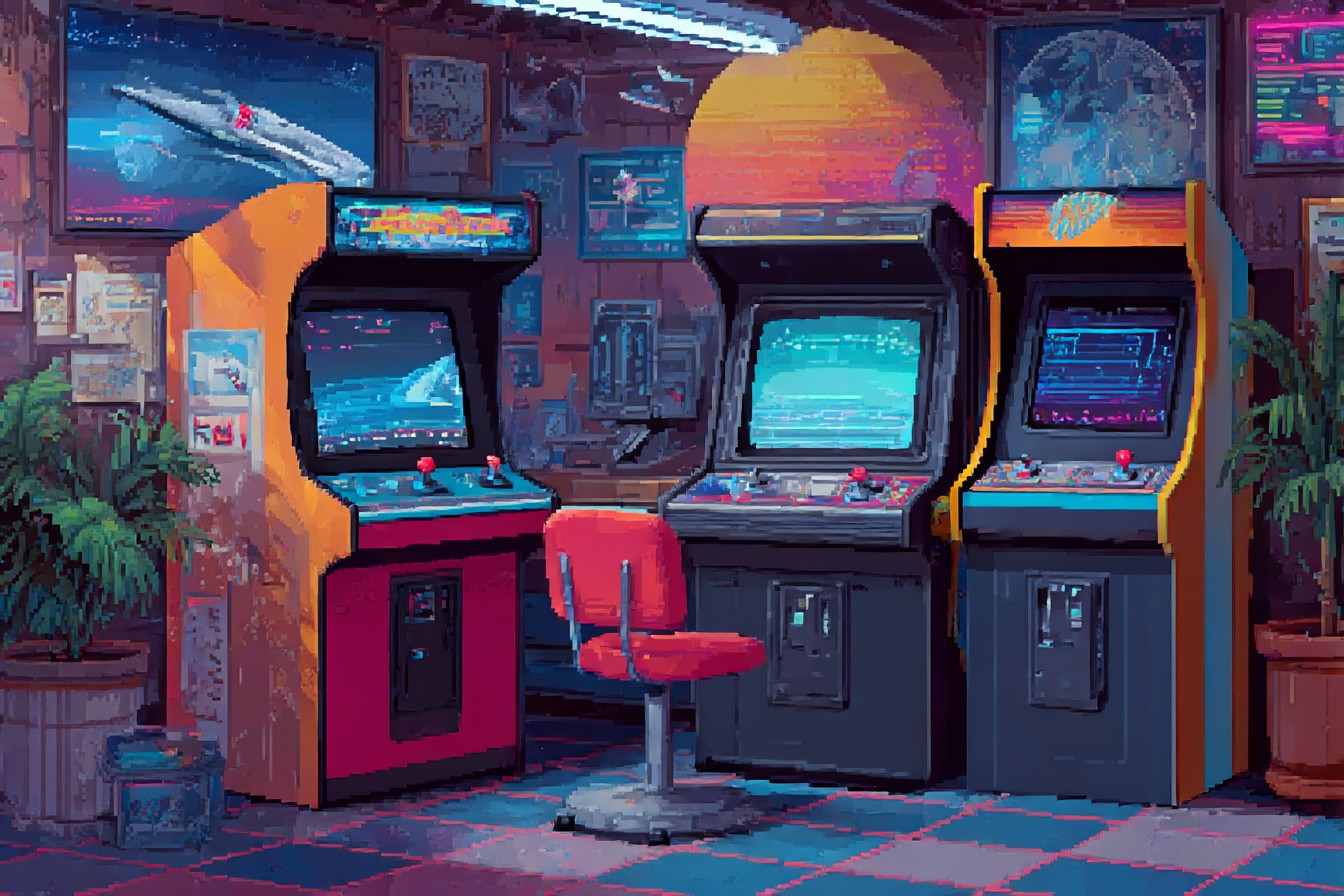
By the time Teenage Mutant Ninja Turtles hit the arcades, I was basically broke permanently. Four-player co-op meant splitting the cost with friends, which should have been economical. Instead, it just meant we'd all run out of money at the same time. The game was absolutely relentless—enemies swarmed from every direction, and the continue countdown felt deliberately cruel.
Looking back, those quarters weren't just buying game time. They were buying social currency, playground stories, shared frustrations, and those perfect moments when everything clicked. When you'd nail a perfect combo in Street Fighter II or make it further in Galaga than ever before, surrounded by kids cheering you on.
I've got all these games now on various retro consoles and MAME setups, with infinite continues and save states. They're still fun, but something's missing without that financial stakes attached. Without that sharp intake of breath when you're down to your last quarter and facing the final boss. Without the ceremony of digging through your pocket for that last bit of change.
Those machines taught me that skill has a price, that practice costs money, and that sometimes the most valuable thing you can buy is fifteen more seconds with your heroes. Every quarter I fed those hungry cabinets was an investment in becoming the gamer I am today—even if my hairline's been in steady retreat ever since.



